LiFePO4 batteries deliver between 3,000 and 6,000 cycles at 80% depth of discharge, a massive leap compared to the 200 to 500 cycles typically offered by standard lead-acid units.
Choosing between lithium vs lead acid for solar storage often feels like a trade-off between your current budget and long-term reliability. We will break down the real-world performance and total ownership costs to help you build a high-efficiency energy system with total confidence.
- Lithium vs Lead Acid for Solar Storage: Choosing the Right Tech in 2026
- Why Performance Metrics Dictate Your Solar Bank’s Real-World Value
- Is the Higher Upfront Cost of Lithium Batteries Actually Worth It?
- Safety Standards and Physical Installation Needs for Home Storage
- How to Size and Transition Your Solar Storage System Effectively
Lithium vs Lead Acid for Solar Storage: Choosing the Right Tech in 2026
LiFePO4 batteries offer 3,000-6,000 cycles and 90% depth of discharge, vastly outperforming lead-acid’s 500-1,500 cycles and 50% limit. While lithium costs more upfront, its decade-long lifespan suits daily off-grid use better than traditional flooded cells.
Before we break down the high-performance options, let’s look at the traditional technology that has powered off-grid systems for decades.
Flooded and Sealed Lead-Acid Technology
Flooded lead-acid batteries rely on a liquid electrolyte. You must top them up with distilled water regularly. They require upright mounting to prevent messy acid leaks. Yet, they remain the most affordable entry point for basic solar storage.
Sealed versions like AGM and Gel offer a cleaner alternative. These use a starved electrolyte or silica additive. They are completely maintenance-free and spill-proof. This makes them far easier to handle in mobile solar setups or vans.
The core chemistry involves lead plates reacting with sulfuric acid. This process is reliable but results in massive weight. Consequently, you need bulky, reinforced structures to house traditional deep-cycle battery banks safely.
Are you looking for a budget-friendly start? You can find a reliable solar panel battery using this proven tech to get your system running without a huge initial investment.
While lead-acid serves the budget-conscious, the industry has shifted toward a more efficient, long-lasting chemical alternative for serious users.
LiFePO4 Chemistry and Lithium-Ion Standards
Lithium Iron Phosphate (LiFePO4) is now the gold standard for home storage. It is chemically stable and non-combustible. This makes it significantly safer than older lithium-cobalt chemistries. You can sleep soundly knowing your energy bank is secure.
Lithium Iron Phosphate (LiFePO4): A lithium-ion chemistry known for high thermal stability, safety, and long cycle life, making it ideal for home energy storage.
Lithium offers incredible energy density compared to lead. A single lithium rack replaces several heavy lead blocks. This saves massive amounts of physical space. It is the perfect solution for tight utility rooms or small cabins.
Weight is the ultimate advantage for mobile applications. Lithium is roughly one-third the weight of lead-acid. This is a massive benefit for vehicle installations. You get more power without compromising your van’s payload or fuel efficiency.
LiFePO4 technology has effectively ended the era of heavy, high-maintenance lead banks for serious off-grid enthusiasts who value long-term reliability over initial savings.
Why Performance Metrics Dictate Your Solar Bank’s Real-World Value
Choosing between lithium and lead-acid isn’t just about the initial price. It is about how much energy you actually use every night when the sun goes down.
Cycle Life and Depth of Discharge Capabilities
Lithium offers 3,000 to 6,000 cycles, while lead-acid hits a wall at 500 to 1,500. Lithium lasts ten years, but lead-acid often fails after three years of heavy use.
You can safely use 90% of a lithium battery’s capacity. Lead-acid shouldn’t drop below 50% discharge. Going deeper causes permanent plate damage and immediate capacity loss.
A high-quality RV solar panel kit pairs perfectly with lithium’s deep discharge. This ensures you never run out of power mid-trip.
3,000+ Cycles
90% DoD
500-1,500 Cycles
50% DoD
Charging Speed and Round-Trip Efficiency
Lithium boasts 95% efficiency, leaving lead-acid’s 80% behind. Less energy is wasted as heat. Your panels fill the bank much faster during short winter days.
The Peukert effect reduces lead-acid capacity under heavy loads. Lithium stays stable even when running microwaves or tools. It handles high power draws without flinching.
Learning how plug and play solar panels work shows why efficiency matters. Every watt saved during charging counts.
Temperature Sensitivity and Climate Impact
Lead-acid handles freezing temperatures better during recharge. Lithium requires internal heaters to prevent cell damage if charged below freezing. It is a vital safety detail.
Heat kills lead-acid batteries by accelerating internal corrosion. Lithium offers superior thermal stability in hot garages. It survives much better in harsh, sun-baked environments.
Never charge lithium below 0°C without heaters. This causes permanent plating damage to the cells.
When picking a solar kit for shed use, consider your climate. Lithium’s heat resistance usually wins.
Is the Higher Upfront Cost of Lithium Batteries Actually Worth It?
Performance metrics prove lithium’s technical superiority, but we must now crunch the numbers to see if the investment pays off.
Initial Investment Versus Total Cost of Ownership
Stop overpaying for “cheap” storage. A lead-acid bank often requires three replacements within a single decade. These recurring hardware costs quickly destroy your initial savings. Lithium stays in service for the entire ten-year period without failing.
Focus on the cost-per-kilowatt-hour. Divide your total investment by the energy stored over the battery’s life. Lithium usually wins this calculation by a wide margin. It delivers more usable power for every dollar spent long-term.
| Technology | Upfront Cost | Lifespan (Years) | Cost per kWh | Best Use Case |
|---|---|---|---|---|
| Lead-Acid (Flooded) | Low ($100-200) | 3-5 | Higher | Emergency Backup |
| AGM | Medium ($200-500) | 4-8 | Moderate | Occasional Use |
| LiFePO4 | High ($700-1300) | 10-20 | Lowest | Daily Cycling |
Maintenance Costs and Hidden System Expenses
Factor in labor and materials. Flooded batteries need frequent water checks and acid cleaning. Lithium is a “set and forget” technology with zero maintenance. This saves you hours of dirty, repetitive work every single year.
Irregular charging kills lead-acid chemistry. These batteries die early if not fully charged regularly. Lithium handles partial states of charge effortlessly. You won’t lose battery health just because the sun stayed behind the clouds today.
Ready to upgrade your setup? Most homeowners are switching to a solar panel plug and play system to simplify their energy independence. It is the smartest way to pair high-efficiency storage with easy installation.
Safety Standards and Physical Installation Needs for Home Storage
Beyond the financial ROI, your choice of battery dictates the safety protocols and physical space requirements of your home.
Ventilation and Indoor Installation Safety
Flooded lead-acid batteries release explosive hydrogen gas during the final stages of charging. This off-gassing risk is serious. You must place them in vented enclosures to prevent gas buildup. This complicates indoor installations significantly for homeowners.
Sealed lithium units do not gas. You can safely install them in closets or living spaces. They don’t require expensive specialized venting systems. This flexibility is a massive advantage for modern homes.
When planning your setup, you should install balcony solar panels safely by following local building codes. Proper placement ensures long-term reliability and peace of mind for your family.
- Hydrogen gas risks
- Acid spill hazards
- Ventilation requirements
- Weight load on floors
The Role of Battery Management Systems
The Battery Management System (BMS) is the brain of your lithium bank. It monitors every cell for voltage and temperature. It automatically disconnects the battery if it detects a short circuit. This prevents thermal runaway and fires.
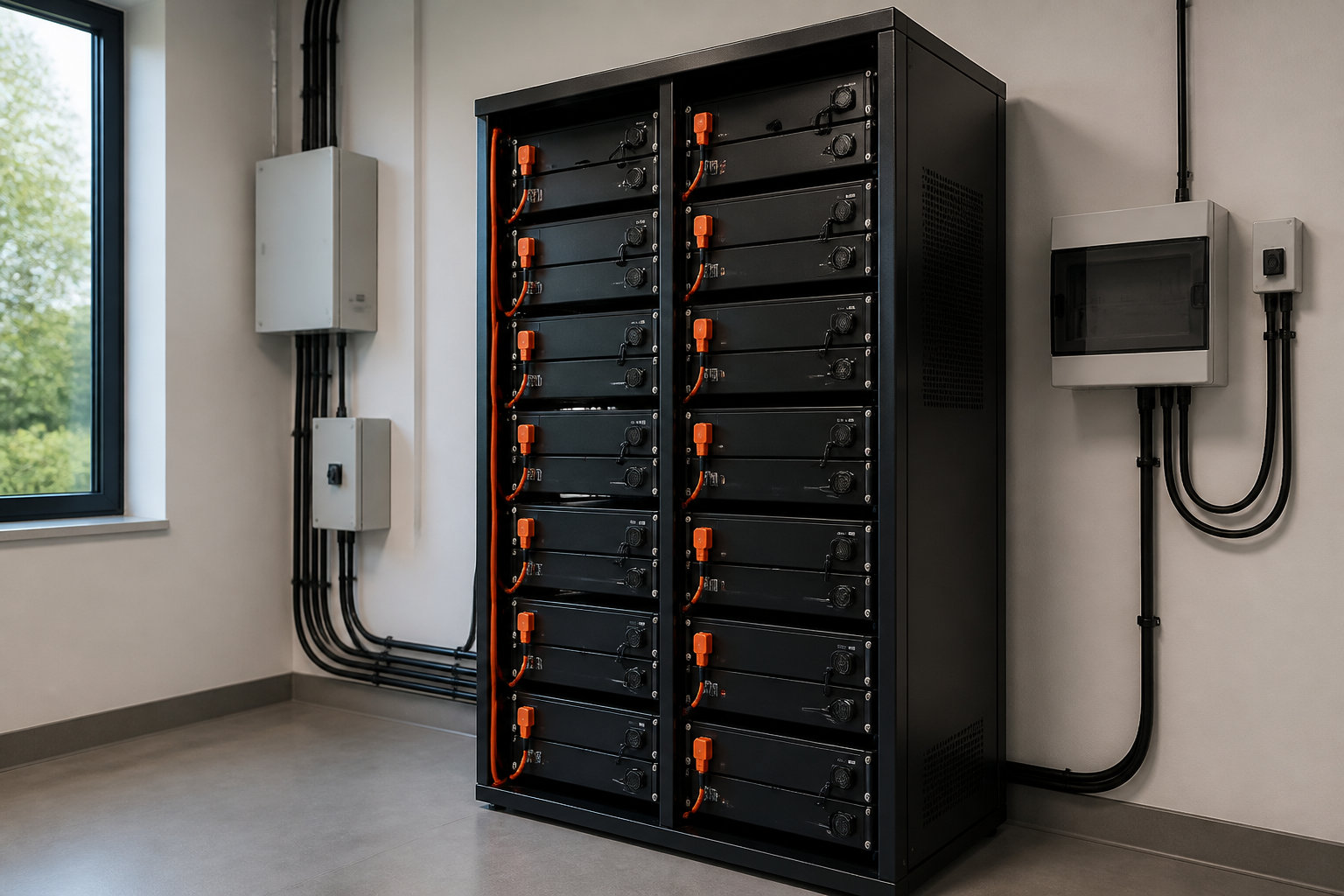
Lead-acid batteries lack this internal protection. These batteries rely entirely on external charge controllers. They have no internal brain to stop a single bad cell from overheating. This makes them more vulnerable to human error.
A quality BMS is the silent guardian of a lithium bank, ensuring that the high energy density remains a benefit rather than a hazard.
Flooded lead-acid batteries must be installed in vented enclosures to prevent the buildup of explosive hydrogen gas during charging.
How to Size and Transition Your Solar Storage System Effectively
Once safety and tech are settled, the final step is determining the scale of your system and how to upgrade existing setups.
Off-Grid Living vs Emergency Backup Needs
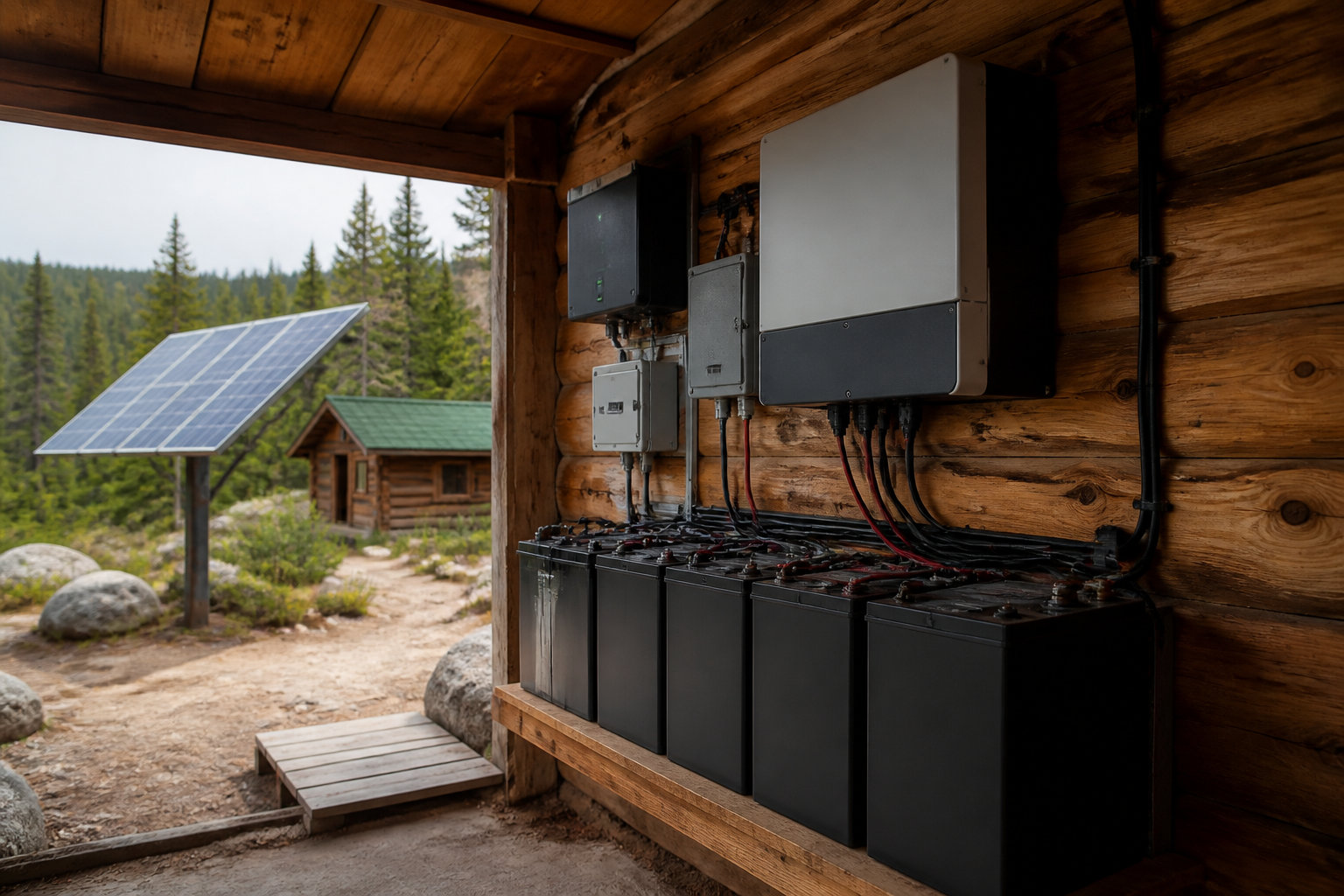
I strongly recommend lithium for daily cycling. If you live off-grid, you need a battery that survives 365 cycles a year. Lead-acid is better suited for emergency backup systems. These systems sit idle most of the time.
Let’s talk sizing. Calculate your daily watt-hour consumption first. Multiply this by the number of autonomy days you need. This determines your total required battery capacity. It is that simple.
To get your numbers right, focus on these variables:
- Daily Wh usage
- Peak load requirements
- Desired days of autonomy
- Local sun hour averages
Need a mobile setup? Check out this camper solar panel kit. It simplifies your energy needs.
Transitioning From Lead-Acid to Lithium
Don’t ignore inverter compatibility. Most modern inverters have a “Lithium” setting. You must ensure your charger can reach the specific voltage profiles required for LiFePO4. Never mix battery types in one bank. It is a recipe for disaster.
Ready to swap? Remove old lead blocks and clean the area. Install the new lithium rack. Update the charge controller settings before switching the system back on. Always double-check your connections.
Upgrading your mobile home? A dedicated solar panel for van setup paired with lithium will change how you travel. You get more power with much less weight to carry around.
Choosing lithium vs lead acid for solar storage is a long-term investment in your energy freedom. While lead-acid offers a low entry price, lithium’s 6,000-cycle lifespan and zero maintenance deliver the best ROI for daily off-grid use. Switch to lithium today to enjoy 95% efficiency and power your future with total confidence!
FAQ
Is switching to lithium batteries really worth the higher initial price?
Absolutely! While the upfront cost is higher, LiFePO4 batteries are a much smarter investment for your wallet over time. They last 10 to 30 times longer than lead-acid, meaning you won’t be paying for expensive replacements every few years. When you factor in zero maintenance and superior efficiency, lithium actually offers a lower total cost of ownership.
How do lithium and lead-acid batteries compare in terms of lifespan?
There is simply no contest here. Traditional lead-acid batteries typically survive only 300 to 1,500 cycles, often failing after just three years of heavy use. In contrast, high-quality lithium cells deliver between 3,000 and 6,000 cycles, providing reliable power for a decade or more. It is the ultimate “set and forget” solution for serious solar users.
Can I safely install these batteries inside my home or van?
Lithium is the clear winner for indoor safety. Unlike flooded lead-acid batteries, which release explosive hydrogen gas and require specialized ventilation, LiFePO4 units are sealed and non-toxic. They are chemically stable and incombustible, making them perfectly safe for closets, living spaces, or tight mobile setups without any nasty acid spill risks.
Do lithium batteries require a special management system?
Yes, and that is a huge benefit! Every quality lithium bank includes a Battery Management System (BMS). This “internal brain” constantly monitors voltage and temperature to prevent overcharging or short circuits. Lead-acid batteries lack this integrated protection, relying entirely on external controllers, which leaves them vulnerable to permanent cell damage.
Which battery type handles deep discharges better?
Lithium wins again with a massive 80-100% Depth of Discharge (DoD) capability. You can use almost the entire capacity of your tank without hurting the battery. Lead-acid batteries are much more fragile; if you regularly discharge them past 50%, you will cause permanent plate damage and drastically shorten their life. Lithium gives you more usable energy in a smaller, lighter package.
How does cold weather affect solar battery performance?
This is one area where lead-acid has a slight edge, as it can be charged in freezing temperatures. Lithium batteries require internal heaters or a warm environment to charge safely below 0°C (32°F). However, lithium performs much better in high-heat environments, where lead-acid batteries tend to degrade and corrode very quickly.