A standard 100W rigid solar panel weighs up to 10kg, while its flexible counterpart cuts that mass by 70% to a mere 2kg. You are likely torn between maximizing your van’s aerodynamics and ensuring your energy system survives the next major hailstorm.
We are going to compare flexible vs rigid solar panels for vans to help you choose the perfect hardware for your specific roof type and travel style. We will break down the long term costs and efficiency secrets so you can build a reliable off-grid setup with total confidence.
- Flexible vs Rigid Solar Panels for Vans: The Ultimate Hardware Showdown
- Efficiency Secrets and the Impact of Summer Heat
- 3 Criteria to Match Panels With Your Van Roof Type
- Calculating the Total Cost of Ownership Over 10 Years
Flexible vs Rigid Solar Panels for Vans: The Ultimate Hardware Showdown
Rigid panels offer a 25-year lifespan and superior heat dissipation via 1-inch air gaps, while flexible alternatives weigh 70% less, bonding directly to curved fiberglass roofs for maximum stealth and aerodynamics.
Choosing the right gear is the first step toward off-grid freedom. But how do these options handle the road?
Weight and Aerodynamics on the Road
Rigid panels rely on heavy tempered glass, while flexible versions use thin polymer layers. This means flexible panels weigh only 4-6 pounds, compared to over 20 pounds for rigid models.
Flush mounting is a huge advantage as it eliminates wind drag completely. Your van stays discreet for better stealth camping, keeping a low profile on the highway.
Heavy racks increase your vehicle’s height, which hurts fuel efficiency significantly. Flexible options stay under the radar, providing a sleek, aerodynamic solution for long-distance travel.
Durability Against Branches and Hail
Rigid panels use tempered glass to withstand heavy hail. Flexible polymer surfaces scratch easily, which blocks light and kills efficiency over time. Internal cells also crack from vibration.
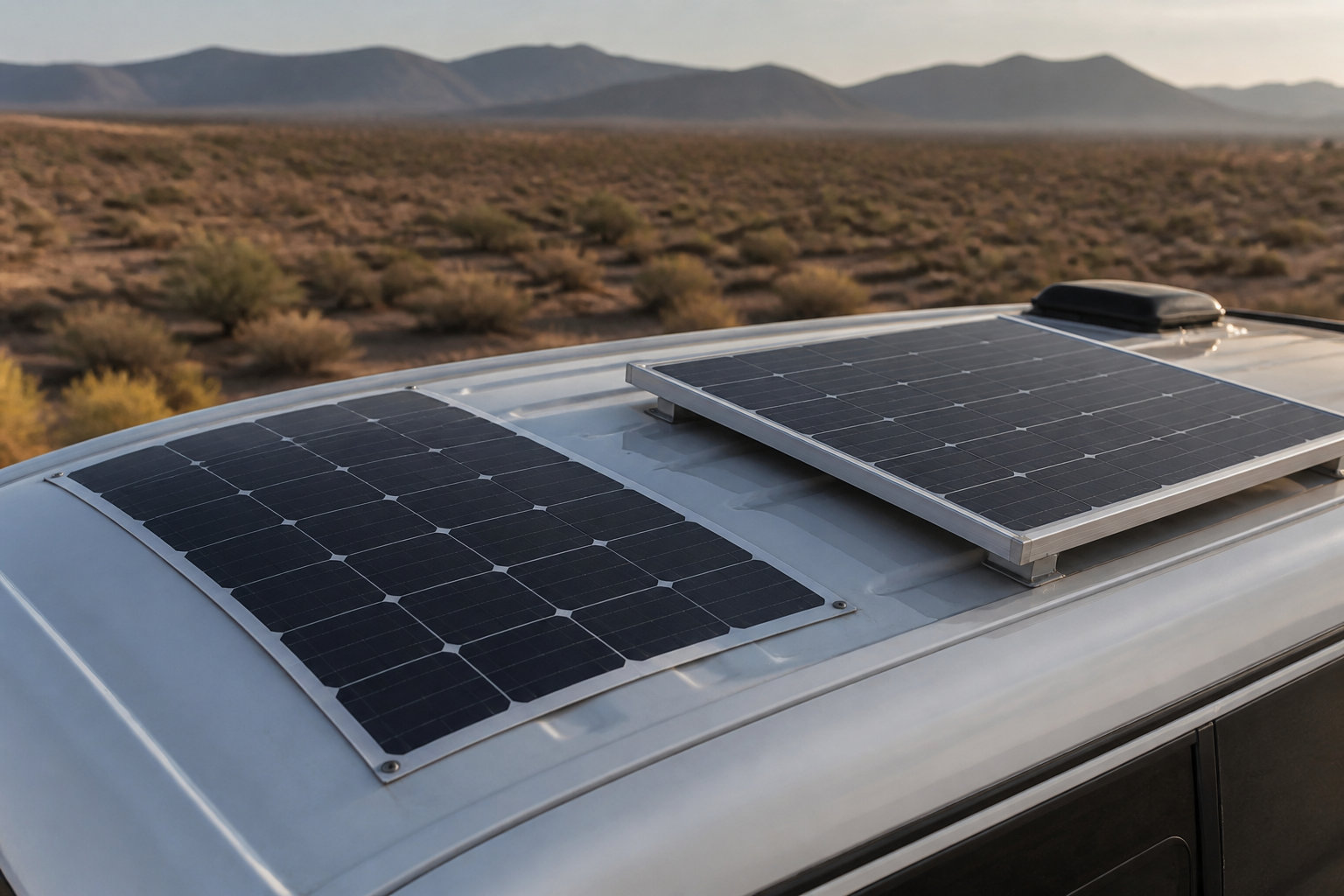
UV rays degrade plastic layers on flexible units quickly. Rigid frames stay structurally sound for decades, built for the long haul in harsh environments.
Efficiency Secrets and the Impact of Summer Heat
While physical build matters for the road, the real performance gap emerges when the sun hits the roof and temperatures climb.
Why Air Gaps Matter for Energy Conversion
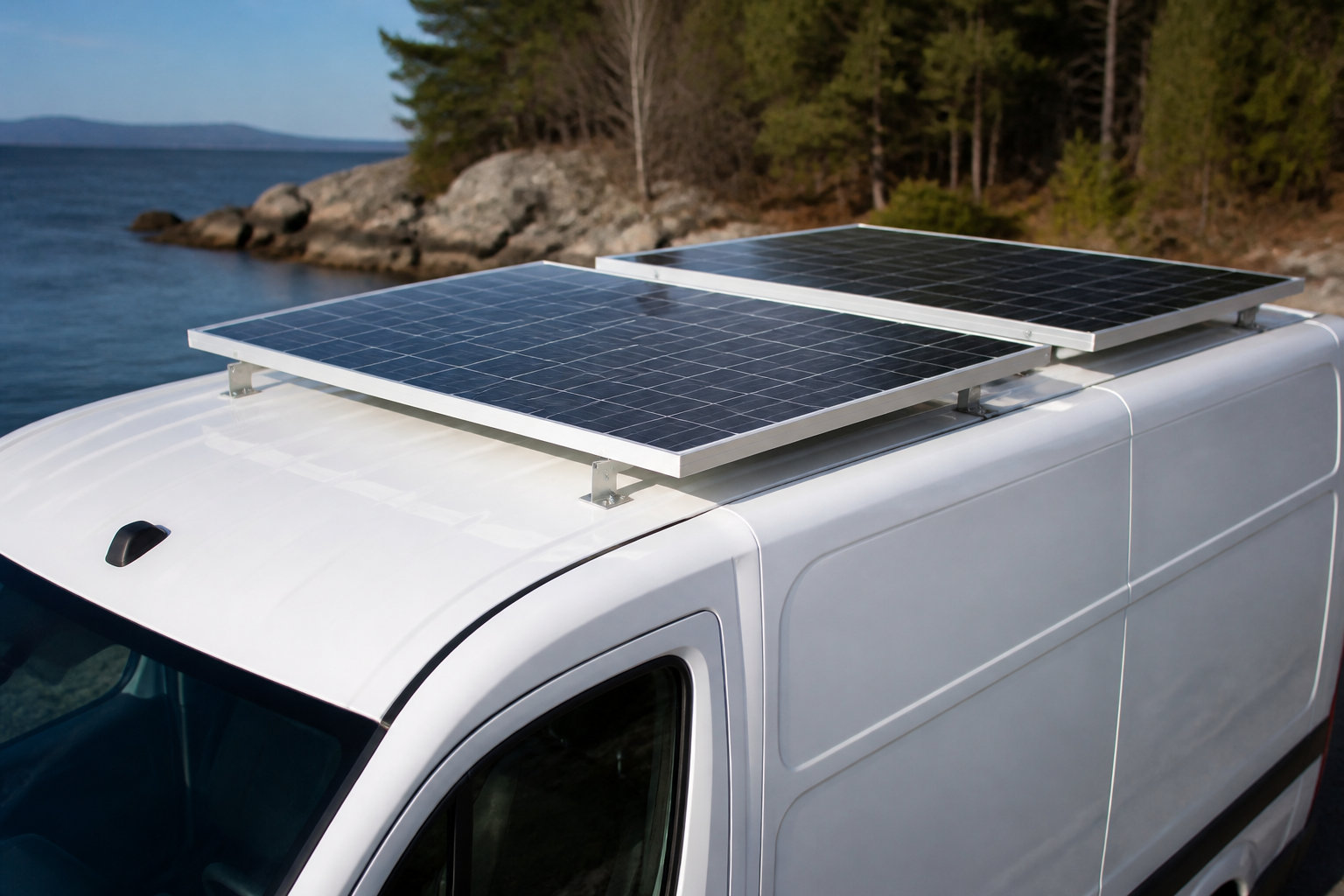
Rigid panels utilize brackets to create a 1-inch convection gap. This clever design allows air to circulate freely. Natural airflow effectively carries intense heat away from the solar cells.
Solar cells lose efficiency as they get hotter. Keeping the panel cool maintains a higher voltage output. This is vital during peak sunlight hours for your battery bank.
- Rigid panels: 10-15% better cooling
- Airflow prevents hotspots
- Brackets act as heat sinks
- Stable power in deserts
Basically, that small gap acts like a natural radiator. It ensures your system doesn’t throttle just when you need the most juice for your fridge.
Temperature-Related Output Drops in Flush Mounts
Flexible panels glued to the roof suffer from a thermal trap. Without rear ventilation, the van roof acts like a giant heat soak. This setup ends up cooking the cells.
In 90°F weather, a flush-mounted panel can reach 150°F. Efficiency often drops by 20% or more. The temperature coefficient becomes a critical factor for summer vanlife. This leads to slower battery charging.
A flexible panel glued directly to a dark van roof can lose nearly a quarter of its rated power on a typical July afternoon.
It is a frustrating reality for many. You buy a 100W panel but only see 75W because the heat has nowhere to go.
3 Criteria to Match Panels With Your Van Roof Type
Understanding heat is vital, but the physical shape of your van ultimately dictates which mounting hardware will actually stay attached.
Bonding Flexible Panels to Curved Fiberglass
Bonding flexible units is remarkably straightforward. Use high-quality SikaFlex or VHB tape for fiberglass roofs. This avoids drilling holes that could cause leaks in pop-tops.
Hybrid setups offer great versatility. You might use a rigid panel on the flat center and flexible ones on the curved edges. This maximizes every square inch of available space.
| Roof Type | Best Panel | Mounting Method | Difficulty |
|---|---|---|---|
| Flat Metal | Rigid | Drill | ★★☆☆☆ |
| Curved Fiberglass | Flexible | Glue | ★☆☆☆☆ |
| Pop-Top | Flexible | Glue | ★☆☆☆☆ |
| Roof Rack | Rigid | Bracket | ★★★☆☆ |
Bracket Mounting and Drilling for Rigid Frames
Rigid installations require heavy-duty hardware. Use Z-brackets or aluminum rails bolted through the roof. Ensure you use stainless steel hardware and Dicor sealant to prevent rust.
Quality electrical components are vital here. Rigid panels often have higher voltages, requiring a quality MPPT charge controller. Route wires through a waterproof gland. This setup handles high-speed vibrations better on corrugated metal roofs. It provides a solid electrical foundation for the build.

Check your structural limits first. Verify that your van’s ribs can support the weight of a full rigid array plus the rack.
Calculating the Total Cost of Ownership Over 10 Years
Once the hardware is bolted or glued down, the true cost starts to reveal itself through maintenance and replacement cycles.
Lifespan and Common Failure Modes to Watch
Rigid panels are built for the long haul, boasting a 25-year warranty. Flexible panels, however, are far more fragile. They often fail within 3 to 5 years due to heat and micro-cracks.
A failing panel won’t fully charge expensive Lithium (LiFePO4) batteries. This forces the alternator to work harder. Consequently, you increase engine wear and risk damaging your storage system.
Replacing cheap flexible panels three times in a decade costs significantly more than a single high-quality rigid installation.
Maintenance Routines for Peak Performance
Cleaning is simple but vital. Use plain water and a soft microfiber cloth. Avoid abrasive chemicals that can scratch polymer surfaces or degrade the glass coating.
Suggest inspection intervals are key. Check adhesive bonds every six months. For rigid setups, tighten bracket bolts annually to ensure nothing rattles loose on washboard roads.
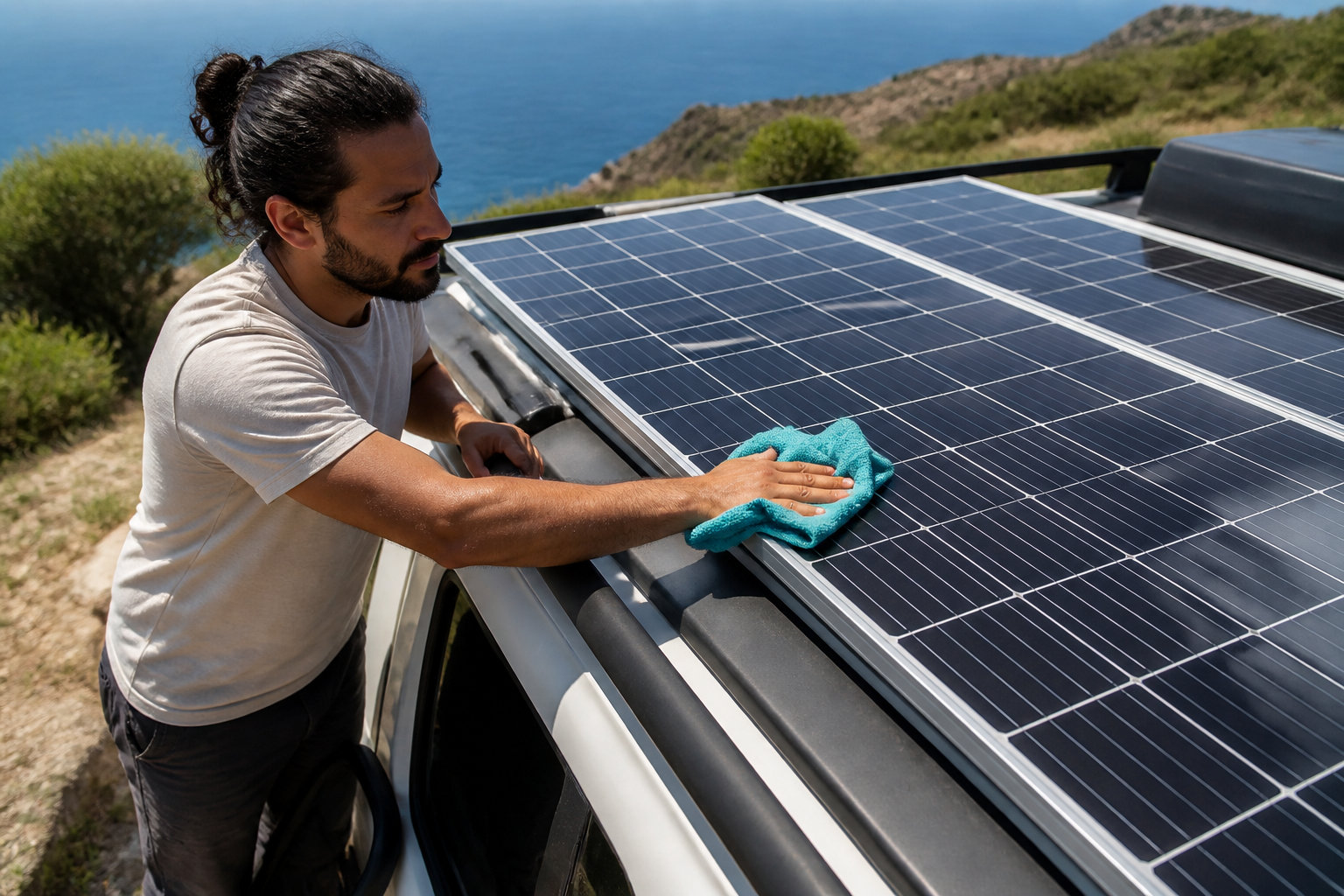
Stay ahead of the game with this simple checklist:
- Monthly: Wipe off dust and bird droppings
- Bi-annually: Check for delamination bubbles
- Annually: Inspect cable glands for water ingress
Choose rigid solar panels for 25-year durability and peak heat efficiency, or flexible vs rigid solar panels for vans alternatives for lightweight, curved stealth. Upgrade your rig today to secure consistent power and aerodynamic savings. Your ultimate off-grid freedom starts with the right energy investment!
FAQ
Are flexible solar panels really better for van aerodynamics and weight?
Absolutely! Flexible panels are the ultimate choice for stealth and efficiency, weighing roughly 70% less than their rigid counterparts. Because they bond directly to your roof, they eliminate wind drag and keep your van’s profile sleek, which is a total game-changer for your fuel economy.
In contrast, rigid panels use heavy tempered glass and aluminum frames, often weighing 20+ pounds each. Their raised mounting brackets increase your vehicle’s height, creating more resistance on the highway compared to the low-profile, flush-mounted flexible alternatives.
How do rigid panels handle extreme weather like hail or low branches?
When it comes to pure toughness, rigid solar panels are the undisputed champions. Built with high-strength tempered glass, they are specifically engineered to withstand heavy hail and resist scratches from low-hanging branches that you might encounter at a campsite.
Flexible panels use polymer layers that are much softer. While they are resilient, they can scratch more easily, and constant vibrations can eventually lead to delamination or internal cell cracking. For long-term durability in harsh environments, the rigid frame is your best bet.
Does the air gap under a solar panel actually improve efficiency?
Yes, it makes a massive difference! Rigid panels are installed with a convection gap (usually about 1 inch) that allows air to flow underneath. This natural cooling is vital because solar cells lose power as they get hotter; staying cool helps maintain a much higher voltage output.
Because flexible panels are often glued flush to the roof, they can suffer from a “heat soak” effect. On a hot summer day, a flush-mounted panel can lose nearly a quarter of its rated power simply because it has no way to dissipate that thermal energy.
What is the best way to mount solar panels on a curved fiberglass roof?
For curved surfaces or pop-tops, flexible panels are your best friends. You can easily bond them using high-quality SikaFlex or VHB tape, which means zero drilling and no risk of leaks in your roof. It is a simple, effective way to maximize every inch of your available space.
| Roof Type | Best Panel | Mounting Method | Difficulty |
|---|---|---|---|
| Flat Metal | Rigid | Drill/Brackets | ⭐⭐⭐ |
| Curved Fiberglass | Flexible | Glue/Bonding | ⭐⭐ |
| Pop-Top | Flexible | Glue/Bonding | ⭐ |
| Roof Rack | Rigid | Bolts/Clamps | ⭐⭐⭐⭐ |
Which solar panel type offers the best value over 10 years?
If you are looking at the long game, rigid panels offer the best return on investment. They typically come with a 25-year warranty and maintain consistent performance for decades. They are a “set it and forget it” solution for serious travelers.
While flexible panels have a lower initial cost and are easier to install, they often need replacing every 3 to 5 years due to UV degradation and heat stress. As we always say:
“Replacing cheap flexible panels three times in a decade costs significantly more than a single high-quality rigid installation.”
What maintenance is required to keep my van solar system running perfectly?
Maintenance is quick and easy! For both types, you should use plain water and a soft microfiber cloth to wipe away dust and debris. Avoid harsh chemicals, especially on flexible panels, as they can damage the sensitive polymer surface and reduce light penetration.
- Monthly: Wipe off dust and bird droppings to maximize sun absorption.
- Bi-annually: Check flexible panels for any delamination bubbles or peeling edges.
- Annually: Inspect cable glands for water ingress and tighten any mounting bolts on rigid frames.