A solar panel’s output depends a lot on how it is tilted and turned, because the sun’s path changes with the seasons.
So which angle and direction give the most energy over a year? This article gives the practical answer and how it changes for roofs, ground mounts, winter and time-of-use rates.
Solar panel tilt angle: face south and match your latitude
For a fixed system in the contiguous United States, face the panels south. Then set the tilt close to your latitude, the number of degrees your location sits north of the equator.
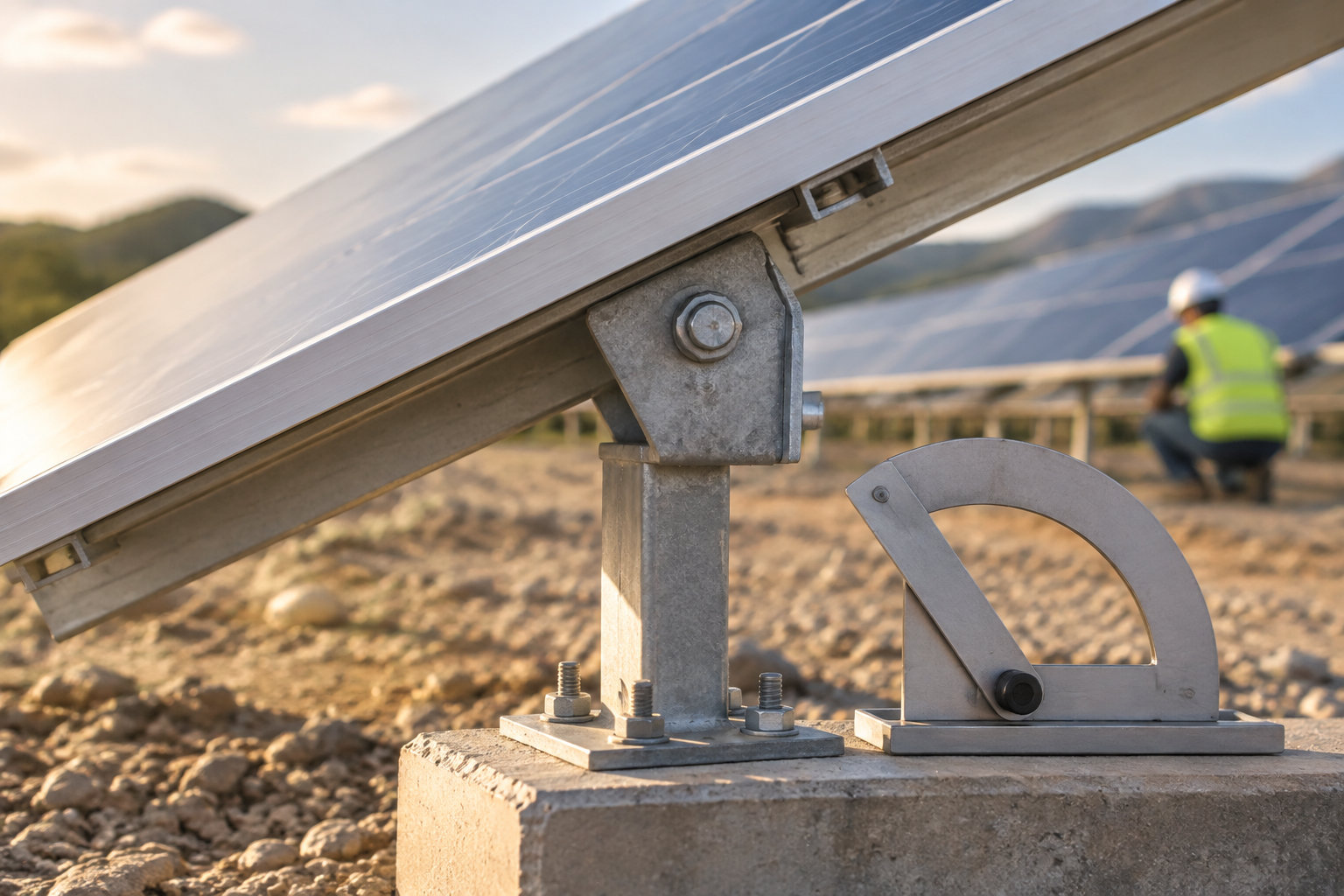
Phoenix is at about 33.4° N, so a tilt near 33° is a good start. Miami, at about 25.8° N, starts near 26°.
Both fall in the 15° to 40° range that gives the most energy over a year. Local climate and wind can still shift the best angle, so treat the latitude as a starting point.
Roof pitch is written as rise over 12: a 4/12 roof rises 4 inches for every 12 inches across. Compare your roof with these values:
4/12 is about 18.4°
6/12 is about 26.6°
8/12 is about 33.7°
If your roof falls between 18° and 34°, its tilt already suits solar production.
South wins on annual output, but east-west arrays still produce
South-facing matters more than the exact tilt. If your panels point 10° away from ideal south, annual output drops by less than 1%.
So a small error in tilt rarely justifies changing the mounting. Check the orientation first, since it has the bigger effect.
Compared with an ideal south-facing array, here is how the other setups stack up over a year.
| Criterion | Ideal south-facing | East-west | Ordinary roof, less favorable angles |
|---|---|---|---|
| Orientation | South | East and west | Often off-south |
| Annual output loss | None (reference) | 10% to 15% | Approaching 20% |
On a time-of-use rate, a west-facing array sends more power in the late afternoon, when demand peaks. PG&E’s E-TOU-C peak runs 4 p.m. to 9 p.m. Check your utility’s peak hours.
Angles matter less than direction for most rooftops
On a roof, direction matters more than a few degrees of tilt. A roof pitched at 22.5° can capture at least 95% of the solar energy available in the contiguous states, the lower 48.
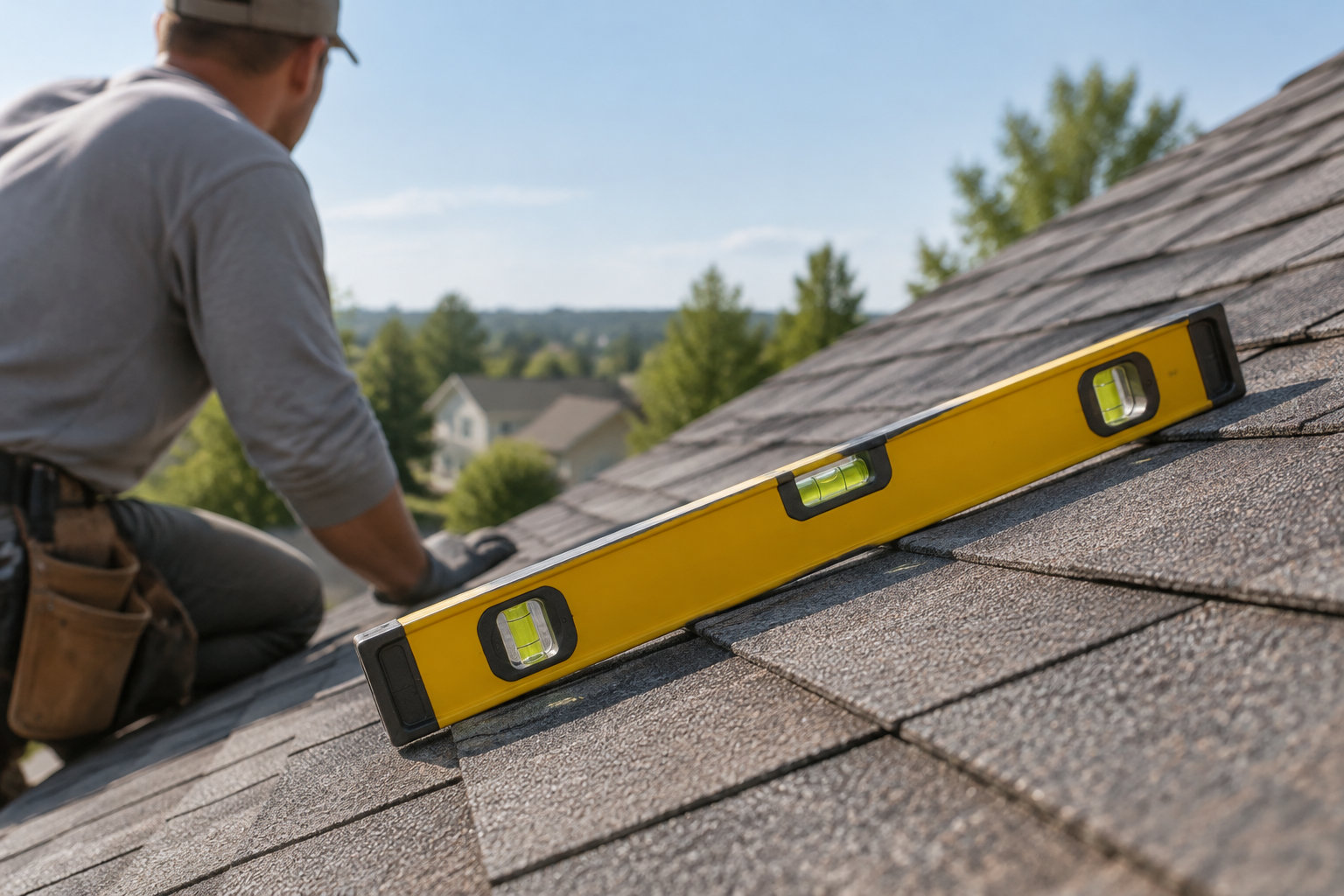
If your roof is near that pitch, you don’t need to change the angle. Check the orientation first.
If your roof faces away from the south, you have three options:
- Accept the loss if the roof is only slightly off south.
- Choose another surface: for a railing or balcony, see balcony panel output.
- Adjust the support, but only if the extra power outweighs the cost of adjustable racks.
Stand in the street, facing the roof, and read the direction on a compass app. If the slope faces south or close to it, and the pitch looks moderate, keep the existing angle.
Winter output calls for steeper tilts, cloudy regions for flatter ones
If winter production matters most to you, choose a tilt of 45° to 60°. That is steeper than the latitude of many US locations, which helps the panels catch the low winter sun.
Steeper is not free. The same angle can reduce summer output, so weigh both seasons before you choose. For tips on winter performance, see how to keep solar panels efficient in winter.
Roof and ground mounts: what you can change and what you cannot
On a pitched roof, you cannot choose the angle. Panels lying flat on the roof take its slope and direction.
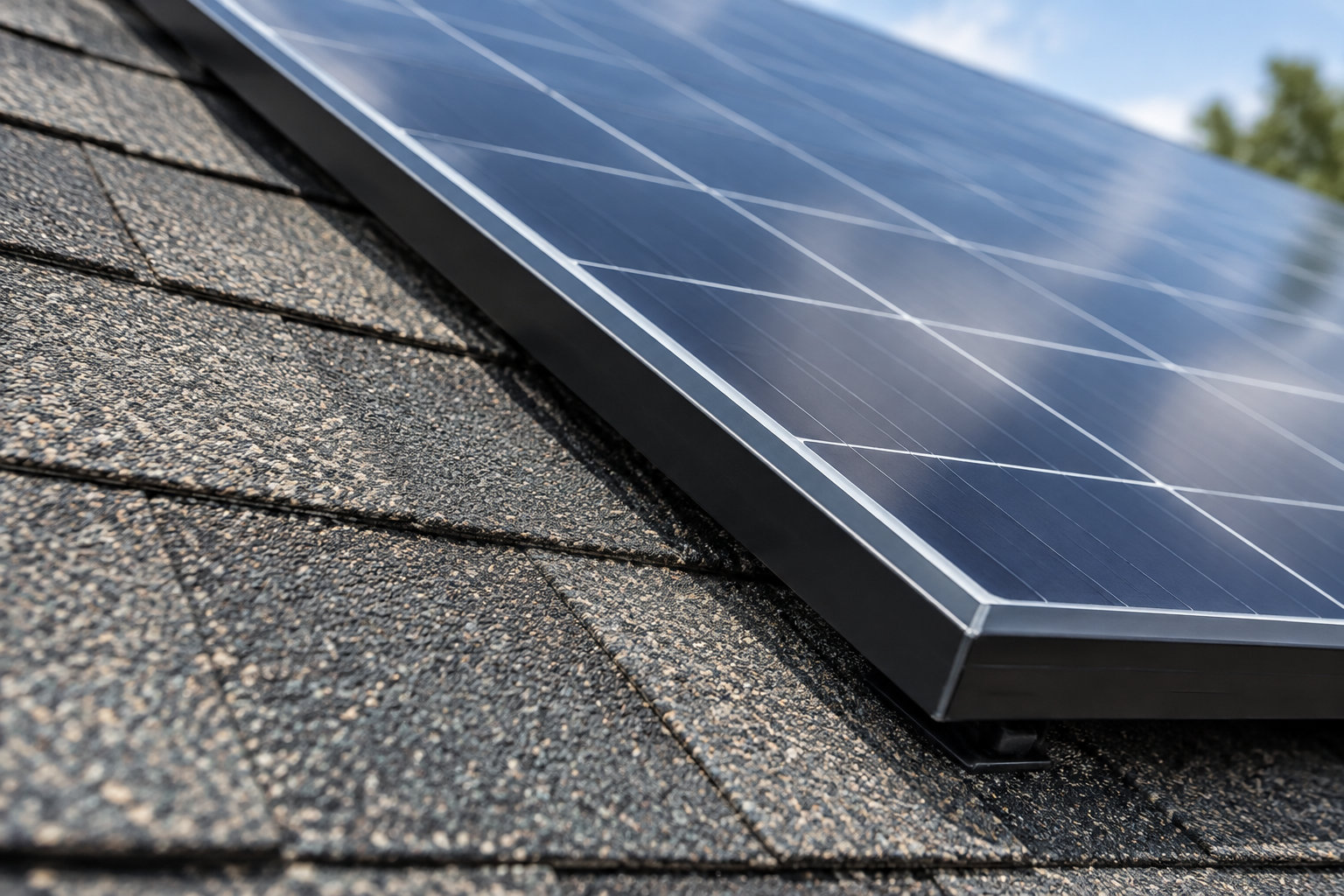
A south-facing roof sloped between 15° and 40° usually suits solar panels, and an east or west roof can also work.
Don’t give up if your roof faces another way or sits outside that range. Check its direction and slope first. A roof that is less than ideal still produces electricity, and the next part shows what you can change.
Flat roof or ground mount
Flat roof
- Panels can be tilted toward the south on frames.
- Check shade, wind, snow and the strength of the roof structure before you commit.
Ground mount
- You choose the orientation and the tilt freely, without depending on a roof slope.
- Pick a fixed frame, or a tracker that follows the sun.
- Check shade, wind, snow and the solidity of the structure.
Check your exact angle with NREL’s PVWatts estimator
PVWatts estimates how much electricity a grid-connected solar system produces. It uses hourly solar data for your location, so the results reflect your address, not a national average.
To test your own tilt and orientation, change one value at a time and compare the annual totals for each option.
To test a tilt and an orientation, change one setting at a time:
- Enter the tilt first. For a fixed system, the PVWatts default is 20°.
- Then set the orientation. 180° is south, 90° is east, and 270° is west.
- Keep the same address, then compare the annual estimates for each combination.
Compare your results
-
Note each annual estimate
Each tilt and orientation gives one annual kWh figure.
-
Compare, don’t forecast
PVWatts simulates one year, and its estimate is preliminary. Read the gap between setups, not the total.
Face fixed panels south and set the tilt near your latitude. Orientation matters more than the exact angle, so check it first, especially on a roof.
Your next step is to test your own address in PVWatts. Change one setting at a time and compare the annual totals for each option.
Frequently asked questions
Is 30 degrees a good tilt angle for solar panels in the US?
Yes. A 30° tilt falls within the 15° to 40° range that suits solar production in the contiguous United States. For a fixed system, facing the panels south matters more than the exact angle, so 30° is a sound choice.
Is it better for solar panels to face south or west?
South is the better choice for a fixed system, because it gives the highest annual output.
West produces more in the late afternoon, which can suit a rate that charges more at that hour. Over a full year, though, west gives less energy.
Does a flat solar panel lose much power compared with a tilted one?
Yes, a flat panel gives less power than one tilted toward the south, because it catches less direct sunlight. On a flat roof, frames can tilt the panels south. A low tilt also helps leaves and snow slide off.
What tilt angle is best for winter solar production?
For winter production, choose a tilt of 45° to 60°. That range sits above the 15° to 40° band that suits solar production across the contiguous states, and it steers the panels toward the lower winter sun.