Did you know that an average van fridge consumes about 40Ah daily, potentially draining a standard AGM battery in less than 24 hours? We often underestimate how quickly small devices add up, leaving us in the dark just when we need power most.
Calculating solar power needs for van life can feel overwhelming when you are balancing wattages, battery depths, and weather variables. We are here to simplify this process by helping you conduct a precise energy audit and size your system for total off-grid independence.
- Calculating Solar Power Needs for Van Life: The Energy Audit
- How Many Days of Autonomy Does Your Battery Really Need?
- 3 Factors That Kill Solar Panel Efficiency in Winter
- Safety Hardware and Alternative Charging Sources
Calculating Solar Power Needs for Van Life: The Energy Audit
A precise van solar setup requires totaling daily Watt-hours (Wh) from appliances like 12V fridges (approx. 40Ah/day) and fans. Systems generally need 200W-400W of panels and 200Ah of lithium storage to ensure three days of autonomy during cloudy weather, starting with a detailed inventory of every electrical load.
Building Your Daily Electrical Load Inventory
Start by listing every device. Note the wattage for 12V lights and 120V laptops. This inventory is the foundation for your entire off-grid power system.
Estimate daily runtimes for each item. Fans might run ten hours, while water pumps only run minutes. Group these by frequency. Heavy consumers like induction stoves need special attention here. This helps identify where you can save energy later.
- 12V Compressor Fridge
- LED Lighting
- MaxxAir Fan
- Water Pump
- Laptop Charger
- Phone/Tablet
Converting Device Specs Into Daily Energy Totals
Multiply the wattage by the hours used. This gives you the daily Watt-hours per device. Be honest about your actual usage patterns to avoid power shortages later.
Add a 20% safety buffer. This covers phantom loads and inverter standby draw. Convert the final Watt-hour total to Amp-hours by dividing by 12. Most van batteries are rated in Amp-hours. This conversion makes battery shopping much easier.
“An accurate energy audit is the only way to prevent ‘solar anxiety’ and ensure your batteries stay healthy throughout the winter months.”
How Many Days of Autonomy Does Your Battery Really Need?
Once you know your daily consumption, you must decide how much energy to store for those inevitable rainy days when the sun disappears.
Understanding Depth of Discharge and Usable Capacity
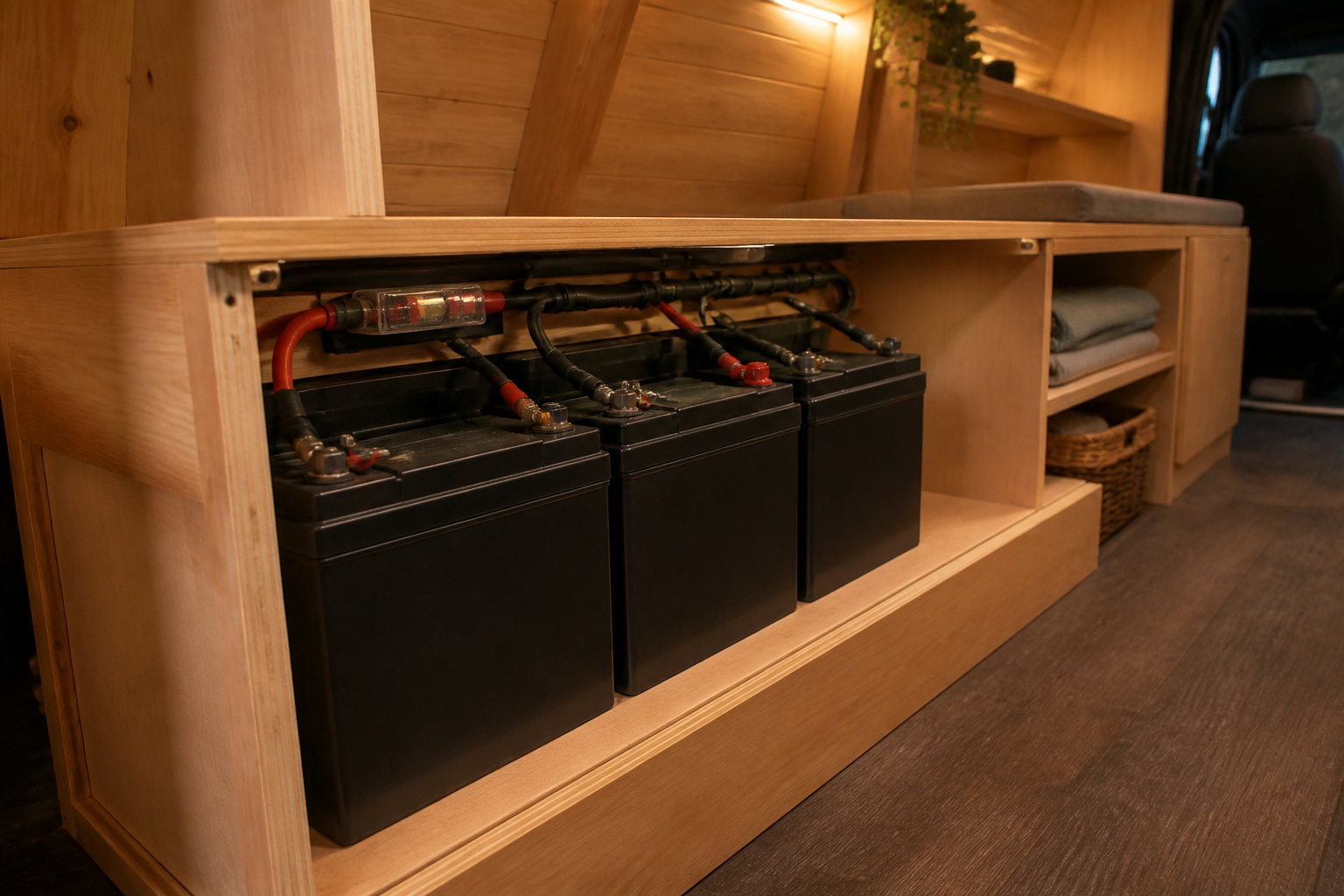
Theoretical capacity is often misleading. Lead-acid batteries should never drop below 50% charge. Doing so causes permanent internal damage. This means a 100Ah AGM battery only provides 50Ah of usable energy. Always calculate your needs based on this 50% limit.
Never discharge AGM or Lead-Acid batteries below 50% to avoid permanent internal damage and reduced lifespan.
Choosing the right solar panel battery is vital. We recommend sizing your storage to match your specific discharge threshold. This simple step protects your investment long-term.
Choosing Between Lithium and AGM for Solar Storage
LiFePO4 batteries allow for 80% to 100% discharge. They are significantly lighter than AGM counterparts. This weight saving is vital for smaller van builds and fuel efficiency.
When comparing lithium vs lead-acid solar storage, lithium wins on performance. We see many travelers switching for the faster charging speeds.
Lithium costs more upfront. However, the longer cycle life offers better value over several years.
Factoring in Safety Margins for Cloudy Weather
Design for three days of autonomy. This protects you during heavy rain or storms. Balance this reserve against your vehicle’s physical space. Too much weight can ruin your van’s handling.
| Battery Type | Usable Capacity | Weight | Lifespan | Best For |
|---|---|---|---|---|
| AGM | 50% | Heavy | 500-1000 Cycles | Budget builds |
| Lithium (LiFePO4) | 90% | Light | 3000+ Cycles | Full-time van life |
| Gel | 50-100% | Heavy | 800-1500 Cycles | Solar demands |
Monitor your levels daily. Good habits prevent unexpected blackouts in remote areas.
3 Factors That Kill Solar Panel Efficiency in Winter
Even the best battery bank is useless if your panels can’t harvest enough energy from the weak winter sun.
Adjusting for Geographic Location and Seasonal Shifts
Peak sun hours vary wildly by region. Arizona offers much more energy than Washington in December. Shorter days and lower sun angles significantly reduce your total daily wattage production.
Latitude dictates your potential harvest. Choosing between flexible vs rigid solar panels for vans impacts how you manage these seasonal shifts. Rigid panels often allow for easier tilting mechanisms.
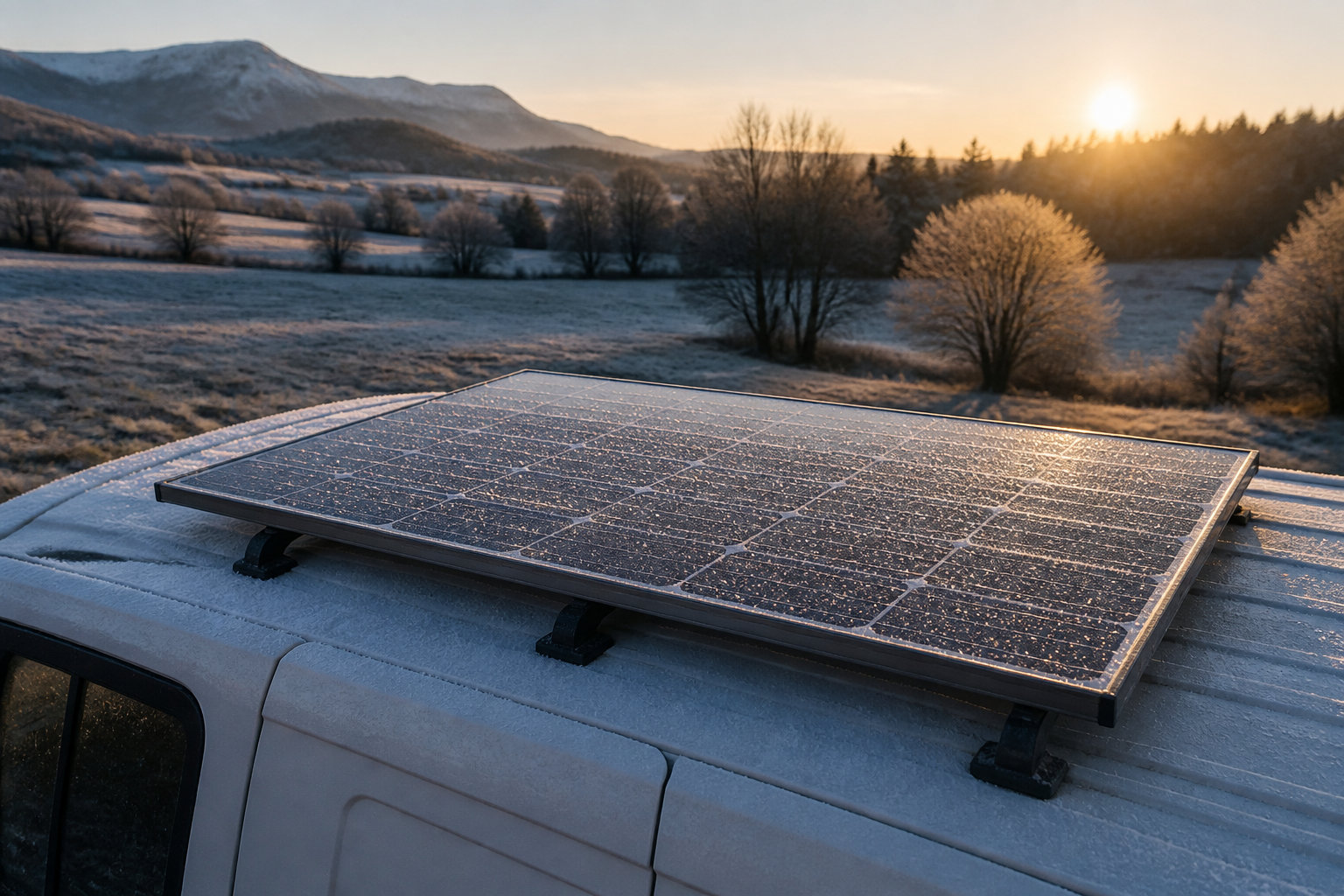
Tilt your panels toward the sun. This simple adjustment can boost winter efficiency by over 20 percent.
Tilting solar panels toward the sun during winter months can increase energy harvest by over 20% compared to flat mounting.
Why MPPT Controllers Outperform PWM Alternatives
MPPT controllers are vastly superior to PWM hardware. They track the maximum power point of your panels. This allows for efficient voltage conversion even in cold weather. You get more charging current when you need it most during the winter.
PWM controllers simply clip excess voltage. This wastes potential energy. In a van, every single watt counts.
Switching from PWM to MPPT can increase your solar harvest by up to 30% in cold, overcast conditions.
Cold temperatures actually improve panel efficiency. An MPPT controller captures this increased voltage instead of discarding it. It is the smartest upgrade for anyone calculating solar power needs for van life in harsh climates.
Safety Hardware and Alternative Charging Sources
Relying solely on the sun is risky, so you should integrate secondary charging methods and robust safety gear.
Combining Alternator Charging with Solar Input
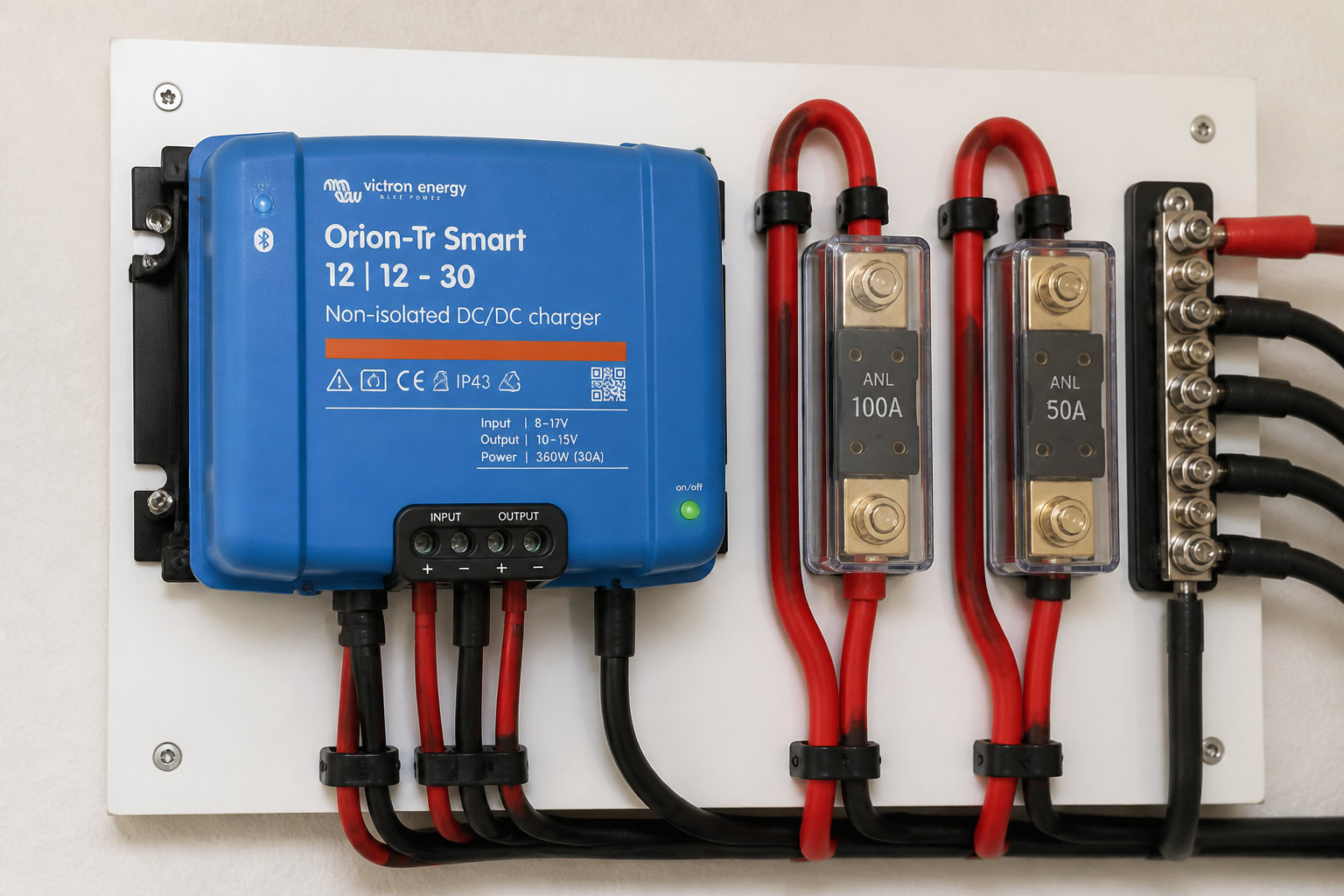
A DC-to-DC charger uses your van’s alternator. It charges your house batteries while you drive. This is the perfect backup for long stretches of rainy or cloudy weather.
Integrating a DC-to-DC charger allows the alternator to charge house batteries while driving, serving as a vital backup when solar production is low.
We know that choosing an RV solar panel kit is just the start. Adding a booster ensures your LiFePO4 or AGM batteries reach a 100% charge efficiently. It protects your alternator from overheating too.
Shore power integration is also smart. It allows for fast charging at campsites or using a generator. This completes your energy independence.
Essential Safety Components and Wire Sizing
Proper wire sizing prevents dangerous voltage drops. Use thick cables for high-current paths between batteries and inverters. Always place fuses as close to the power source as physically possible.
- ANL Fuses for main lines
- Circuit breakers for solar arrays
- Busbars for clean connections
- Heat-shrink tubing for insulation
Don’t overlook the technical details. Following safety standards prevents fires. High-quality busbars and insulation keep your mobile home secure and reliable for years.
Mastering calculating solar power needs for van life ensures total off-grid freedom. Start with a precise energy audit, select a high-capacity battery with a safety buffer, and invest in an efficient MPPT controller. Act now to build your reliable power system and enjoy endless horizons with complete peace of mind. Your adventure deserves a limitless energy supply.
FAQ
How do I calculate the daily electrical load for my van?
To get an accurate picture of your needs, start by listing every single device you plan to use, from LED lighting to your 12V fridge. You need to multiply the wattage of each appliance by the estimated hours it will run daily to find the total Watt-hours (Wh). If you only have the Amp rating, simply multiply Amps by Volts (usually 12V) to get the Watts.
We always recommend adding a 20% safety buffer to this total. This accounts for energy lost through your inverter and ensures you aren’t left in the dark if you use a little more power than expected. Once you have your total Wh, divide it by 12 to convert it into Amp-hours (Ah), which is the standard measurement for most van batteries.
Which battery type is best for off-grid van life?
The choice usually comes down to Lithium (LiFePO4) versus AGM or Gel batteries. While AGM batteries are more budget-friendly upfront, they can only be safely discharged to 50% of their capacity. In contrast, Lithium batteries allow you to use 80-90% of their energy, they are much lighter, and they can last up to 10 years, making them a fantastic long-term investment for serious travelers.
For example, if your daily consumption is 80Ah, you would need a massive 160Ah AGM battery to stay safe, whereas a single 100Ah Lithium battery would easily handle the job. We suggest choosing based on your frequency of travel and available space; Lithium is the clear winner for efficiency and weight savings.
Should I choose a PWM or an MPPT solar charge controller?
If you want to maximize your energy harvest, an MPPT controller is the way to go. It is roughly 30% more efficient than a PWM controller because it constantly adjusts voltage and current to find the “maximum power point.” This is especially vital in cloudy weather or during winter when every watt counts.
PWM controllers are simpler and cheaper, but they are best suited for very small systems under 150W. For a modern van setup, an MPPT controller allows you to use higher voltage panels and ensures your batteries charge faster and more effectively, giving you much more freedom off-grid.
How can I stay powered up during several days of rain?
Relying on the sun alone can be risky, so we suggest building in some redundancy. A DC-to-DC charger is a game-changer; it taps into your van’s alternator to charge your house batteries while you drive. This ensures you arrive at your next camp with a full charge, regardless of the weather.
Additionally, you should size your battery bank for at least two to three days of autonomy. By combining solar panels with alternator charging and perhaps a shore power connection for campsites, you create a robust system that keeps your fridge running and your devices charged no matter what the sky looks like.