South-facing balconies can capture over eight hours of direct sunlight daily during the summer, yet even a small railing shadow can slash your energy production by 15% or more. Many apartment dwellers invest in solar kits only to find that neighboring buildings or seasonal shifts leave their panels in the dark for half the day.
Success starts with measuring sun exposure for balcony solar to ensure your setup actually pays off. We will show you how to map shading patterns and use simple tools to guarantee your transition to energy autonomy is both smooth and highly profitable.
- Measuring Sun Exposure for Balcony Solar: The First Step to Energy Autonomy
- 3 Manual Techniques for Low-Cost Sun Tracking
- Which Mobile Apps Provide the Most Accurate Sun Path Simulation?
- Calculating Your Potential Energy Output From Raw Data
Measuring Sun Exposure for Balcony Solar: The First Step to Energy Autonomy
South-facing balconies yield 4-5 peak sun hours daily, while glass railings reduce efficiency by 15%. Accurate mapping prevents wasted investment by identifying specific shading from neighboring structures and seasonal shifts in light quality.
The quality of this light depends heavily on whether rays hit the cells directly or scatter through the atmosphere.
Direct vs. Diffuse Light: Why It Matters for Your Yield
Photovoltaic cells thrive on direct sunlight for maximum production. However, clouds scatter these rays, creating diffuse light that keeps systems running at a lower capacity. It is a vital distinction for yield.
Balcony glass often creates reflections that trick sensors. Unfortunately, this specific glare does not translate into usable energy for most standard panels. To judge light quality on gray days, look for shadows. If objects cast a distinct shadow, your panels are still receiving decent irradiance.
Peak Sun Hours vs. Total Daylight: The Efficiency Gap
We define peak sun hours as a unit representing 1,000 watts per square meter. It differs from total daylight duration significantly. Weak morning light rarely provides enough voltage to trigger the inverter effectively.
Twelve hours of daylight never equals twelve hours of full power. Energy production only hits its stride when the sun is perfectly perpendicular to your setup.
A balcony receiving six hours of partial shade often produces less energy than a spot with three true peak sun hours.
A standardized unit representing 1,000 watts per square meter of solar irradiance, used to calculate real-world energy production potential.
South vs. East/West: Choosing the Right Orientation
South remains the gold standard for total annual yield. However, East or West balconies offer valuable peaks during morning or late afternoon hours, depending on your consumption habits.
Adjusting the tilt can help fix poor orientations. While vertical mounting is a common balcony choice, it is generally less efficient than using an angled bracket system. Before you drill, make sure to install balcony solar panels safely to protect your hardware and your neighbors. Proper mounting is the foundation of autonomy.
3 Manual Techniques for Low-Cost Sun Tracking
While understanding light theory is great, you need boots-on-the-ground data to see how your specific balcony behaves throughout the day.
Sketching Shading Patterns Using the Sun Diary Method
Record shadow positions at fixed intervals. Use a simple sun diary to stay organized. Mark where shadows fall every two hours.
Document railing shadows, as these are common obstructions. Track these variables for Simple ways to measure sun exposure for balcony solar:
- Time of day
- Shadow length
- Obstruction source
- Weather conditions
Using Time-Lapse Photography to Track Daily Shadow Movement
Set up a smartphone for a visual log. Use a tripod or tape the phone to the glass. Set the interval to ten minutes. This reveals hidden obstructions like distant trees.
Overlay photos to see the worst-case shading scenario. Identify “dead zones” where no sun reaches.
Accounting for Seasonal Sun Path Variations Without Software
Use a rule of thumb for winter angles. The sun sits lower in December. This causes longer shadows from nearby buildings.
Check local weather history. Use it to predict cloud cover patterns during winter months.
Consider ground mounted solar kits for small yards to bypass balcony shading limits.
Which Mobile Apps Provide the Most Accurate Sun Path Simulation?
If manual tracking feels too tedious, your smartphone can simulate an entire year of sun movement in just a few seconds.
Comparing Free vs. Paid Simulation Software for Balcony Users
Evaluate basic compass apps carefully. Many free tools lack LIDAR support. They often ignore the specific height of your balcony.
Paid apps offer detailed shading reports. We believe your choice depends on your technical goals and local obstructions.
| App Type | Key Feature | Precision | Price |
|---|---|---|---|
| Basic Compass | GPS sync | Low | Free |
| AR Sun Tracker | Solstice arcs | Medium | Paid |
| Professional 3D Mapper | Shading analysis | High | Paid |
Adjusting for Latitude and Longitude in 3D Visualizations
GPS calibration is vital for accuracy. Small errors in coordinates cause massive shading miscalculations. Always input your floor height manually. Most apps default to ground level, which fails apartment dwellers.
Avoid generic regional data. Your micro-climate and surrounding architecture are unique to your balcony. Precision prevents wasted investments.
Interpreting AR Simulations to Place Panels Between Railings
Use Augmented Reality to see the sun live. Point your camera skyward. The app overlays solstice arcs directly on your view.
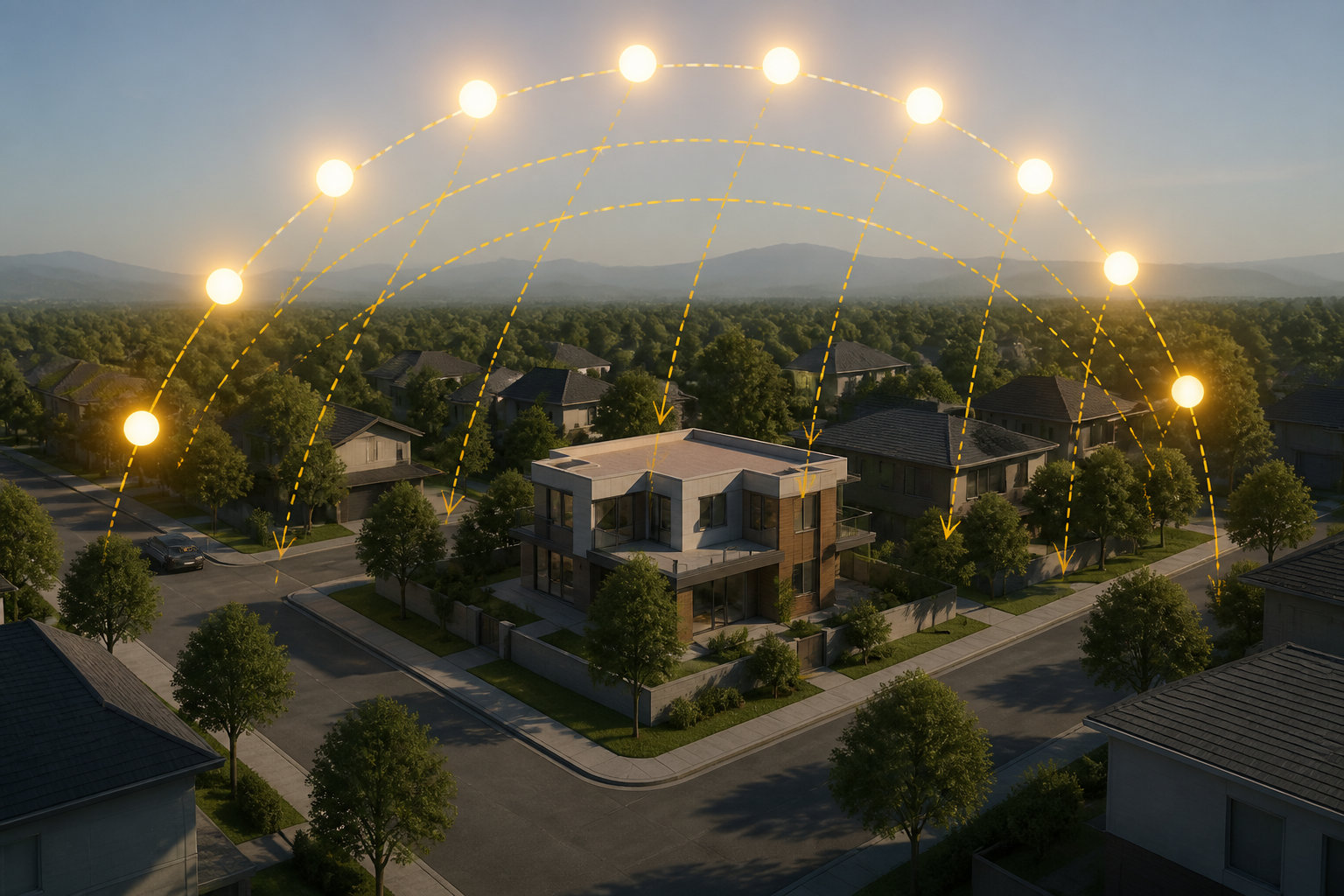
Identify the best spots. Avoid glass reflections or railing shadows. Every inch of light counts for efficiency.
Actually, understanding how plug and play solar panels work helps align these AR projections. Simple ways to measure sun exposure for balcony solar start with this visual check.
Calculating Your Potential Energy Output From Raw Data
Once you have gathered your sun hours and shading data, it is time to crunch the numbers to see if the investment pays off.
Converting Measured Sun Hours into Daily Kilowatt-Hour Estimates
Multiply your peak sun hours by the panel’s rated power. Subtract 20% for system losses, including heat and micro-inverter inefficiency. This gives a realistic daily kWh estimate.
For example, a 400W panel in partial sun might only produce 1.2 kWh. This suffices for a laptop and lights.
Never base your budget on theoretical maximums; always use the measured shading data to avoid disappointment during winter months.
Troubleshooting Common Shading Issues to Improve Balcony Yield
Use bypass diodes to help when parts of the panel are shaded. Without them, one small shadow can kill the entire output instantly.
Keep panels clean, as city dust and bird droppings significantly reduce light absorption over time.
Consider adding a solar panel battery to store energy. This simple step ensures your balcony setup remains efficient even after sunset.
Mastering measuring sun exposure for balcony solar ensures you capture every peak sun hour while avoiding costly shading errors. By tracking shadow patterns and using AR simulation tools, you can accurately predict your energy yield and secure a faster ROI. Start mapping your balcony today to transform sunlight into immediate savings and energy autonomy.
FAQ
How can I accurately track shadow patterns on my balcony without expensive gear?
You can easily master your environment by using the sun diary method. Simply place a fixed object on your balcony and record the position and length of its shadow at regular intervals throughout the day. This low-cost technique helps you visualize exactly how light moves across your space.
By marking these shadows every two hours, you identify the specific “dead zones” caused by railings or neighboring buildings. This hands-on data ensures you place your panels in the most productive spots, transforming a simple observation into a professional-grade energy strategy. ☀️
Are mobile apps effective for simulating sun paths on an apartment balcony?
Absolutely! Modern smartphone apps like Shadowmap or Sun Tracker AR allow you to visualize a full year of solar movement in seconds. These tools use Augmented Reality to overlay the sun’s trajectory directly onto your camera view, showing you exactly where the light will hit during different seasons.
We recommend using these simulations to account for floor height and surrounding architecture, which generic data often misses. Whether you use a free version for quick checks or a professional 3D mapper for detailed shading reports, these apps take the guesswork out of your solar setup. 📱
How do I calculate my potential energy yield from sun hour measurements?
To estimate your daily production, multiply your measured peak sun hours by the rated wattage of your solar panel. However, to stay realistic, you should subtract about 20% for system losses caused by heat and inverter inefficiency. This gives you a dependable kilowatt-hour estimate for your daily needs.
For example, a 400W panel in partial sun might generate around 1.2 kWh daily, perfect for powering a laptop and lighting. Always base your plans on these real-world measurements rather than theoretical maximums to ensure your energy autonomy remains reliable all year round. ⚡
Can I improve my balcony solar output if I have partial shading issues?
Yes, you can definitely fight back against shading! Utilizing hardware solutions like bypass diodes is essential, as they prevent a small shadow on one corner from shutting down the entire panel’s output. This technology ensures that the unshaded parts of your kit keep producing power efficiently.
Additionally, keeping your panels clean from city dust and debris is a simple yet powerful way to maintain high light absorption. By combining smart placement with regular maintenance, you maximize every ray of light that reaches your balcony. 🛠️