Solar panels actually generate more voltage in cold weather because silicon conductivity improves as temperatures drop, making winter a surprisingly productive season. But how do you maintain peak solar panel kit efficiency in winter when the sun sits low and snow begins to accumulate?
We often struggle with significant power drops just when we need energy the most for heating and lighting. This guide breaks down the tactical adjustments and maintenance steps you need to take to protect your hardware and keep your batteries fully charged until spring. We will help you optimize your setup for the harshest conditions.
- Why Solar Panel Kit Efficiency in Winter Improves With Cold Temperatures ❄️
- 3 Adjustments for Low-Angle Winter Sunlight 📐
- How to Clear Snow Without Damaging Your Hardware? 🧹
- Battery Protection and Storage Strategies for Freezing Weather 🔋
Why Solar Panel Kit Efficiency in Winter Improves With Cold Temperatures ❄️
Solar panels generate more voltage in cold weather because silicon conductivity improves as temperatures drop. Snow cover further boosts output by reflecting light via the albedo effect, especially when using bifacial modules.
Learning how to maintain solar panel kit efficiency in winter reveals that cold air is a performance catalyst. While daylight is shorter, photovoltaic cells process light with higher precision when chilled.
The Cold Temperature Coefficient Advantage
Silicon cells experience less electron friction in the cold. This physical state reduces electrical resistance significantly. It allows for a smoother flow of energy.
Chilled environments prevent heat-induced energy loss common in summer. High voltage levels translate to better conversion rates during winter. Physics simply favors the cold.
Heat degrades PV cell efficiency over time. Cold air keeps hardware within its most productive thermal range. You get more energy from every captured photon.
“While it seems counterintuitive, solar panels are electronic devices that perform significantly better in crisp, cold air than in sweltering summer heat due to reduced internal resistance.”
Albedo Effect and Bifacial Panel Gains
Snow acts as a mirror for sunlight, known as the albedo effect. It bounces photons back toward the installation. This creates a secondary energy source often missed during winter.
Bifacial modules harvest energy from both sides simultaneously. This dual-sided absorption maximizes production in snowy regions, outperforming flexible vs rigid solar panels for vans in fixed winter setups.
Standard panels only capture direct overhead rays. They lose the extra energy provided by ground reflection and white snow surfaces.
3 Adjustments for Low-Angle Winter Sunlight 📐
While temperature physics work in your favor, the sun’s position in the sky requires a more hands-on tactical approach to maintain peak performance.
Steeping the Tilt Angle for Low-Horizon Sun
The winter sun sits much lower on the horizon. You must adjust your array to a steeper 60-degree angle. This ensures rays hit the glass at a perpendicular orientation.
A 60-degree winter tilt can increase production by 5-10%, and up to 30% in optimal conditions compared to flat summer angles.
Manual adjustments outperform fixed summer angles during the solstice. A steep tilt also helps snow slide off naturally. Gravity becomes a maintenance ally when the glass faces the ground more directly.
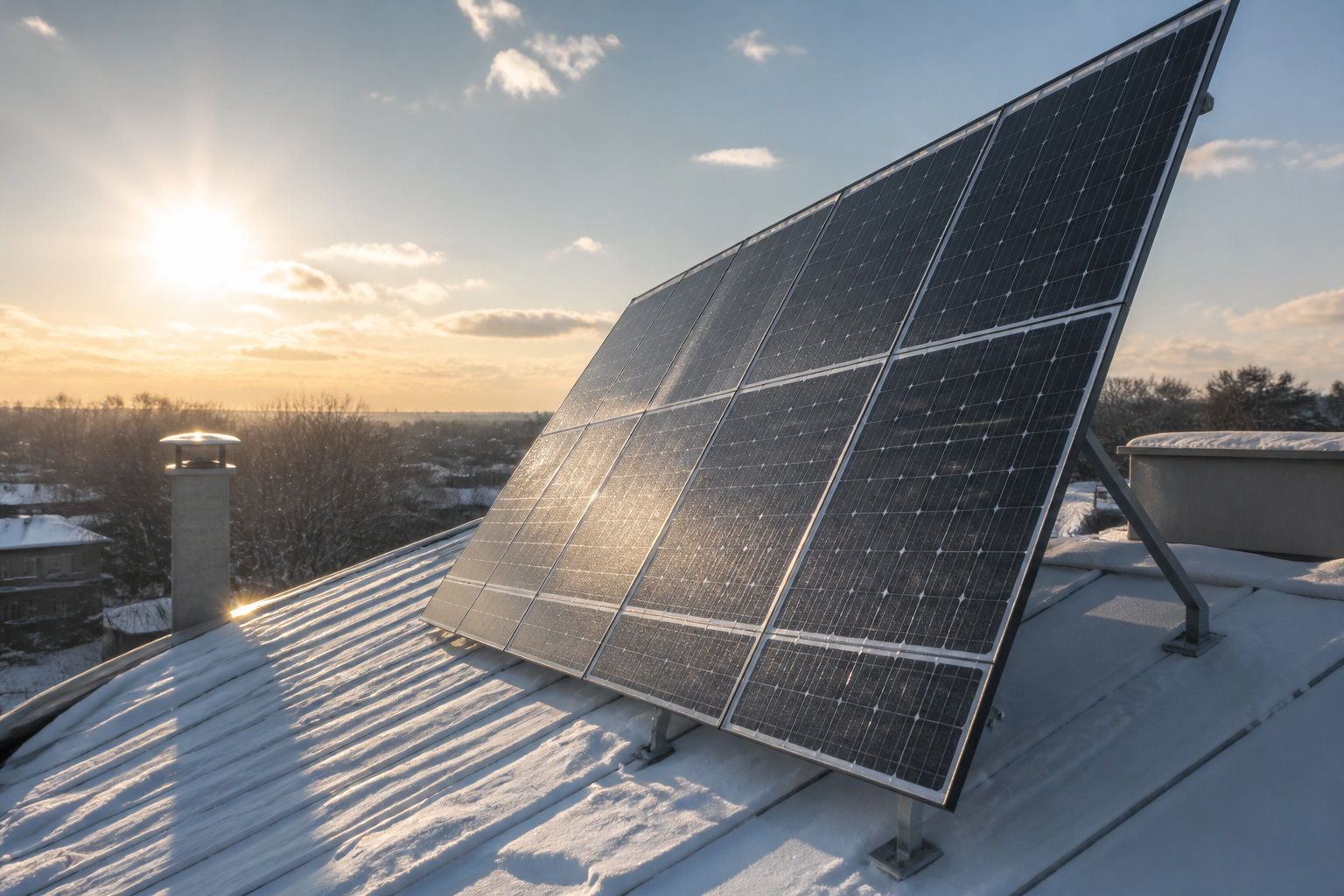
Flat panels lose massive amounts of potential energy in winter. Proper orientation can increase daily yields by over twenty percent in northern latitudes for your RV solar panel kit.
Shadow Management for Longer Winter Silhouettes
Winter shadows stretch much further than summer ones. Even distant trees can suddenly block your solar cells for hours daily. How to maintain solar panel kit efficiency in winter starts with clear sightlines.
Identifying these long silhouettes is vital for off-grid success. You might need to prune specific branches or relocate panels. Seasonal shade patterns are the silent killers of winter energy production.
Use a sun-tracking app to map these obstacles. Small obstructions cause large voltage drops in series-connected strings. Keeping the path clear ensures consistent charging even during short December days.
How to Clear Snow Without Damaging Your Hardware? 🧹
Beyond positioning, physical maintenance becomes the daily priority when heavy snowfall threatens to bury your energy production entirely.
Safe Snow Removal Tools and Soft Brooms
Use specialized roof rakes equipped with rubber bumpers. These tools prevent direct contact between metal and glass. A long-reach soft-bristle broom is also an excellent choice for light snow.
Avoid metal shovels at all costs. They scratch tempered glass immediately. Damaged surfaces reduce light transmission and can lead to micro-cracks in the underlying silicon cells.
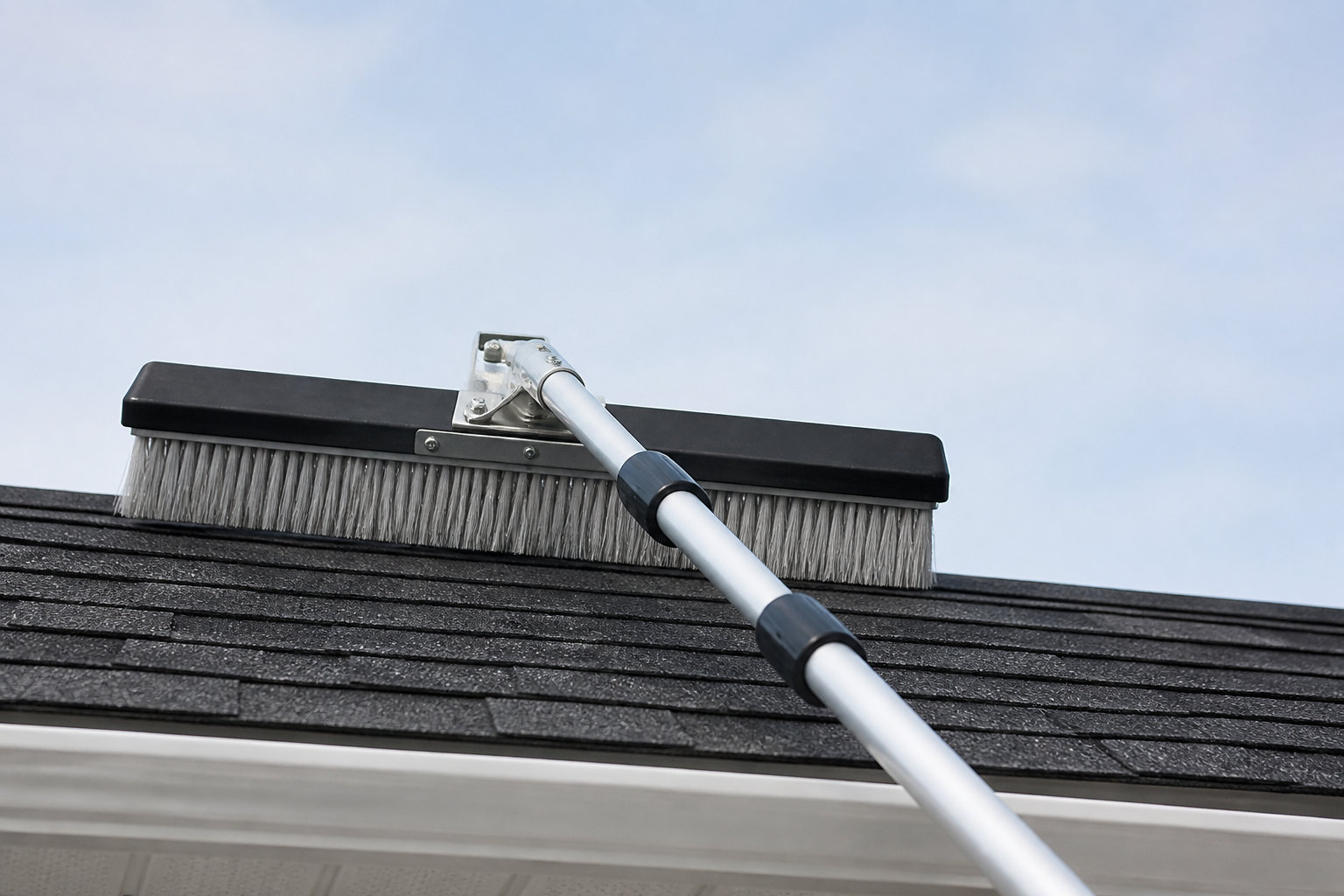
Work from the ground for safety. Never lean ladders against the modules. Gentle sweeping motions are enough to clear the surface and restart the charging process effectively.
- Roof rake with rubber edge
- Soft-bristle telescoping broom
- Specialized solar squeegee
- Leaf blower for light dustings
Preventing Thermal Stress During Ice Clearing
Never pour hot water on frozen panels. The extreme temperature difference causes thermal shock. This shatters glass instantly, rendering hardware useless and voiding warranties.
Never use hot water or metal shovels. Avoid chemical de-icers which cause corrosion and leave light-blocking residue.
Chemical de-icers corrode aluminum frames and seals. These substances leave films that block sunlight. Knowing how to maintain solar panel kit efficiency in winter means relying on mechanical removal. Once the top layer is gone, internal cell heat melts remaining ice naturally.
Battery Protection and Storage Strategies for Freezing Weather 🔋
Even if your panels are clear, your energy storage system faces its own set of biological and chemical challenges in the deep freeze.
Insulating Battery Banks Against Capacity Loss
Lithium batteries lose significant capacity below freezing. Chemical reactions slow down in the cold. You might see a thirty percent drop in available power during a typical winter night.
Use insulated battery wraps to retain internal heat. A climate-controlled enclosure is the gold standard for off-grid setups. Keeping the bank above 40 degrees Fahrenheit ensures reliable discharge and charging.

Lead-acid batteries also suffer but are slightly more resilient to cold. However, they must stay fully charged to prevent freezing.
| Battery Type | Freezing Performance | Charging Risk | Insulation |
|---|---|---|---|
| Lithium (LiFePO4) | 30% Capacity loss | High (< 0°C) | Heated Box |
| AGM Lead-Acid | Moderate loss | Low | Wraps |
| Flooded Lead-Acid | High risk | Moderate | Thermal Box |
MPPT Charge Controllers for Low-Light Harvesting
MPPT controllers are vital for winter solar success. They track the maximum power point constantly. This technology extracts every possible watt during gray, overcast afternoons when light is scarce.
Standard PWM controllers waste the high voltage generated by cold panels. MPPT converts that extra voltage into usable charging current. This efficiency boost is often the difference between a full battery and a blackout.
Upgrade to MPPT immediately for winter. The return on investment is undeniable in low-light climates, especially when comparing lithium vs lead-acid solar storage needs.
Maximize your winter energy by tilting panels to 60 degrees, clearing snow with soft tools, and insulating batteries to prevent capacity loss. These simple adjustments ensure your solar panel kit efficiency in winter remains peak despite the cold. Secure your off-grid independence today for a bright, powered future.
FAQ
Do solar panels actually work during the cold winter months?
Absolutely! Solar panels are electronic devices that thrive in crisp, cold air. Lower temperatures actually reduce internal electrical resistance, allowing silicon cells to conduct energy more efficiently than they do during sweltering summer days. While the daylight hours are shorter, the cold temperature coefficient ensures that each ray of light captured is converted into power with peak effectiveness.
How should I adjust the angle of my solar kit for the winter sun?
Since the sun sits much lower on the horizon during winter, you need to steepen your panel tilt to approximately 60 degrees. This adjustment ensures sunlight hits the glass at a perpendicular angle, maximizing energy absorption. A steeper angle also provides a mechanical advantage by allowing gravity to help snow and debris slide off the surface naturally, keeping your production levels high.
What is the safest way to remove snow from my solar panels?
Safety and hardware integrity are your top priorities. We recommend using a soft-bristle telescoping broom or a specialized roof rake with rubber bumpers to gently clear the surface from the ground. Avoid metal shovels or scrapers at all costs, as they will scratch the protective coating and permanently degrade your kit’s efficiency.
Can I use hot water to melt ice off my solar installation?
Never pour hot water on frozen panels! The extreme temperature difference causes thermal shock, which can instantly shatter the tempered glass and void your warranty. Instead, clear the loose snow and let the sun do the rest; once the dark solar cells are exposed, they naturally generate internal heat that melts remaining ice safely and effectively.
How does the snow on the ground affect my solar energy production?
Snow can actually be a secret weapon for your energy yields thanks to the albedo effect. When snow covers the ground, it acts like a massive natural mirror, reflecting sunlight back toward your panels. This is especially beneficial for bifacial modules, which harvest this reflected light through their transparent back layer to significantly boost total kilowatt-hour production.
Why is an MPPT charge controller better for winter solar setups?
Winter sunlight is often weak and overcast, making an MPPT controller essential for harvesting every possible watt. Unlike standard controllers, MPPT technology tracks the maximum power point and converts the high voltage generated by cold panels into usable charging current. This efficiency boost is frequently the deciding factor between maintaining a full battery and facing a winter blackout.
How do freezing temperatures impact my solar battery storage?
Extreme cold is tough on batteries, particularly lithium-based systems which can see a 30% drop in available capacity when temperatures plummet. To maintain reliability, we suggest using insulated battery wraps or climate-controlled enclosures. Keeping your energy storage bank above 40°F ensures consistent chemical reactions and prevents the charging risks associated with deep-freeze conditions.