The box says plug in and go, and the garage outlet looks ready for it.
Before you decide whether plug and play solar panels fit your home, know that a simple-looking kit can still strain your wiring. Here is what to check first.
Are plug and play solar panels safe with certified systems?
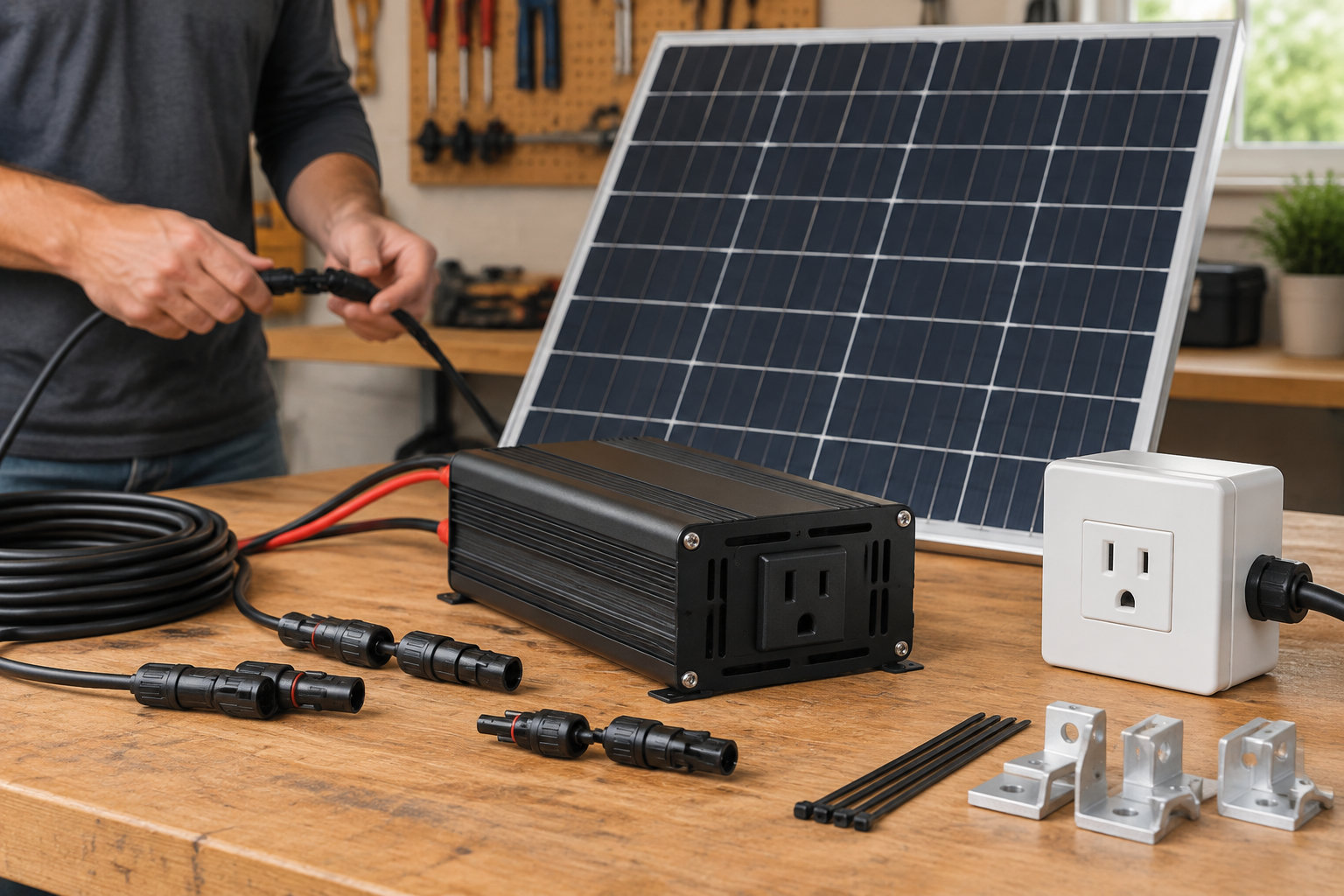
Plug and play solar can be safe, but only when the whole system has been checked for how it connects to your home, as explained in how plug and play solar panels work. A safety mark on the inverter alone isn’t enough. Look for certification that covers the panels, inverter, connectors, receptacle, controls and installation method together.
What UL 3700 certification actually covers
UL 3700 is the Outline of Investigation for interactive plug-in photovoltaic equipment and systems. It evaluates the complete plug-in setup, including connectors, receptacles, GFCI devices and overcurrent protection that support two-way current.
The inverter has its own requirement too. An inverter marked UL 1741 confirms grid compatibility and anti-islanding behavior. That’s useful. It doesn’t prove the full plug-in kit is safe on your home circuit.
How to check a product’s certification yourself
Start with the exact model number. Search it in UL Product iQ or the certifier’s database. Then match the model, inverter, plug, receptacle and configuration against the listing. A logo on a product page isn’t proof.
Check the scope before you connect anything. UL 3700 covers a complete plug-in system tied to a circuit whose connectors, receptacles, GFCI devices and overcurrent protection support two-way current. It does not approve your balcony railing or the building structure.
Look for permanent markings showing voltage, current, environmental limits, connection type and warnings. Follow the manual closely. A certified kit paired with a different cord, a generic adapter or an ordinary outlet may no longer match the evaluated setup.
Before you connect anything
- Find the exact model number and search it in UL Product iQ or the certifier’s database.
- Match the model, inverter, plug, receptacle and system configuration against the listing.
- Confirm the scope covers your circuit, including GFCI devices and overcurrent protection.
- Check the permanent markings for voltage, current, environmental limits, connection type and warnings.
- Keep the cord and adapter the kit was evaluated with, and skip any generic substitute.
Why backfeeding can overload a home circuit and raise fire risk
How the circuit gets overloaded
Backfeeding happens when utility power and solar power share the same branch circuit. The panel feeds it, and solar enters through a receptacle. The wire carries current from both sources. Depending on where the sources connect, a breaker may not detect the full current flowing through every section of wire.
Before installation, identify the breaker, the wire size, the receptacle rating and every appliance on that circuit. Include loads in other rooms that share the breaker. Kitchen, garage and laundry circuits are busy, so take extra care with them.
Don’t assume a 120-volt, 15-amp or 20-amp outlet is ready for generation. The receptacle rating describes its intended use, not approval for two-way current.
Check before you connect
- Find the breaker and confirm its rating
- Check the wire size behind that breaker
- Read the receptacle rating on the outlet
- List every appliance on the circuit, including loads in other rooms that share the breaker
Why ordinary GFCI outlets can be a problem
Standard GFCI outlets create a second risk. A GFCI, or ground-fault circuit interrupter, detects current leaving its normal path. Traditional devices were designed for one-way current. That means they may not work correctly with solar backfeed.
Never connect solar through an extension cord, power strip, splitter or improvised adapter. Each one adds loose connections, damage points and unprotected cable length. Overheating or a fault can then develop outside the system’s protection.
Don’t plug an ordinary solar panel or a generic grid-tied inverter into a wall outlet. A panel produces direct current. A generic inverter may lack touch protection, bidirectional circuit protection, approved connectors or anti-islanding behavior.
Plugging a panel or a generic inverter into a wall outlet can expose you to shock and fire. Keep solar off household receptacles.
How shock and outage protection depend on the inverter
A plug-in inverter must keep accessible plug blades and output contacts from staying energized after you disconnect it. Why does that matter? Sunlight can keep the panels producing power even after you pull the cord.
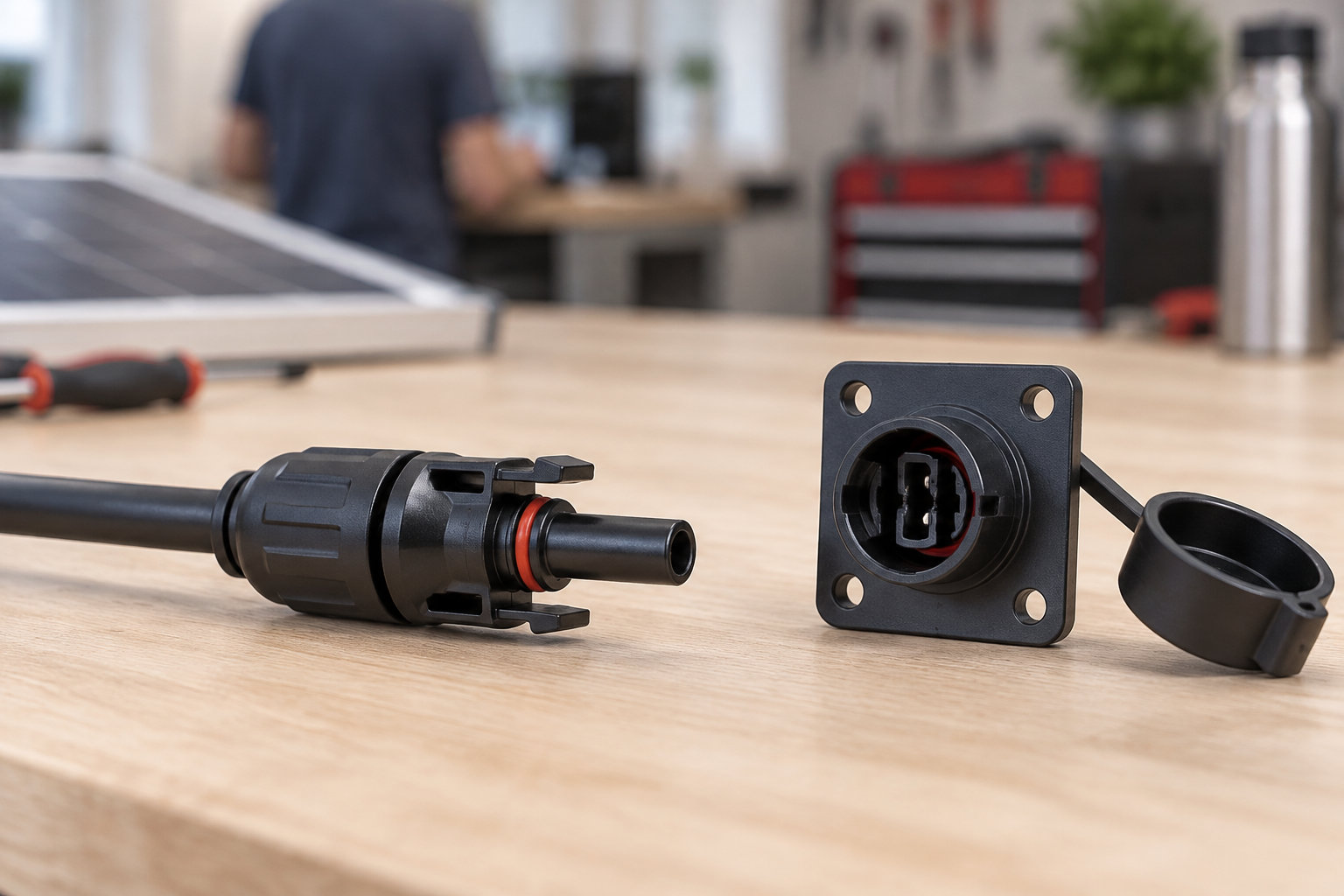
UL 3700 covers this touch hazard. Use only the plug and receptacle included in the evaluated setup. Never substitute a standard NEMA plug or generic adapter, since that may put your kit outside its listing.
To unplug safely, follow the manual, keep your hands dry and avoid damaged equipment.
If the cord, connector, panel or inverter shows heat damage, cracking, water entry or exposed conductors, stop using the system and have it assessed before you reconnect.
That automatic shutdown protects utility workers, who may assume a damaged line is de-energized. It also means plug-in solar won’t keep your refrigerator or lights running during a blackout, even in full sun.
Utility approval and home wiring decide whether a kit can connect
Rules and permissions
U.S. requirements vary by state, utility, local authority and building type. A certified product addresses equipment safety, but it doesn’t automatically satisfy utility interconnection rules, permits, building codes or inspections.
Ask your utility what it requires before you buy. Depending on where you live, you may need:
- advance notification
- an interconnection application and signed agreement
- an inspection
- an external disconnect or a meter review
Maryland sets a specific pathway for residential portable solar systems. Systems are limited to one per electric meter and up to 1,200 watts, and the device must be certified by an NRTL.
Systems up to 391 watts are exempt from certain product-listing provisions involving building wiring or panels.
Local permits still matter whenever the installation changes wiring, panels, mounting or the building itself. Check with your city or county electrical department, especially for a new receptacle or a dedicated circuit.
Checking the home and the equipment
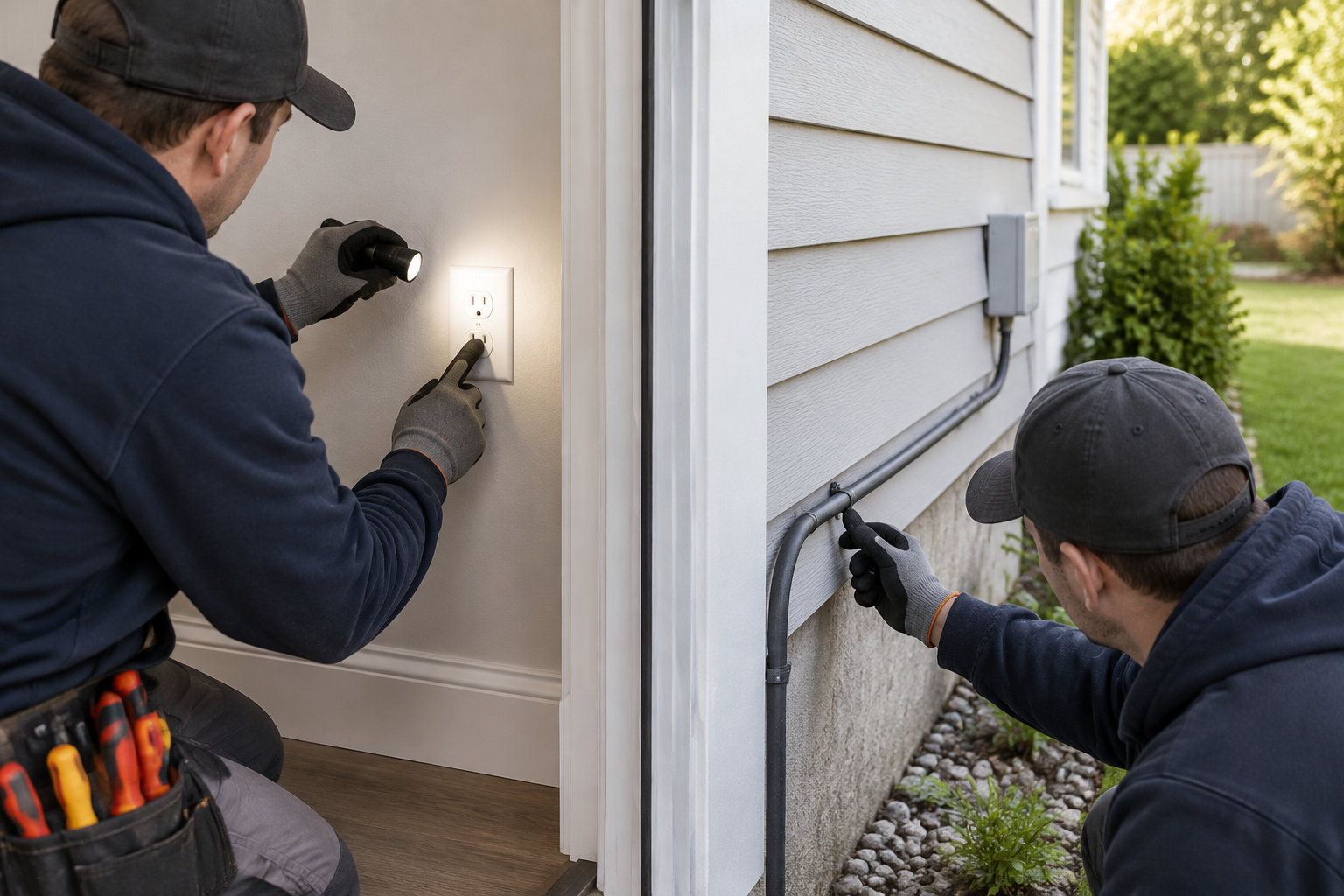
Have an electrician review the outlet and connection when the system:
- exceeds a small plug-in rating
- shares a circuit with significant loads
- needs a new receptacle
- uses a balcony or outdoor cable route
This check can catch overloaded wiring before the first sunny day.
Match every detail to the kit instructions and its evaluated configuration: panel arrangement, inverter model, connector type, receptacle, GFCI protection, mounting hardware, cable route and maximum number of units. If anything changes, check whether the listing still covers that setup.
Plug and play solar can be a reasonable addition to a home, but only once you have confirmed that the whole setup fits your wiring and your local rules. Treat the certification as the start of the check, not the end of it. The moment that matters most is the first connection, so before you buy, pick the outlet you plan to use and find out who will look at it. Your wiring needs to be ready before you connect the system.
FAQ
What are the downsides of using plug-in solar panels?
The main downsides are limited output, dependence on direct sunlight and stricter connection rules than a normal appliance.
Shade, clouds, winter daylight, panel angle and balcony obstructions can cut production. A small kit won’t power a whole house, so plan around that.
Will plug-in solar replace a rooftop solar system?
Usually not. It will offset only part of your daytime electricity use, because the panels and inverter are smaller.
It suits a small space or a household that wants a limited system without a full roof installation. A rooftop system offers more area and higher production.
Do plug-in solar panels produce electricity on cloudy days?
Yes, though output is lower. The panels still produce some power from diffuse light, but direct sunlight produces much more.
Don’t expect the wattage printed on the panel. Output shifts with cloud cover, season, shade, panel direction and temperature.