Nothing ruins a night outdoors like a CPAP that goes quiet at 3 a.m.
A bigger battery doesn’t always help. Picking a portable power station for CPAP camping starts with what your machine draws at night. Here’s how to size, connect and recharge one.
Which portable power station fits your CPAP camping setup?
Four stations cover most CPAP camping needs, and each one suits a different kind of trip:
- Best overall: BLUETTI AC70, with 768Wh, a regulated 12V outlet and a $359 station price.
- Best for lighter loads: EcoFlow RIVER 2 Pro, also 768Wh but weighing about 18.2 pounds.
- Best for several nights: Jackery Explorer 1000 v2, with 1,070Wh and a $519 station price.
- Best for rapid solar recovery: Anker SOLIX C1000 Gen 2, with 1,024Wh and up to 600W solar input.
| Station | Battery capacity | Maximum solar input | Weight | Best match |
|---|---|---|---|---|
| BLUETTI AC70 | 768Wh | 500W | 22.5lb | Several nights without heated accessories |
| EcoFlow RIVER 2 Pro | 768Wh | 220W | 18.2lb | Lower carrying weight |
| Jackery Explorer 1000 v2 | 1,070Wh | 400W | 23.8lb | Longer trips between charges |
| Anker SOLIX C1000 Gen 2 | 1,024Wh | 600W | 24.9lb | Fast daytime solar recharge |
Before you pick a station
- Add up the watt-hours your CPAP uses for one full night.
- Check the solar input rating against the hours of sun your campsite gets.
- Compare the weight with how far you will carry the station.
- Confirm whether your CPAP runs on AC power or a 12V DC outlet.
BLUETTI AC70: the flexible choice for CPAP camping
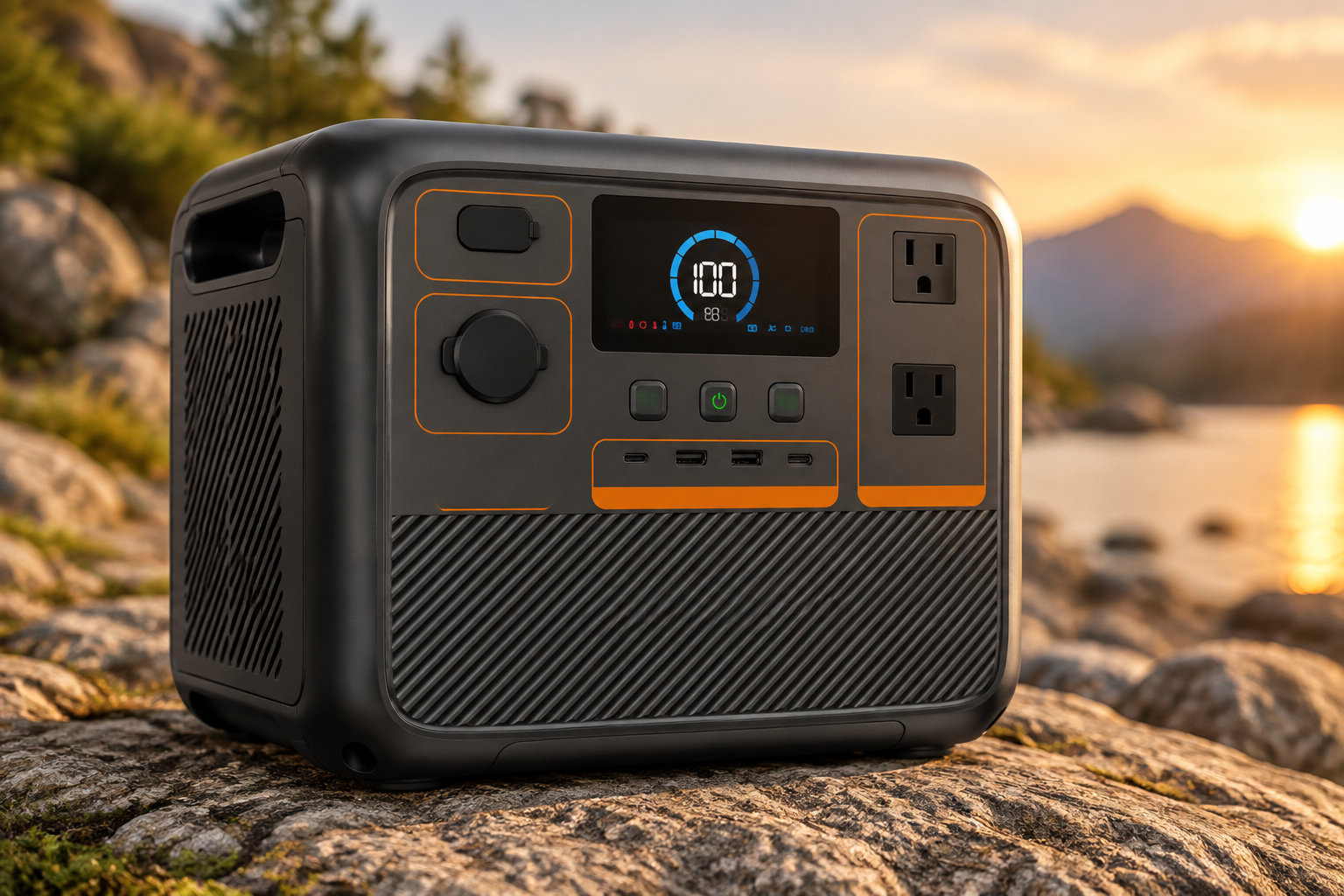
The BLUETTI AC70 stores 768Wh. It delivers 1,000W through pure sine wave AC outlets.
After inverter losses, about 85% of that capacity is usable. That is roughly 653Wh for an AC-connected CPAP. This gives you about two eight-hour nights at 40W. At 60W, you get one night with some reserve.
Its outlets include:
- Two 120V AC ports
- Two 100W USB-C ports
- One USB-A port
- One regulated 12V, 10A car outlet
Your normal CPAP power supply works on the AC route, with no changes. The 12V outlet works with a manufacturer-approved DC converter, if your machine supports one.
Check these before you plug in
- Confirm your CPAP runs on its standard AC power supply
- Check your machine’s manual for a manufacturer-approved DC converter before using the 12V outlet
- Plan around about 653Wh of usable capacity, not the full 768Wh
The station sells for $359, or $669 with a 100W SP100L solar panel. BLUETTI estimates about two hours for a full solar recharge at maximum input, under good conditions.
EcoFlow RIVER 2 Pro: the lighter 768Wh option
The EcoFlow RIVER 2 Pro measures 10.6 by 10.2 by 8.9 inches. It weighs about 18.2 pounds. That saves several pounds over the other full-size options. You will feel the difference when you carry the station from the car to your tent.
It offers an 800W pure sine wave AC output. It also has a regulated 12.6V DC output, USB-C up to 100W, and a 220W maximum solar input. The station is listed at $389. A package with a 220W panel costs $569.
Jackery Explorer 1000 v2: the largest reserve
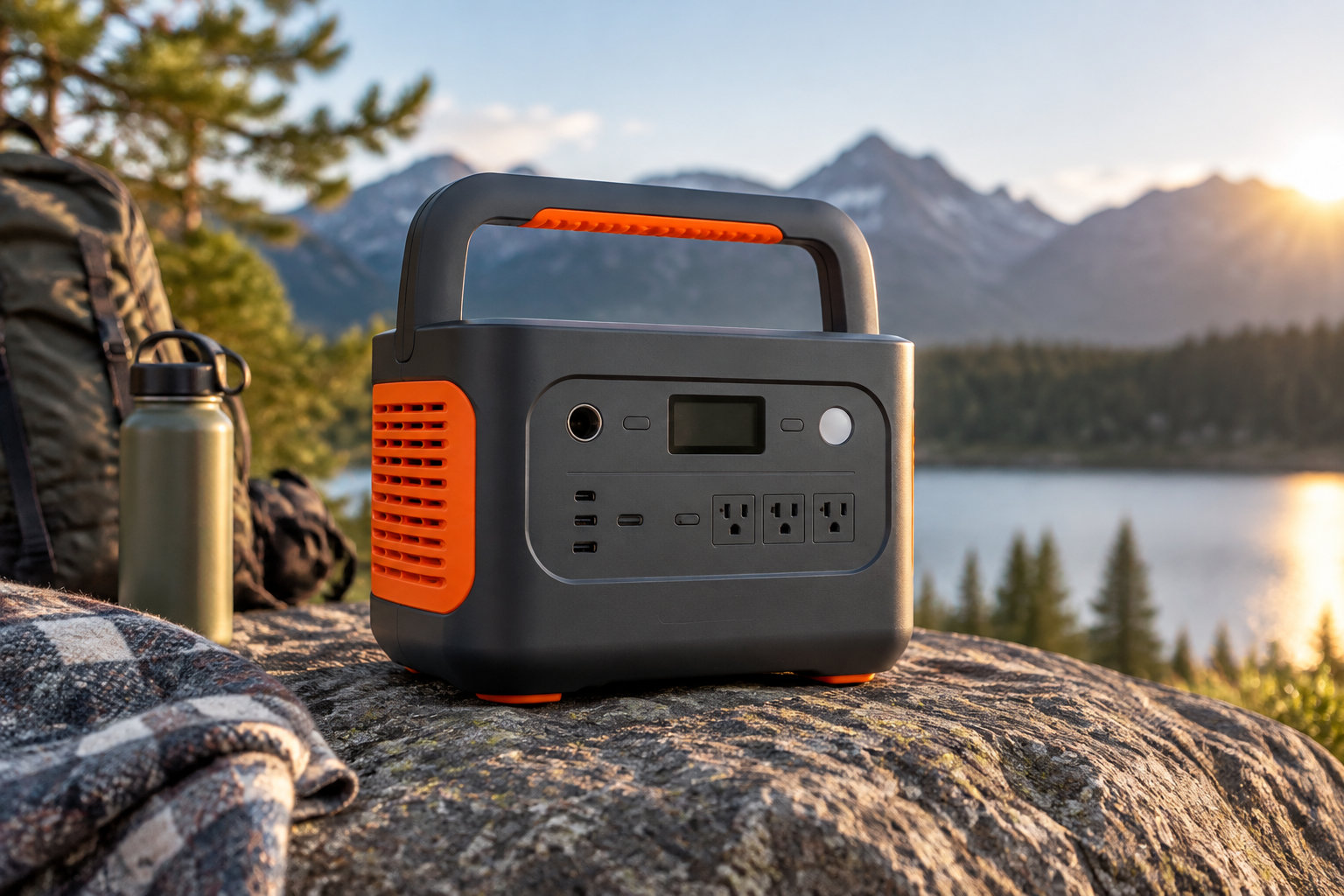
The Jackery Explorer 1000 v2 stores 1,070Wh. It has three 120V AC outlets and delivers 1,500W of continuous output. Its 85% AC estimate leaves about 910Wh for your CPAP. That is roughly three eight-hour nights at 40W, or nearly two at 60W.
The standalone station sells for $519. The Solar Generator 1000 v2 pairs the station with one SolarSaga 200W panel for $699. It includes the AC cable, solar cable and panel. Jackery lists a 1.58-hour AC recharge and about 7.5 hours through the 200W solar setup.
Anker SOLIX C1000 Gen 2: the fastest solar recovery
The Anker SOLIX C1000 Gen 2 has a 1,024Wh battery and 2,000W of AC output across 10 ports.
At about 85% AC availability, roughly 870Wh is usable. That is enough for about 2.7 eight-hour nights at 40W, or 1.8 at 60W.
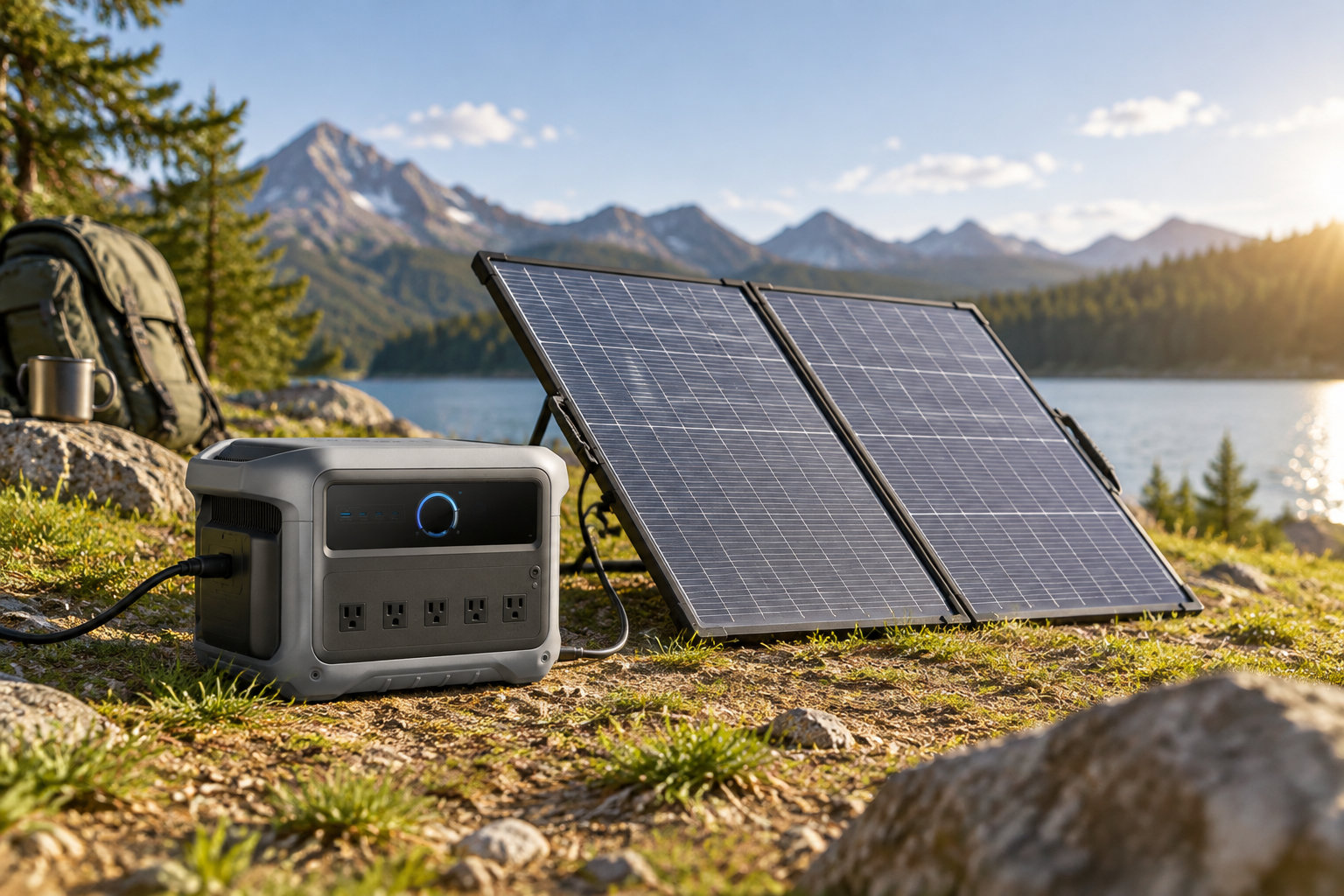
It accepts up to 600W of solar input. Its maximum open-circuit voltage is 60V, and its maximum current is 15A.
The 200W package includes the PS200 bifacial panel, an AC charging cable and safety materials, so you can recover power during the day without buying a separate panel.
Size the battery around your CPAP
The power supply rating printed on a CPAP often reflects its limit, not what it actually draws overnight. The ResMed AirSense 11 typically consumes 56.1W, with a 73.2W maximum, while the AirSense 10 lists 53W typical and 104W peak.
Energy equals average watts multiplied by sleep hours.
An eight-hour night uses these amounts before conversion losses:
- 240Wh at 30W
- 320Wh at 40W
- 480Wh at 60W
- 640Wh at 80W
AC operation runs battery power through an inverter, which wastes energy as heat. Plan on about 85% of rated capacity for AC use, or about 90% with a compatible direct DC converter.
For two nights at 40W, you need about 640Wh at the CPAP, so aim for at least 800Wh of rated capacity once conversion loss and reserve are included.
At 60W, two nights need 960Wh before losses, which makes a 1,000Wh class station the safer pick.
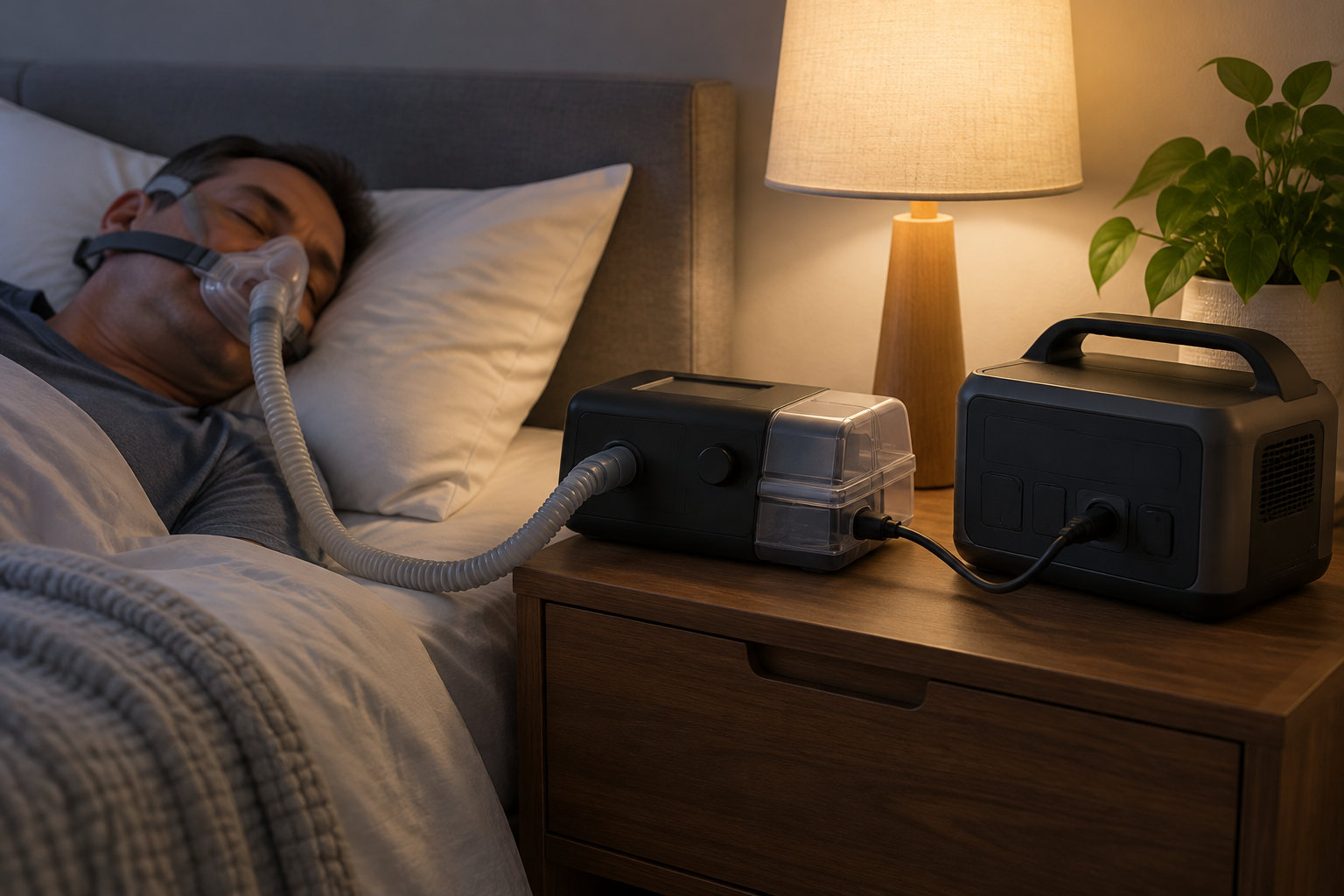
Keep a 20% to 30% reserve for cold weather, pressure changes, battery aging, phone charging and imperfect capacity readings.
Test the full setup at home through a complete sleep period before relying on it in the backcountry.
CPAP connections: AC or DC
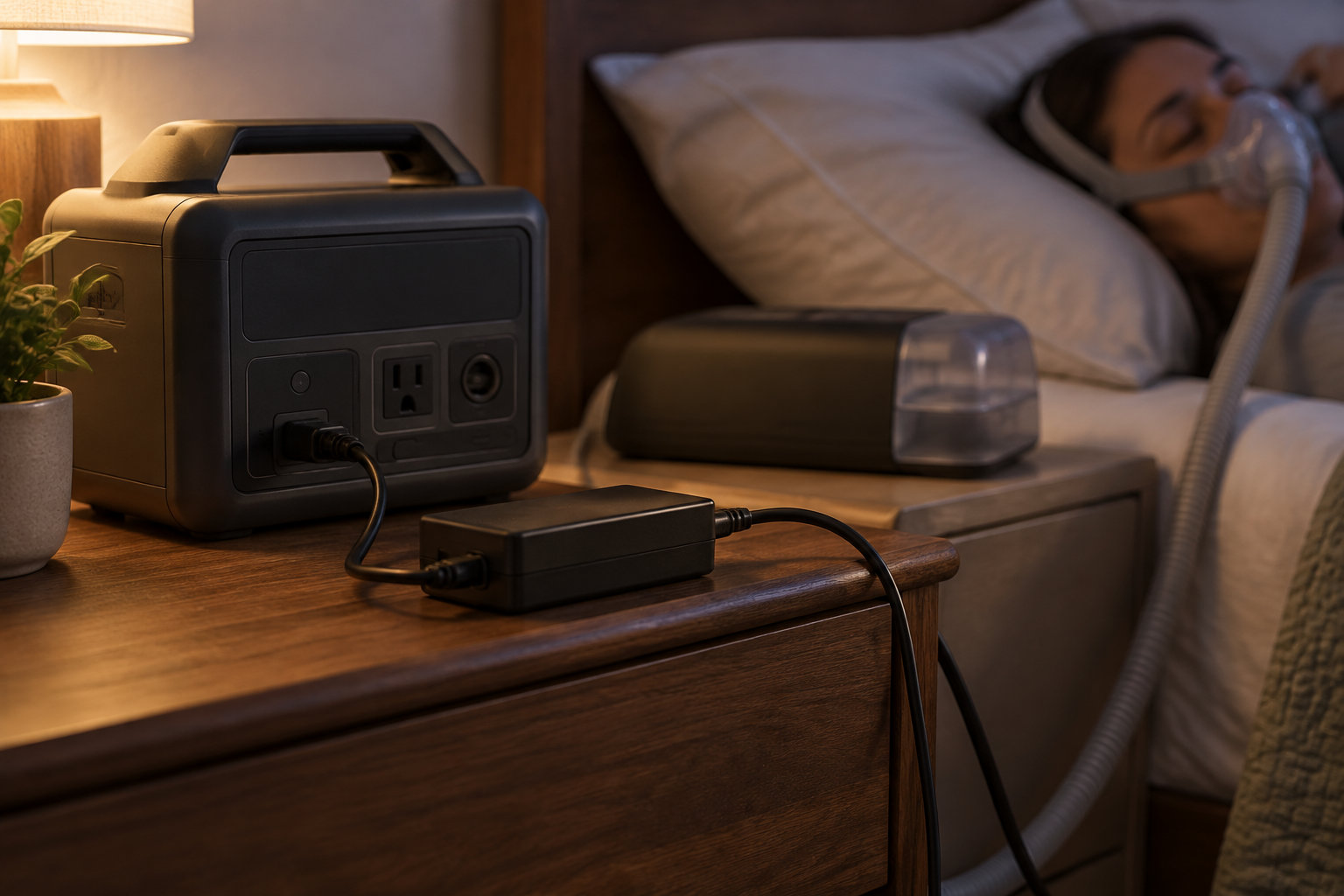
AC is the simplest route. Plug the CPAP’s original power brick into the station’s pure sine wave 120V outlet. You don’t need to work out the voltage yourself. But the inverter shortens runtime.
DC can run longer when the CPAP supports a manufacturer-approved converter. The ResMed AirSense 11 converter accepts 12V or 24V input. It outputs 24V at up to 3.75A. The AirSense 10 uses its own 24V DC converter.
Do not connect a 12V outlet directly to a 24V CPAP input. Match the converter to the exact model, voltage, plug and current requirement, and use a regulated outlet rather than an unregulated battery connection.
Check the CPAP manual before using a third-party cable. ResMed recommends specific DC converter and cable combinations. Its battery guidance also lists certified inverter requirements for cases where direct DC operation isn’t available.
Humidifier and heated hose reduce runtime
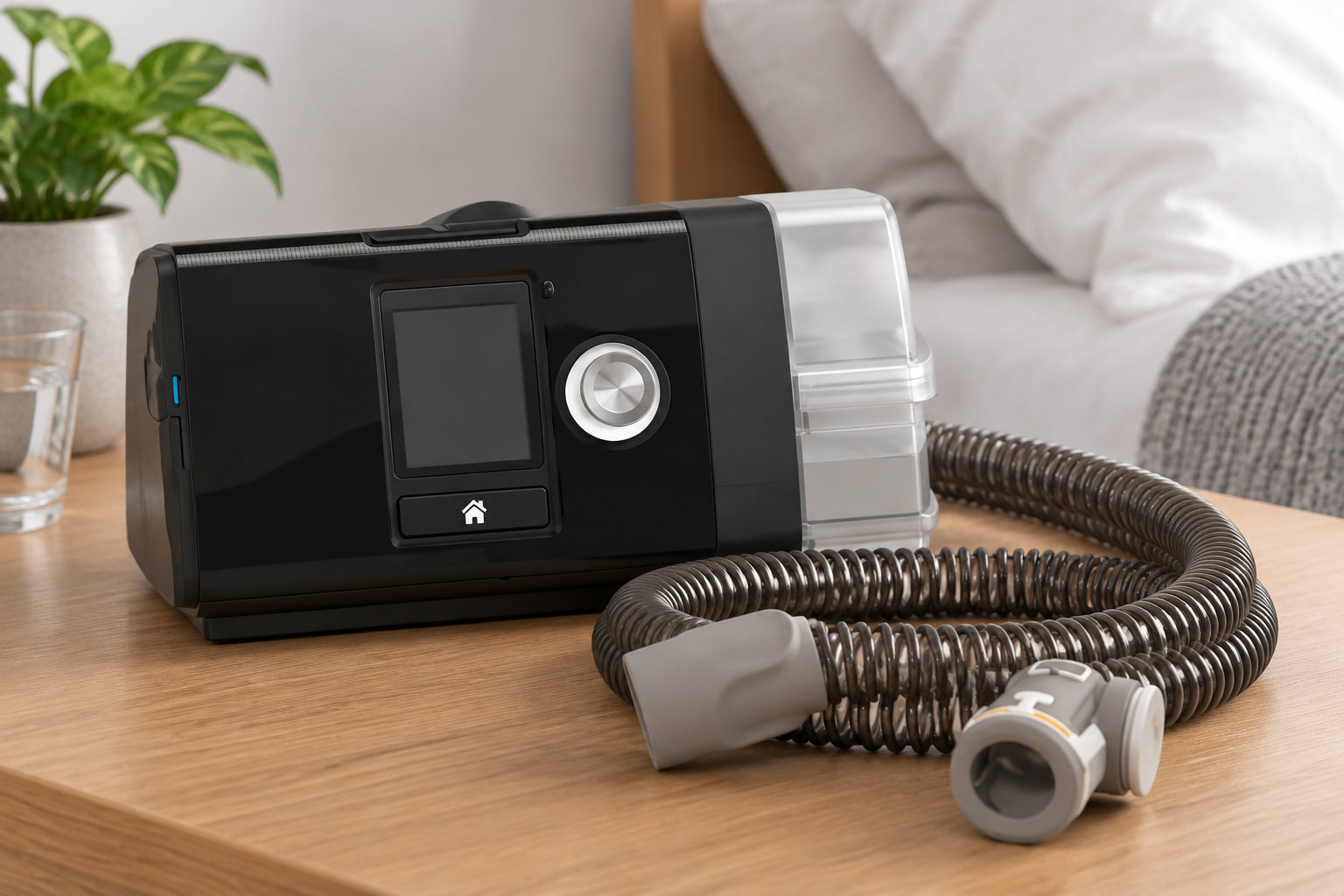
Heating water and tubing can draw more energy than the CPAP blower itself. ResMed’s AirSense 10 tables show 0.70 to 1.66A at 12V with standard tubing, compared with up to 3.50A with ClimateLineAir heating, depending on pressure.
When you camp, switch the humidifier and heated hose off if you can sleep comfortably without them, or lower both settings. That can bring a setup from roughly 60W or more down toward the 30W to 40W range, stretching a 768Wh station from about one night to roughly two.
Test with the same mask, pressure, tubing, humidifier and power connection you’ll use outdoors. Read the station’s watt display over several hours, because the power brick rating alone can’t predict your overnight consumption.
Solar recharge away from the grid
Match the panel’s voltage and connector to the station. Solar limits differ by model:
- BLUETTI AC70: 12V to 58V, up to 500W
- EcoFlow RIVER 2 Pro: 11V to 50V, up to 220W
- Jackery Explorer 1000 v2: up to 400W and 60V
- Anker SOLIX C1000 Gen 2: up to 600W and 60V
For several nights, work out the daily balance: energy used overnight minus energy recovered during daylight. If your panel restores 400Wh and your CPAP uses 480Wh, the battery loses about 80Wh per day before phones and other loads.
Before you set up and charge
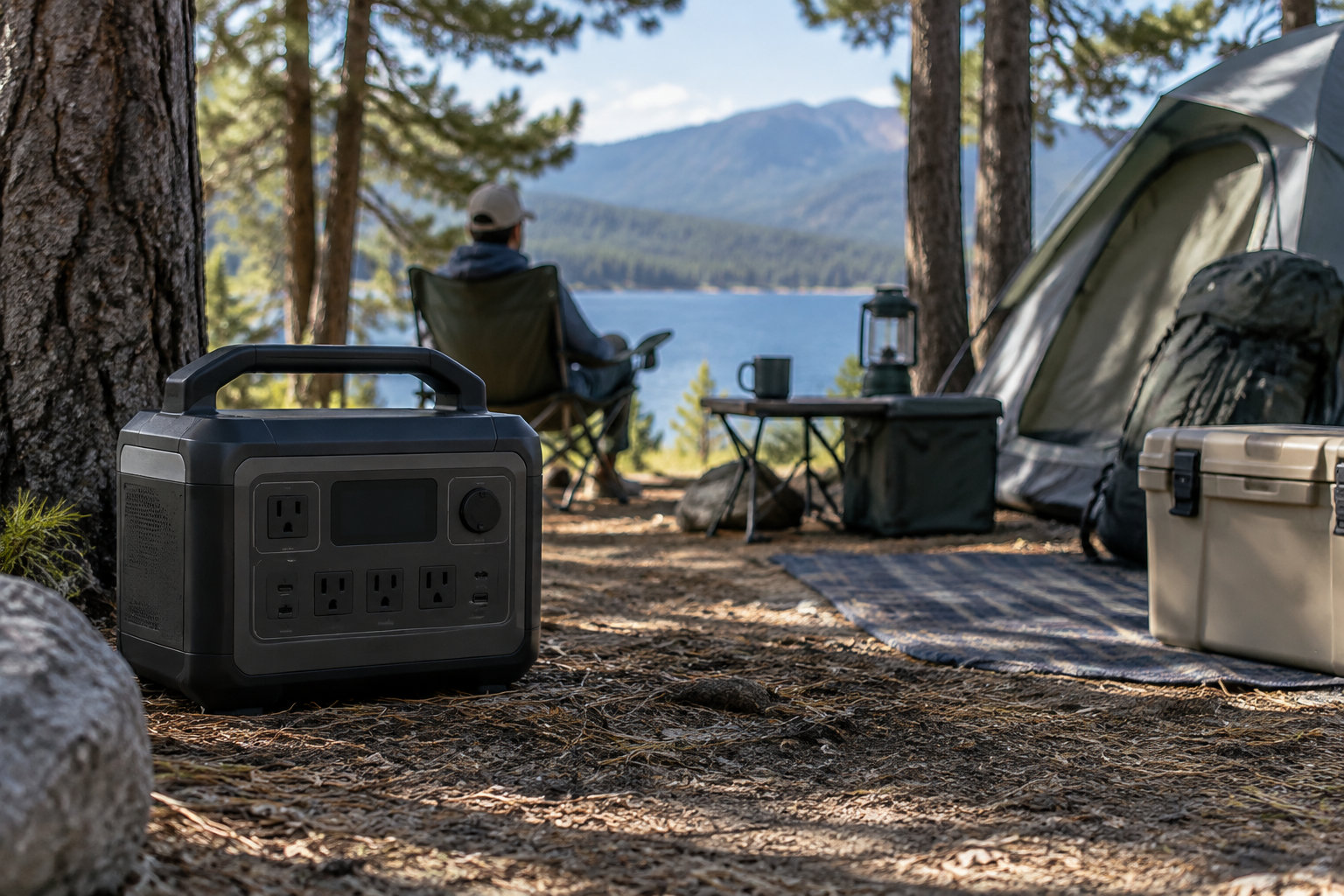
- Keep the station dry, shaded, upright and away from cooking heat.
- Don’t charge it below the manufacturer’s minimum temperature.
- Route cables where nobody will trip over them.
- Disconnect panels before changing wiring or connectors.
Before you buy, sort your CPAP’s real overnight draw from the power brick rating, then pick a station that covers at least two nights with a 20% to 30% reserve. Run that exact setup at home for a full sleep period, with the humidifier and heated hose in the configuration you’ll use outdoors, so the station’s watt display, not a label, tells you whether your battery will last.
Frequently asked questions
Can I use a portable power station while it charges from solar?
Yes, the BLUETTI AC70 supports pass-through charging, so it can power your CPAP while solar charges it.
Solar input must stay above your CPAP’s draw, or the battery slowly drains. Clouds or shade can cause that drop.
Does a CPAP power station need a pure sine wave inverter?
Yes, pure sine wave output is the safest default when your CPAP runs on its normal AC power supply.
All four stations compared here include one, so check for it on any other station you consider.
How do you keep CPAP running during a power outage?
Use a station with an uninterruptible power supply function, keep it charged, and test the transfer before an outage.
The EcoFlow RIVER 2 Pro switches in under 30 milliseconds, and the Jackery Explorer 1000 v2 specifies under 20 milliseconds.