The label on a 400-watt panel gives its peak power, reached in strong sun. That number says nothing about what the panel makes over a day.
How many kWh will one panel give you, and is it enough for a home or van? This article shows how to calculate it and what it means for your panel count and batteries.
What one 400-watt panel makes in a day
Why 400 watts is a peak rating, not daily energy
A 400-watt rating is the panel’s peak power, reached only under strong sun: 1,000 watts per square meter at a 25°C cell temperature. So it never runs at that figure all day.
Watts measure power at one moment. Kilowatt-hours (kWh) measure energy over time, and one 400-watt panel running for one hour makes 0.4 kWh. For what modern panels can reach, see current solar panel efficiency.
Typical daily range across U.S. sun hours
Your location sets the daily figure. What counts is peak sun hours, the equivalent hours at 1,000 watts per square meter, not the hours from sunrise to sunset. Seattle gets about 3.85 of them, Phoenix about 6.55.
A 400-watt panel makes about 1.5 kWh per day in Seattle, 1.7 in Chicago, 2.2 in Los Angeles and 2.6 in Phoenix, before losses.
Quick calculation
Multiply 0.4 kW by your peak sun hours. At 4 peak sun hours, one 400-watt panel makes 0.4 × 4 = 1.6 kWh before losses. That is a ceiling: wiring, the inverter and heat take part of that energy before it reaches your home or van.
Use this formula: daily kWh = 0.4 kW × peak sun hours × (1 − loss fraction). The 0.4 kW is the 400 W rating divided by 1,000. A full hour at 400 W gives 0.4 kWh.
Pick your loss fraction with care, since it changes the result. For a van, total your daily device draw before choosing a panel.
Here is the calculation with the 14% default loss:
Start with 0.4 kW × 4 peak sun hours: 1.6 kWh before losses.
Multiply by 0.86, which is 1 minus 14%: 1.6 × 0.86 ≈ 1.38 kWh per day.
The 14% is a model assumption, not a fixed rule. It groups dirt, shading, wiring and other losses, which combine rather than add up.
Your real losses depend on your system and your site.
A worked example for your location
Calculate with your own city
Find your peak sun hours. Use the average for your city. Chicago’s figure is 4.22. Convert the rating. 400 W divided by 1,000 gives 0.4 kW. Multiply by the sun hours. 0.4 × 4.22 = 1.688 kWh before losses. Apply the losses. Multiply by 0.86 (1 minus 14%). You get about 1.45 kWh per day. Compare the range. A sunnier city gives more kWh per day, a cloudier one less. Your figure should fall within that range, not at one fixed number.
What makes the daily number go up or down
Season, weather and location
Location matters. A 400-watt panel gets 6.55 peak sun hours a day in Phoenix, but only 3.85 in Seattle. Use your city’s figure.
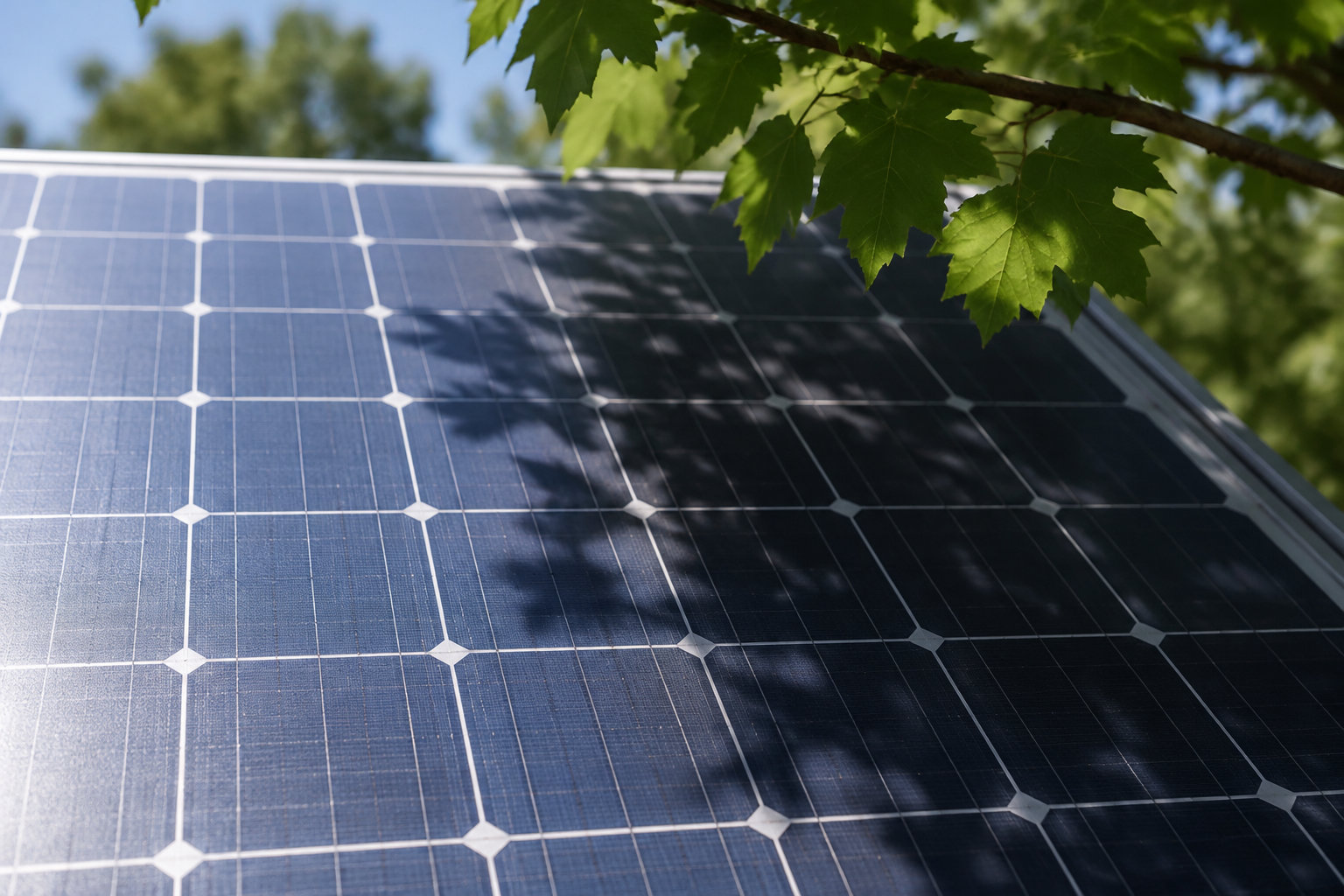
Even partial shade can reduce a panel’s output, with the effect varying by the installation and conditions.
Summer days are longer, so the panel makes more than in winter. Clouds cut the light reaching the panel, so output can fall below the clear-day estimate. If you rent, see plug-and-play solar for renters.
Tilt, orientation and shade
Four settings change the light the panel catches:
Tilt: the angle between the panel and the ground. Near your latitude works well for the whole year.
Direction: fixed panels face the equator, south in the Northern Hemisphere and north in the Southern.
Shade: a tree or wall covering part of the panel cuts the light on that part.
Dirt: dust on the glass blocks sunlight, so keep the panel clean.
Losses are model inputs
Default loss
PVWatts uses 14% total loss by default.
This is a model input, not a fixed loss for every panel.
Multiply the daily output by 30 to get the monthly figure. At 4 peak sun hours a day, one 400-watt panel gives about 48 kWh over 30 days. At 5 peak sun hours, it gives 60 kWh.
These figures come before system losses, so plan with the lower 48 kWh if you want a safe margin.
These numbers are a range, not a promise. For your own roof, run a simulation with your location, tilt and system losses. For a balcony, see balcony panel output.
Typical U.S. range
Sunny California example
Production ratio
1.1 to 1.6
1.5
Annual output
440 to 640 kWh
600 kWh
Monthly average
37 to 53 kWh
about 50 kWh
How many 400-watt panels a home needs
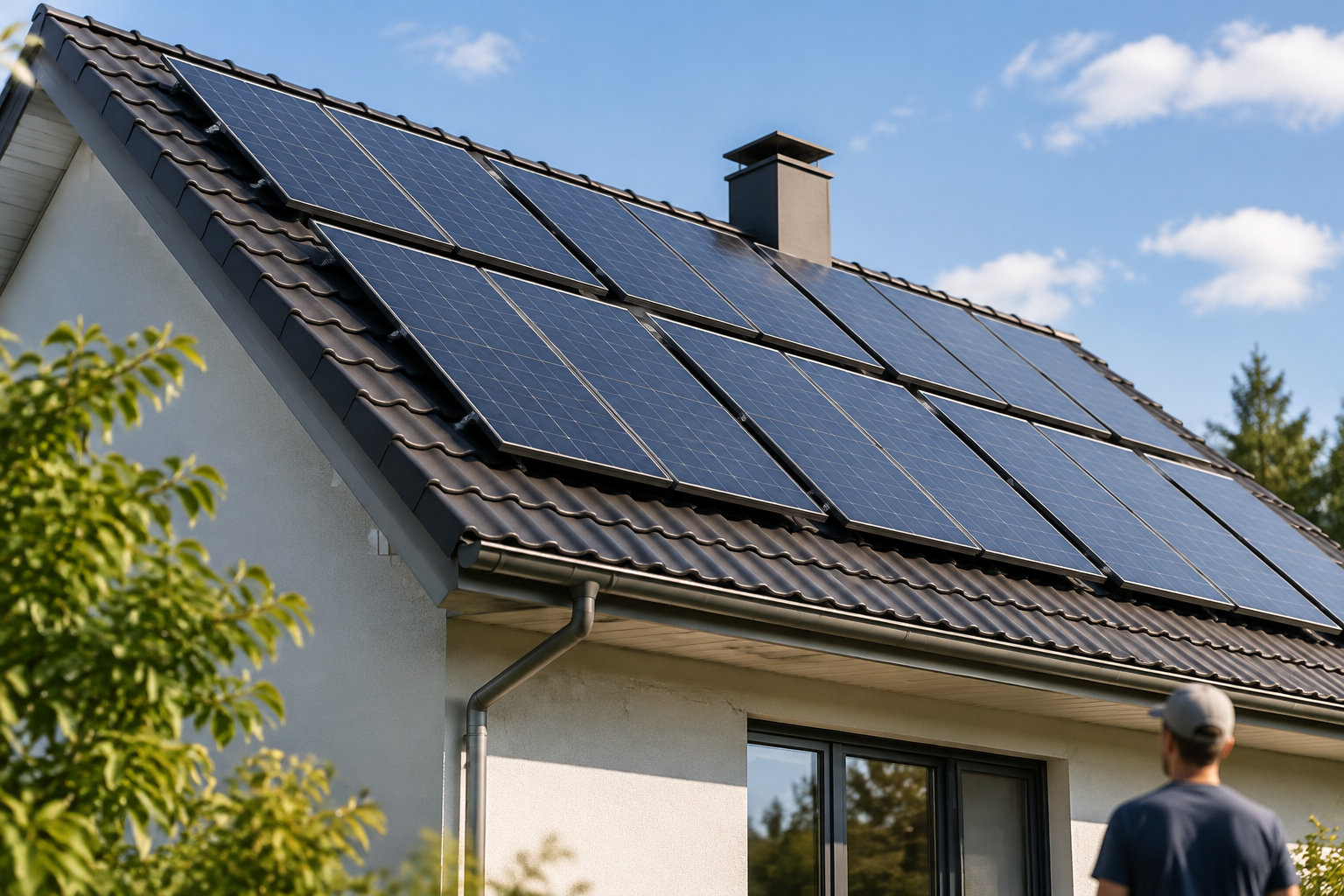
The average U.S. household uses about 10,500 kWh of electricity a year. With a production ratio of 1.1 to 1.6, that comes to about 17 to 24 panels rated at 400 W.
Panel counts depend on usable roof area, access clearances, household electricity use, and local solar conditions.
Use your own yearly total from your electricity bill, because use varies by region and housing type.
Before you count panels
Find your yearly kWh total on your electricity bill.
Measure the roof area you can really use, minus access and clearance space.
Divide that area by 17 to 22 square feet per panel to see how many fit.
Decide what share of your use the system must cover.
Check shading, tilt and sun hours, since they change each panel’s output.
Capacity in kWh is the energy a battery stores. Power in watts is how fast it delivers that energy.
Compare expected daily solar production with appliance use, and account for losses when charging and drawing energy from a battery.
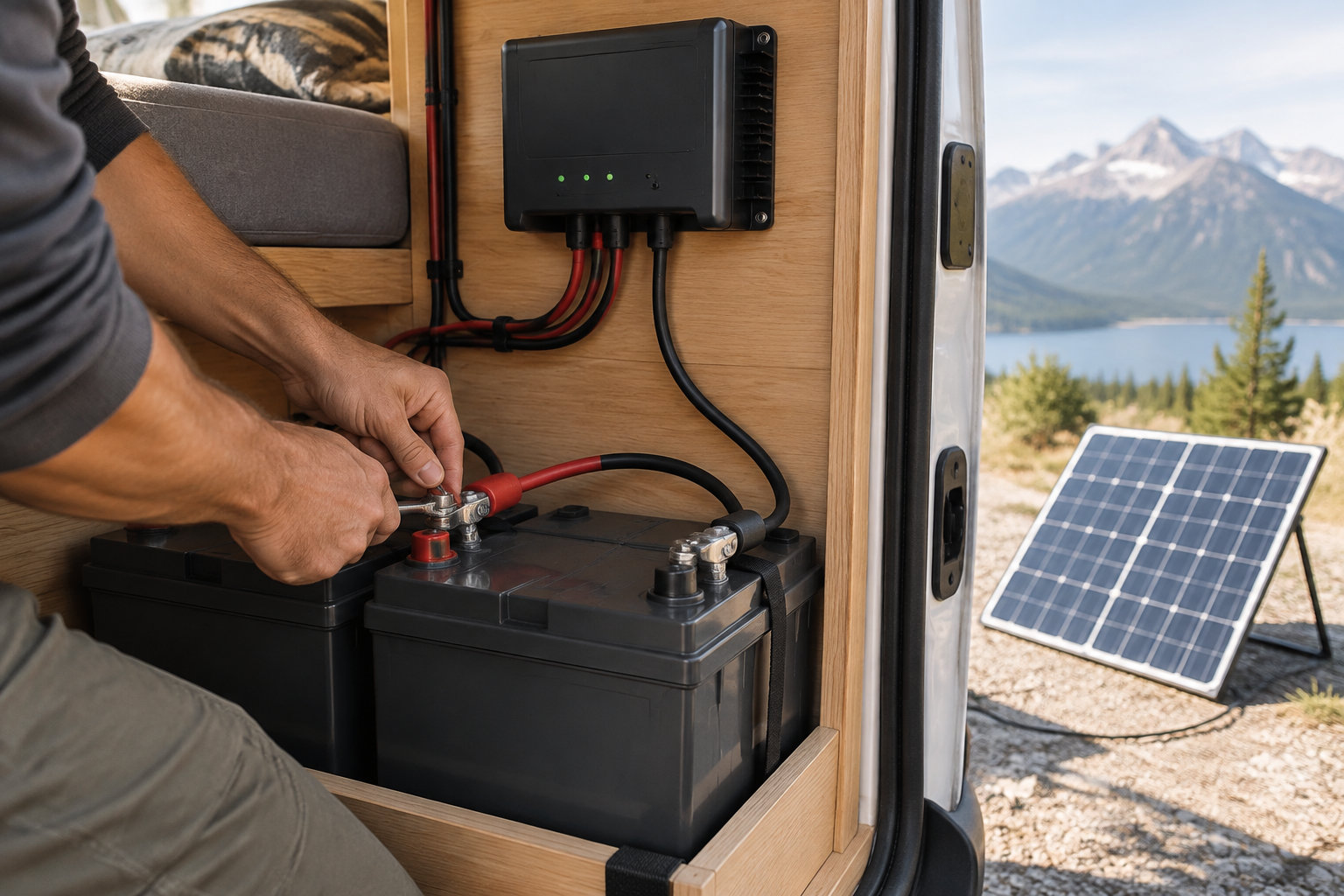
Plan on 90 to 100 percent of the capacity being usable for lithium iron phosphate, and about 50 percent for lead-acid. Your panel sets the limit: at 1.6 kWh a day, you can’t store more than 1.6 kWh.
A 12-volt compressor fridge uses about 300 to 600 Wh per day. The amount changes with the fridge, the weather and how you use it.
A full-size household fridge uses about 1,000 to 2,000 Wh per day, because its compressor cycles on and off.
A 50-watt fan running for 8 hours uses 400 Wh.
A 400 W panel does not mean a 400 W appliance will run
A panel’s rating is its peak output in full sun, not a promise that a given appliance will work. Before you connect anything, compare its daily energy use with what the panel makes, then check that the battery and the inverter can supply its power. Skip the check, and the appliance may stop, the inverter may shut down under overload, or the battery may run flat by evening.
Remember this: one 400-watt panel makes about 0.4 kWh for each peak sun hour, and your city sets how many hours you get. Subtract the losses, and you have your daily figure.
Your next step is to list your daily energy use, from your bill or your appliances, and compare it with that figure before you choose a panel count or a battery size.
Frequently asked questions
Does a 400-watt solar panel still produce power on cloudy days?
Yes. A 400-watt panel still produces power on cloudy days, but less than on a clear day, because clouds block part of the sunlight that reaches the panel.
On a grey day, plan with a lower figure than the clear-sky estimate.
Can a 400-watt solar panel run a refrigerator?
Yes, but only a small one. A 12-volt compressor fridge uses 300 to 600 Wh a day, which one 400-watt panel covers on a sunny day.
A full-size fridge, at 1,000 to 2,000 Wh a day, needs more than one panel.
What size solar system do I need for 400 kWh per month?
For 400 kWh a month, you need about 8 to 11 panels rated at 400 W, or 3.0 to 4.4 kW of panels.
The count depends on your local production ratio, from 1.1 to 1.6: a higher ratio means fewer panels.