A well-placed 400W balcony system can slash your annual electricity costs by up to $150 while requiring zero professional help. Many urban residents feel trapped by rising utility bills and restrictive rental agreements that prevent traditional renovations. We often assume that renewable energy is reserved for homeowners with sprawling rooftops, leaving apartment dwellers in the dark.
This guide explores how plug and play solar panels for apartments offer a portable, high-efficiency solution for small spaces. We will break down the ROI calculations, legal rights for tenants, and safety protocols to help you start generating your own clean power today.
- Mastering Plug and Play Solar Panels for Apartments
- 3 Steps to Evaluate ROI and Monthly Savings
- Securing Legal Rights and Balcony Safety Standards
- Comparing System Capacities and Future Portability
Mastering Plug and Play Solar Panels for Apartments
Plug-and-play solar kits reduce electricity bills by 10-20% through 400W-800W balcony systems. These portable units connect via standard outlets, requiring no professional electrician, and utilize integrated microinverters to convert DC energy immediately.
The real magic happens within the microinverter technology that powers your home.
Microinverter Mechanics
Microinverters convert DC solar energy into 220V AC electricity for immediate home grid injection via standard outlets.
Microinverters transform DC power into AC electricity safely at the source. This ensures low-voltage security for your balcony setup.
Simply plug the system into a standard outlet. This How Plug-and-Play Solar Kits Work: Setup & Cost explains how it feeds your home grid.
Appliances consume this energy first. It is a simple way to power your life.
Hardware Components
Standard kits feature lightweight panels and robust brackets. Choose rigid monocrystalline panels or flexible alternatives for railings. Durability ensures long-term performance.
- Monocrystalline panels for efficiency
- Microinverter for conversion
- Mounting hooks for safety
- Monitoring app for data
Smart monitoring apps provide real-time tracking. Using smart monitoring helps you optimize daily energy production effectively.
3 Steps to Evaluate ROI and Monthly Savings
Understanding the mechanics is one thing, but calculating the actual financial impact on your wallet is where the real decision happens.
ROI Calculations
Most users see a full return on investment within 2 to 5 years. You can easily estimate your specific timeline using a calculator for local utility rates. Check out how much do plug and play solar kits really cost? to start.
- Average annual savings: 190€
- Payback period: 2-5 years
- Lifespan: 20-25 years
Compare your initial kit price against monthly bill drops. Remember that solar savings accumulate daily, slowly erasing that upfront cost through consistent production.
“A well-placed 400W panel can save up to $150 annually, depending on local electricity tariffs and sun exposure.”
Sun Exposure
Partial shade from nearby buildings significantly drops your output. Balcony orientation dictates how much energy you harvest each afternoon. South-facing spots are optimal for production. Avoid shadows from trees to maintain high plug and play solar panel efficiency.
Smart placement strategies help in tight urban spaces. Use adjustable mounts to maximize light capture during short winter months.
Baseload Consumption
Your home has a constant energy drain from refrigerators and routers. This is your baseload power, usually between 100 and 250 Watts. These systems offset constant energy drains effectively.
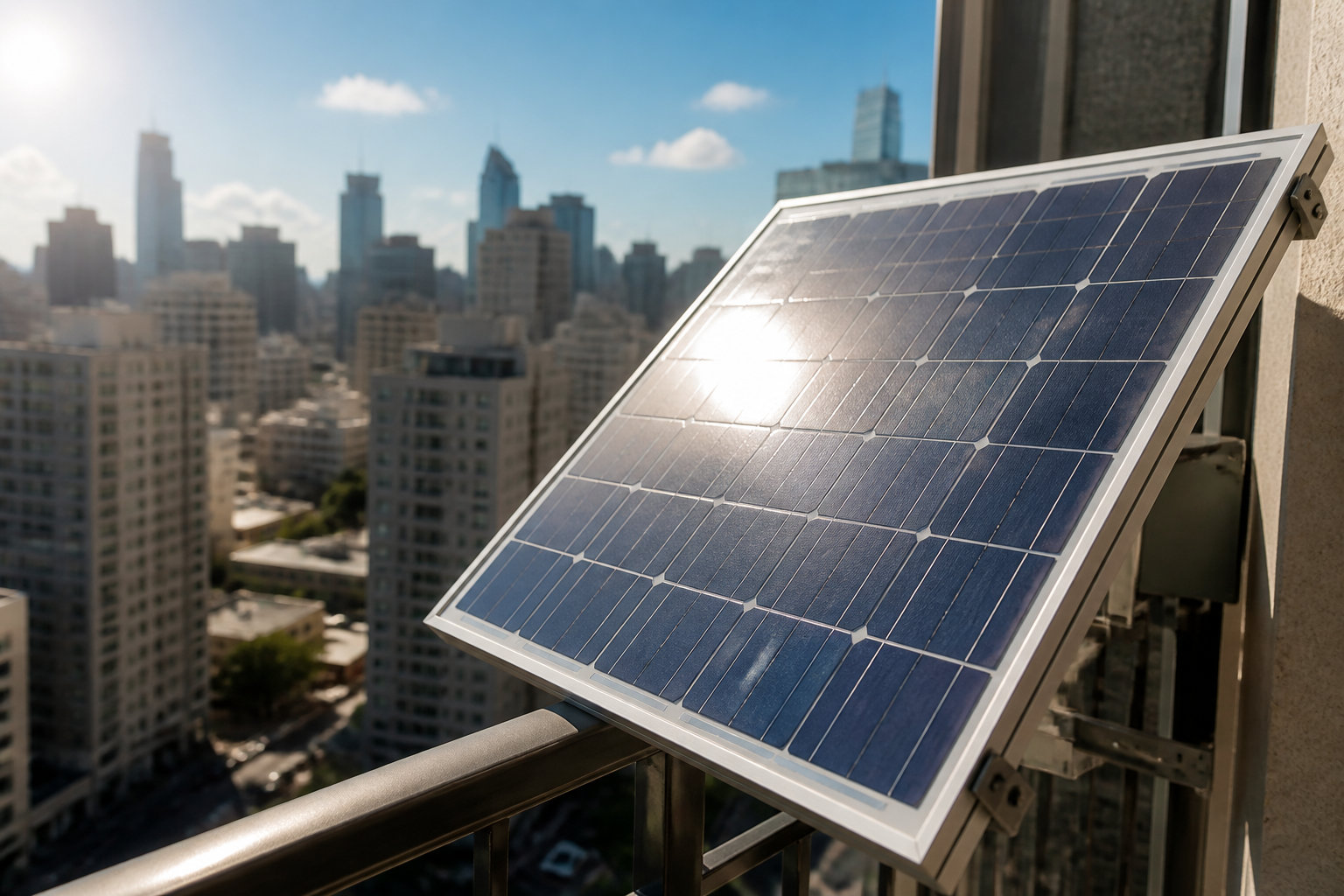
Small kits have clear limitations for high-draw appliances like ovens. Plug and play solar panels for apartments and small balconies cannot power heavy machinery alone.
Focus on offsetting electronics and standby devices. This reduces the hidden costs of modern living without changing your habits.
Securing Legal Rights and Balcony Safety Standards
While the savings are clear, navigating the legalities and safety requirements is the next hurdle for any apartment dweller.
Renter Rights
Most plug and play solar panels for apartments and small balconies are non-permanent. Verify your lease and HOA rules. Check if can you use plug and play solar as a renter? before installing.
Utility policies for small-scale interconnection vary by state. Most allow these kits under specific net metering rules for low-wattage systems.
Always document your installation as a temporary appliance to avoid disputes with landlords regarding property modifications.
Safety Protocols
Prioritize kits with UL listings for microinverters to protect against surges. Review the legal regulations for plug and play solar in USA to stay compliant.
Electricians are rarely needed for these systems. They are designed for safe DIY setup via standard outlets, featuring built-in weatherproofing for modern microinverters.
Railing Security
Secure panels using wind-resistant mounting techniques. Ensure the structural integrity of your balcony railing can support the added weight and force.
Check weight limits and ensure hooks are rated for high-velocity winds.
| Railing Type | Mounting Method | Security Level | Wind Resistance |
|---|---|---|---|
| Metal Bars | Curved Hooks | High | Beaufort 8-9 |
| Glass Panels | Suction & Cables | Moderate | Beaufort 6-7 |
| Concrete Wall | Clamps / Bolts | Very High | Beaufort 10+ |
| Wooden Railing | Screws / Straps | High | Beaufort 7-8 |
Comparing System Capacities and Future Portability
Once safety is handled, you need to decide which system size fits your lifestyle and how it will move with you.
Panel Configurations
Choosing between a single-panel or multi-panel setup for your balcony depends on your energy goals. Larger systems offer higher energy yields but naturally demand more physical space. Check out this Plug-and-Play Solar Kit vs Panel or Full Install comparison to see what fits.
Urban solar often faces net metering limitations that you must navigate. You should weigh the trade-offs between standard grid-tie systems and adding battery storage options. Direct consumption is usually more efficient for small setups.
If you decide to store power, the choice of storage is vital. Review the differences between Lithium vs lead acid for solar storage carefully. Choose based on weight and lifespan for better long-term results.
Moving Logistics
Dismantling these kits for relocation is remarkably simple and fast. This makes them the ultimate portable asset for nomadic urbanites today. You won’t need to make any permanent changes to your building structure.
Portable energy systems represent a smart long-term value for any renter. These modular units maintain their worth over time quite well. Learn more about how long do plug and play solar panels really last? to protect your investment.
Regular cleaning ensures peak performance despite urban dust. Just a quick wipe down every few months prevents significant yield drops.
Always keep the original packaging for safe transport. This small habit simplifies moving to a new apartment significantly.
Ready to slash your bills by $150 annually? These portable kits offer immediate energy savings with a safe, 5-minute setup that moves with you. Secure your plug and play solar panels for apartments today to start capturing free sunshine. Your future of sustainable, independent living begins at the next sunrise.
FAQ
Is it really possible to install solar panels on my apartment balcony as a renter?
Absolutely! Plug-and-play solar kits are the ultimate solution for urban dwellers because they are designed as non-permanent, portable appliances. Since these systems don’t require structural changes to the building, they generally don’t need a building permit. However, it is essential to check your lease agreement or HOA bylaws to ensure there are no specific restrictions regarding the aesthetic appearance of the building facade.
To keep things smooth with your landlord, we recommend documenting the installation as a temporary setup. Once you are ready to move, you can simply unplug the kit and take your green energy source with you to your next home! 🏠✨
How exactly do these plug-in solar systems work for small spaces?
The magic lies in the simplicity of the hardware. The kit captures sunlight through high-efficiency monocrystalline panels and immediately converts it into usable AC electricity via an integrated microinverter. Instead of complex wiring, you simply plug the system into a standard 220V wall outlet. This allows the solar energy to flow directly into your home grid, where your appliances will consume it first.
By using this “free” energy for your baseload consumption, like your refrigerator or Wi-Fi router, you effectively slow down your electric meter. It’s a smart, seamless way to lower your monthly bills without any professional help! ⚡🔌
What kind of savings and ROI can I expect from a balcony solar kit?
Investing in a balcony kit is a brilliant financial move, with most users seeing their initial costs amortized within 2 to 5 years. On average, a well-placed 400W system can save you approximately $190 per year on electricity. While you cannot sell excess power back to the grid in most apartment setups, the immediate reduction in your utility bill provides a consistent return on investment.
To maximize your solar savings, ensure your panels are south-facing and free from shadows. Even a small 400W panel can be a powerhouse, offsetting the “hidden costs” of standby electronics and modern living. 💰☀️
Are these portable solar panels safe and resistant to high winds?
Safety is a top priority for these systems. Quality kits come with UL-certified components (like UL 1741 SB for inverters), ensuring they interact safely with your home’s electrical grid and provide surge protection. The panels are built to be weatherproof and robust, often designed to withstand wind speeds of up to 170 km/h (approx. 105 mph).
When it comes to your railing, structural integrity is key. Most panels are lightweight (under 5kg for flexible versions or 12-18kg for rigid ones), but you must use rated mounting hooks and safety cables. Always verify your balcony’s weight capacity to ensure a secure and worry-free installation! 🛡️💨
Do I need a battery for my balcony solar setup?
For most apartment dwellers, a battery is not strictly necessary. Since the goal is to offset your “always-on” appliances during the day, the energy is usually consumed as soon as it is produced. However, if you are away from home frequently during peak sun hours or want to power devices at night, adding a lithium storage solution can help you capture every drop of sunshine.
Choosing between staying grid-tied or adding storage depends on your lifestyle. If you want to reach the peak performance of your independence, a small battery can be a great future upgrade for your portable energy kit! 🔋🌟
| Railing Type | Mounting Method | Security Level | Wind Resistance |
|---|---|---|---|
| Metal Bars | Adjustable Hooks & Bolts | High | Beaufort 10-12 |
| Glass Panels | Suction Cups & Safety Straps | Medium | Beaufort 6-7 |
| Concrete Wall | Drilled Expansion Bolts | Maximum | Beaufort 12+ |
| Wooden Railing | Heavy-duty Clamps | High | Beaufort 8-9 |