Key takeaway: Regular maintenance using deionized water and soft tools prevents up to 20% energy loss. By avoiding high-pressure washers and thermal shocks, you maximize the lifespan of your plug-and-play kit safely. Monitoring performance dips ensures you clean only when necessary, keeping your system at peak efficiency without risking expensive hardware damage or voiding your warranty.
Did you know that a simple layer of dust or bird droppings can slash your solar energy production by up to 20%? We understand that watching your electricity yields drop while the sun is shining is incredibly frustrating for any homeowner.
You might worry about damaging sensitive glass or voiding your warranty while trying to fix the issue. We are here to help you master cleaning plug and play solar panels safely to restore your peak performance and protect your green investment for years to come.
Cleaning Plug And Play Solar Panels Safely For Maximum Yield
Regular cleaning prevents up to 30% energy loss from dust or bird droppings. Use deionized water and soft brushes during early morning hours to avoid thermal shock and maintain plug-and-play efficiency through monitoring.
Monitoring your system is the first step toward peak efficiency.
Spotting Performance Drops Through Monitoring Systems
Use mobile apps to track daily output. Look for sudden dips that do not match the weather, as this indicates surface obstruction. Local pollution or salt deposits near coasts create thick films that reduce photon absorption.
Compare historical data to current production levels. Significant deviations usually mean it is time for a thorough cleaning to restore power. Staying proactive with data prevents long-term financial losses.
Impact of Neglect
15-20% production drop from standard dirt.
30% loss risk from heavy bird droppings.
Before you grab the water, you must ensure the hardware is physically sound.
Pre-Cleaning Inspection For Cracks And Loose Connections
Inspect the glass surface closely for hairline cracks. Water entering these fissures causes permanent internal damage. Safety starts with a visual check for chips or debris before applying any liquid to the hardware.
Verify that all plug-in cables are securely seated. Loose connections can arc when wet. Ensure the mounting brackets remain firm and stable to prevent accidents during the cleaning process.
Impact Of Environmental Debris On Energy Yield
Dust layers act as a physical barrier to sunlight. Even a thin coating reduces total energy harvest. Regular maintenance ensures cells receive maximum light for optimal conversion.
While knowing when to clean is vital, using the correct gear is what prevents expensive damage to the glass.
Benefits Of Deionized Water For Streak-Free Panels
Mineral-free water is the secret to a perfect finish. Standard tap water leaves calcium deposits behind. These white streaks block light just like dust does.
Deionized water absorbs dirt more effectively than hard water. It rinses clean without needing heavy chemicals or detergents.
Using pure water extends the time between cleanings. It keeps the surface smoother for longer.
Risks Of Pressure Washers And Abrasive Brushes
High-pressure streams can force water past the protective seals. This leads to internal corrosion and total system failure. Never use a power washer on your panels.
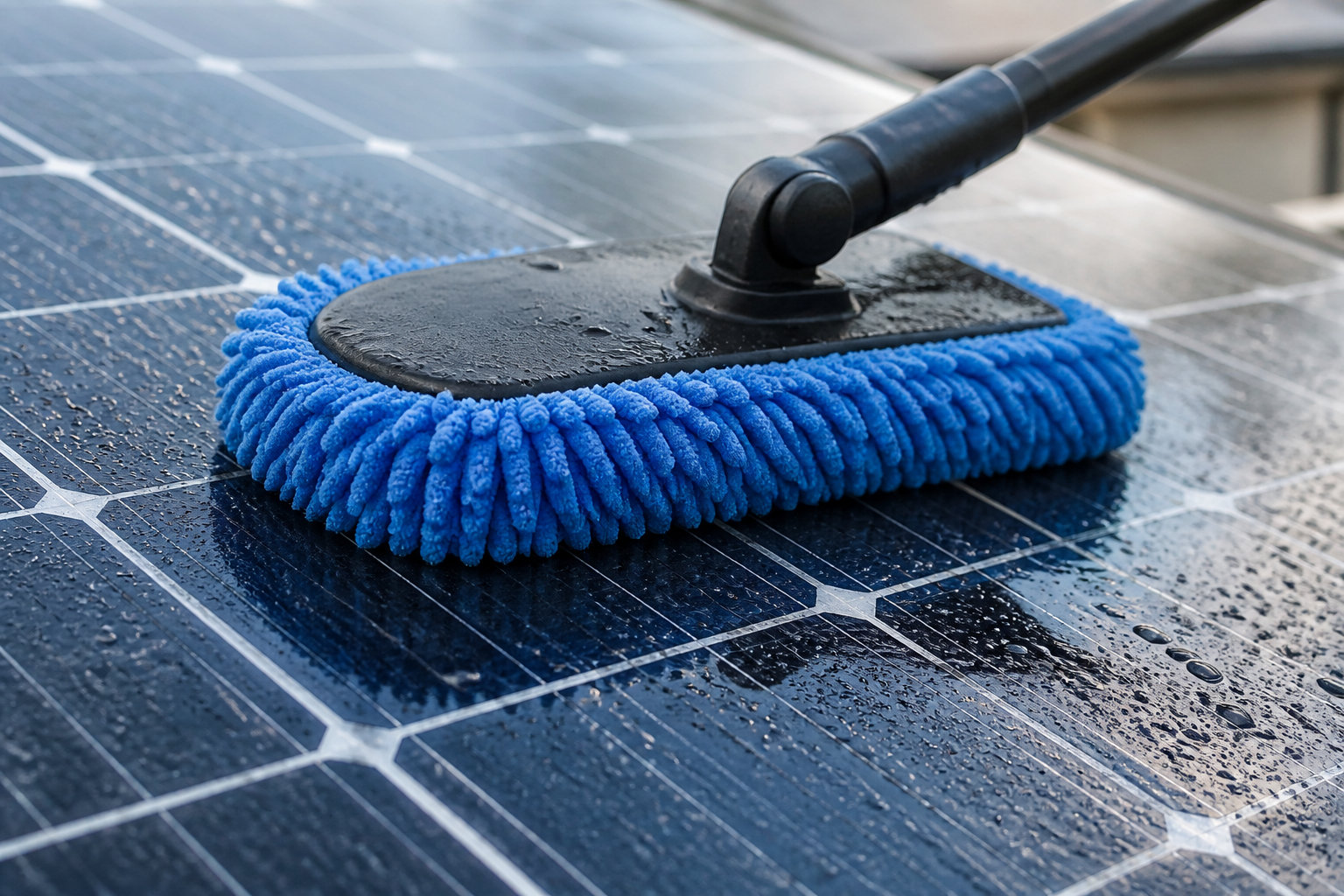
Abrasive brushes create micro-scratches on the tempered glass. These scratches trap dirt and scatter incoming sunlight.
“Using a pressure washer on solar glass is the fastest way to void your warranty and destroy cell efficiency.”
Safety Protocols Regarding Electricity And Temperature
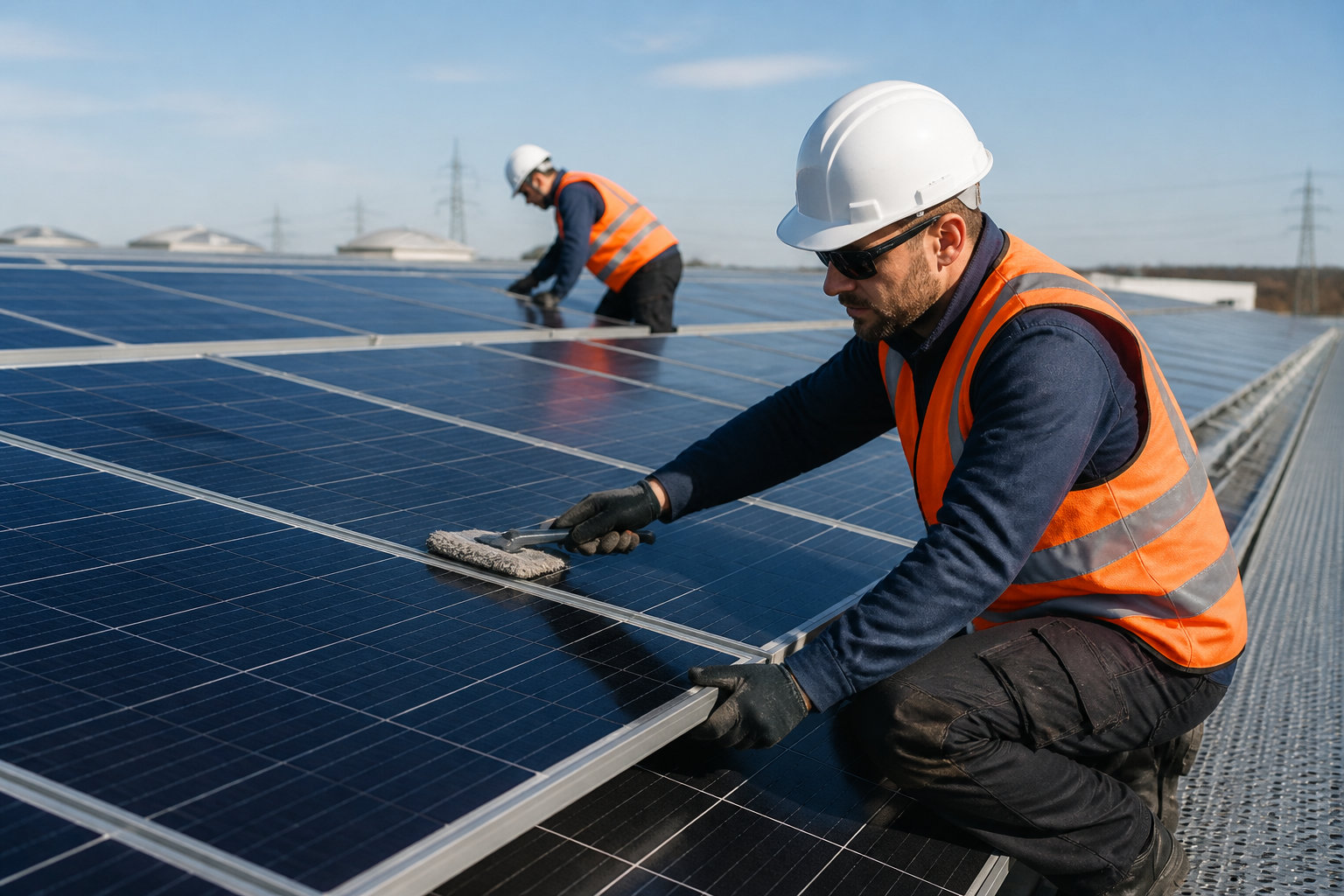
Always disconnect the system before starting the cleaning process. Working with water near active electrical circuits is dangerous. Safety must always come first during maintenance.
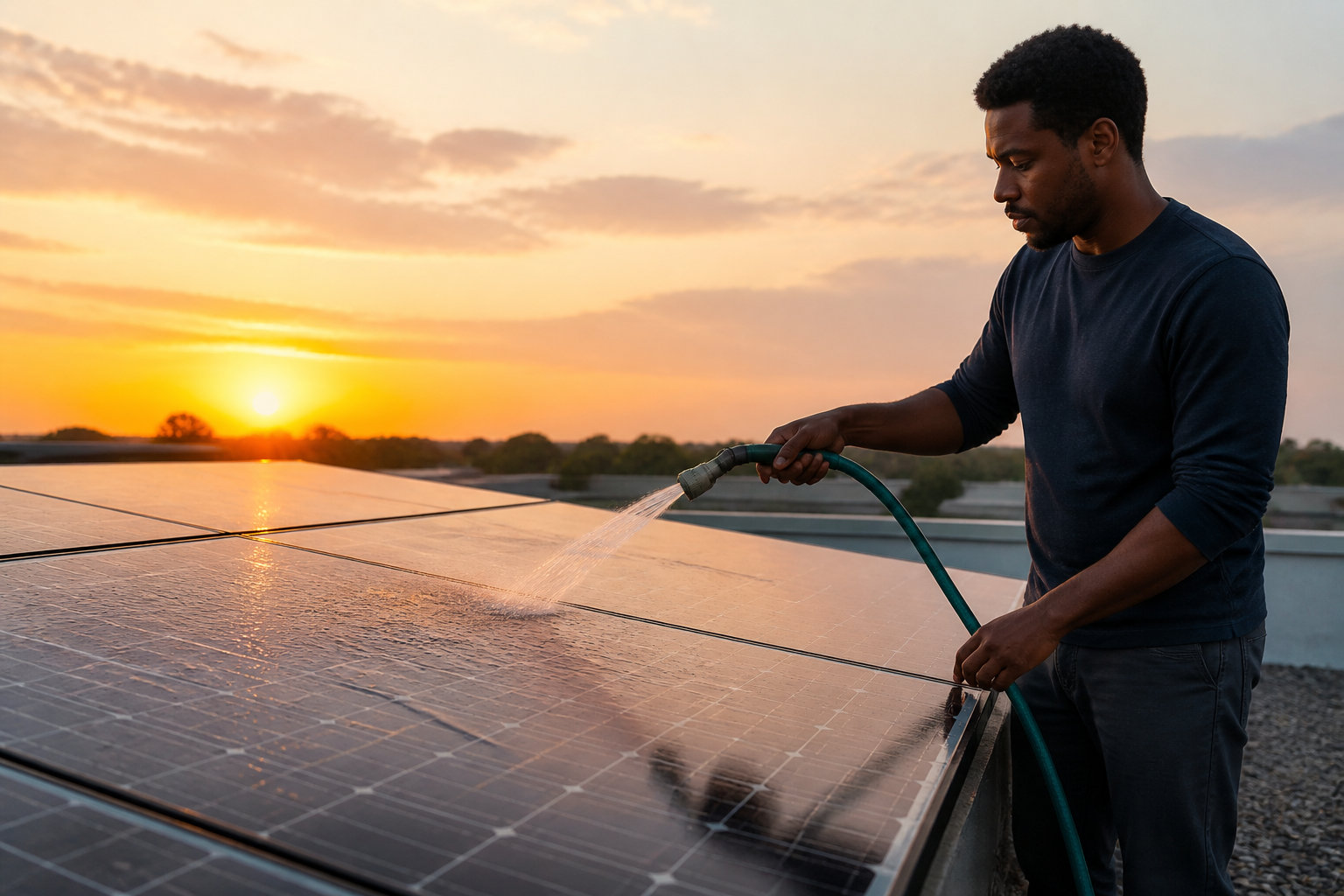
Clean panels in the early morning. Applying cold water to hot glass causes thermal shock. This can shatter the entire surface.
Critical Safety Warning
Avoid cleaning in direct midday sun to prevent thermal shock. Always disconnect the system before cleaning to avoid electrical hazards.
Protecting Your Hardware Through Long-Term Maintenance
Beyond the glass surface, the structural integrity of your kit determines how many years of service you will actually get.
Inspecting Wiring And Mounting Hardware Stability
Check the tightness of all balcony clamps and ground mounts. Wind vibrations can loosen bolts over several months. A stable mount prevents mechanical stress on the cells.
Look for UV damage or animal bites on external wiring. Exposed copper is a major fire hazard and reduces efficiency.
Component
Inspection Frequency
What to Look For
Action Required
Glass Surface
Monthly
Cracks/Dirt
Clean
Cables
Quarterly
UV damage/Bites
Replace
Mounting Brackets
Quarterly
Loose bolts
Tighten
Inverter/Plug
Monthly
Rust/Loose
Tighten
Warranty Considerations And Manufacturer Guidelines
Always read the manufacturer documentation before choosing a cleaning agent. Some brands forbid the use of any soap. Following these rules protects your long-term investment.
Improper cleaning methods often void the product warranty. Keep a log of your maintenance to prove you followed the guidelines.
Boost your energy yield by 20% with regular maintenance. Simply disconnect your system, use deionized water with a soft brush, and clean during cooler morning hours to avoid thermal shock. Act now to protect your investment and ensure you are cleaning plug and play solar panels safely for years of peak performance.
FAQ
How frequently should I maintain my plug and play solar panels?
For most users, a professional-grade cleaning once or twice a year is sufficient to ensure peak performance. We recommend a spring session to remove winter debris and an autumn touch-up to clear away fallen leaves. However, if you live in a high-pollution urban area, a coastal region with salt spray, or near agricultural dust, you should increase this frequency to every 3 to 6 months.
Keep a close eye on your system’s output via your mobile app. A significant and sustained drop in energy production is the most reliable indicator that environmental grime is blocking the sun’s rays. Regular monitoring helps you maximize the lifespan of plug and play solar panels by preventing long-term debris buildup.
Can I safely use a pressure washer to clean my solar kit?
Absolutely not. Using a pressure washer is one of the most dangerous mistakes you can make, as excessive pressure can shatter the glass or force water past the protective seals. This leads to internal corrosion, micro-cracks, and total system failure, which will void your manufacturer warranty instantly. Safety and hardware integrity must always be your top priorities.
Instead, we suggest using a low-pressure rinse with a standard garden hose followed by a soft brush or microfiber cloth. This gentle approach effectively lifts stubborn grime without risking the structural health of your photovoltaic cells. Remember, your goal is a streak-free finish, not a high-impact blast that could destroy your investment.
What is the best type of water for cleaning solar panels?
To achieve professional results, deionized or demineralized water is the gold standard. Unlike standard tap water, which contains minerals that leave behind white calcium deposits, pure water evaporates without leaving a trace. These mineral streaks act just like dust, blocking photons and reducing your overall energy yield.
If you are dealing with heavy buildup, you can use a neutral detergent followed by a thorough rinse with pure water. This ensures no chemical residue remains on the surface, which could otherwise attract more dirt. Using the right liquids is a simple way to install and maintain balcony solar panels safely while keeping them operating at 100% efficiency.
How can I clean my solar panels safely without getting an electric shock?
Safety is paramount when mixing water and electricity. You must always disconnect the system from the wall socket or shut down the inverter before you begin any cleaning routine. Working on an active circuit, especially if there are undetected hairline cracks or loose cables, poses a serious risk of electrocution.
Furthermore, timing is everything to avoid thermal shock. We strongly advise cleaning your panels in the early morning or late evening when the glass is cool. Applying cold water to panels that have been baking in the midday sun can cause the tempered glass to crack instantly, leading to permanent damage.
What tools do I need for a DIY solar cleaning routine?
You don’t need expensive machinery to get the job done right. A soft, non-abrasive brush or a microfiber cloth attached to a telescopic pole is perfect for reaching panels safely from the ground. This setup allows you to apply gentle pressure to lift bird droppings and soot without the risk of falling from a ladder or roof.
For those in water-restricted areas, compressed air or specialized ultra-soft dry brushes can be used to sweep away loose sand and dust. By using these simple but effective tools, you can enjoy all the benefits of plug and play solar systems while ensuring your hardware remains in pristine condition for years to come.