Modern off-grid farming has seen a massive shift toward automation, with compact energy systems now powering everything from security cameras to climate control. However, many poultry keepers still struggle with the daily chore of manual coop management or the constant expense of replacing dead batteries in their equipment. Relying on traditional power sources often leads to vulnerable flocks and unnecessary operational costs.
We are going to show you how a solar panel kit for chicken coop setups provides a sustainable, set-and-forget solution for your birds. We will break down the essential hardware and protection strategies to ensure your automation stays reliable year-round, so you can finally enjoy true peace of mind. ☀️
- Solar Panel Kit For Chicken Coop: The Path To Off-Grid Automation
- Selecting The Right Battery And Controller For Your Flock
- How Do You Protect Your Solar Electronics From Predators And Frost?
- DIY Builds Versus Pre-Made Integrated Solar Solutions
Solar Panel Kit For Chicken Coop: The Path To Off-Grid Automation
Off-grid chicken coop automation requires a 20W to 50W solar panel paired with a 10Ah LiFePO4 battery and an MPPT controller. This setup reliably powers automated doors and LED lighting, ensuring predator protection even during three consecutive cloudy days.
The hardware components work in synergy to provide consistent storage and power delivery for your flock’s safety.
Identifying The Core Hardware For A Reliable Setup
The panel harvests energy during daylight. The battery stores this power for nighttime door operation. This cycle ensures constant protection for your birds.
The charge controller acts as a safety bridge. It prevents overcharging or draining cells too low. This component significantly extends your battery’s overall lifespan.
Learn how Plug-and-Play Solar Kits Work: Setup & Cost to simplify your installation. These systems offer immediate off-grid autonomy for any backyard setup.
Calculating Daily Watt-Hour Needs For Doors And Lighting
Calculate the total draw of motors and lights. Most doors use minimal power. However, water heaters significantly increase your daily energy requirements.
Account for weather and shorter winter days. Always add a thirty percent buffer. This ensures the door opens even after a week of rain.
Review How to calculate your solar power needs for van life – Solar Panel Kit for comparison. Both systems require precise energy balancing for reliability.
Selecting The Right Battery And Controller For Your Flock
While knowing your power needs is a start, the real magic happens in how you manage and store that energy for your birds.
MPPT Versus PWM: Picking The Brain Of Your System
MPPT controllers are more efficient than PWM models. They convert excess voltage into usable amperage. This is vital during cold or overcast mornings. PWM is cheaper but wastes significant energy.
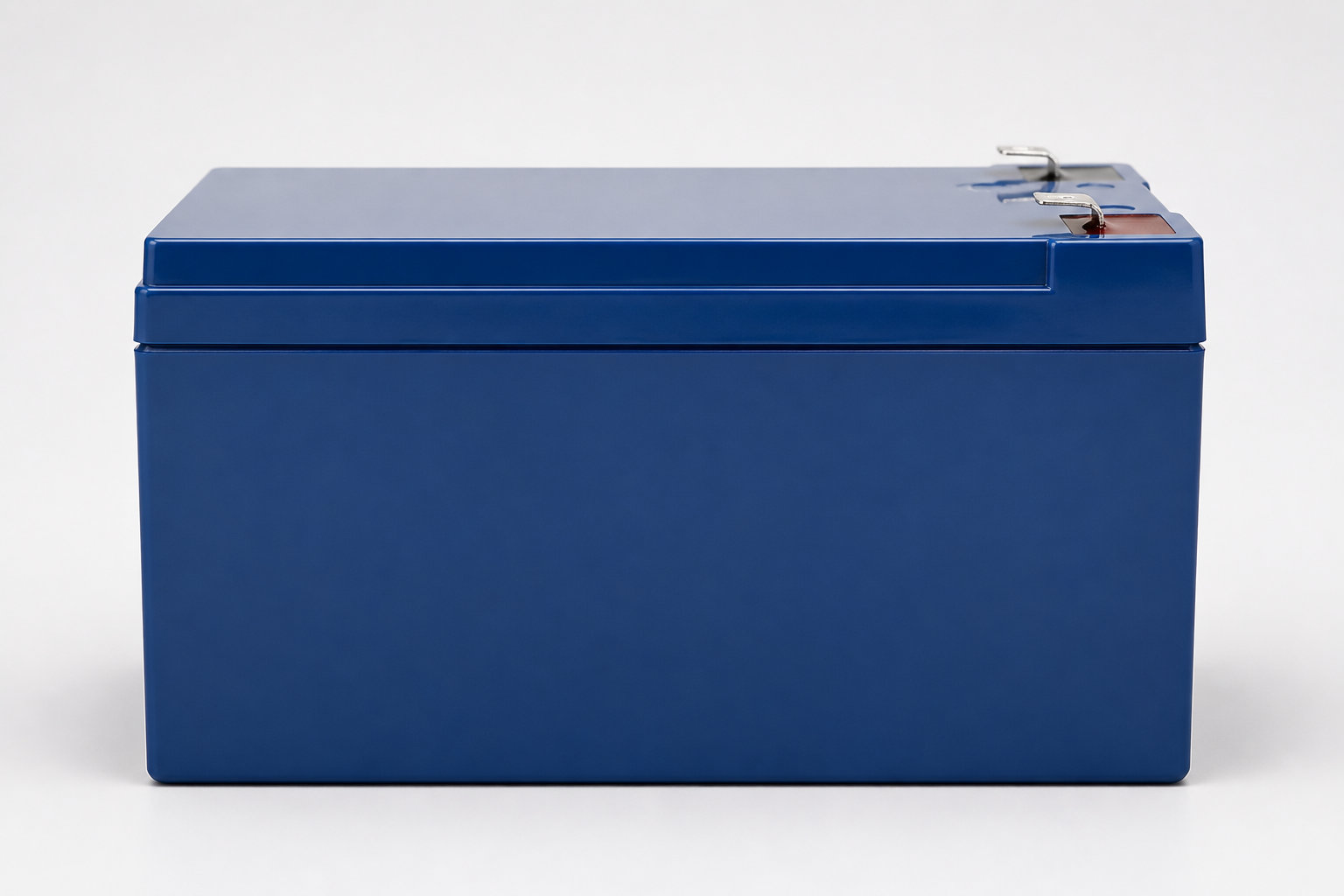
Advanced tracking improves battery health over time. It maintains a steady charge profile. This prevents internal plate sulfation in traditional batteries.
Choosing an MPPT controller can increase your energy harvest by up to 30% in shaded conditions.
LiFePO4 Versus Lead-Acid For Long-Term Reliability
Lithium batteries offer a superior cycle life compared to lead-acid. They handle deep discharges without damage. This makes them perfect for automated coop systems.
Consider the impact of extreme temperatures. Lead-acid batteries are heavy and lose capacity in the cold. Lithium requires a heater if temperatures drop below freezing.
Investing in LiFePO4 ensures your solar panel kit for chicken coop: automated power solutions remain reliable. Check this guide on Lithium vs lead acid for solar storage – Solar Panel Kit for more details.
| Feature | LiFePO4 | Lead-Acid |
|---|---|---|
| Cycle Life | 3,000+ cycles | 300-600 cycles |
| Discharge | 80-90% | 50% |
How Do You Protect Your Solar Electronics From Predators And Frost?
Even the best tech fails if a raccoon chews the wires or ice jams the mechanism, so physical protection is mandatory.
Rodents gnawing on plastic insulation can cause short circuits or fires; use steel conduits. Ice buildup jams tracks; use silicone-based lubricants.
Weather-Proofing Strategies For Outdoor Wiring And Enclosures
Use steel conduits for all exposed wiring. Rodents love to gnaw on soft plastic insulation. This simple step prevents short circuits and potential coop fires.
Place circuit boards in NEMA-rated waterproof enclosures. These boxes keep moisture and dust away from sensitive components. Mount them high to avoid ground-level humidity. Ensure all seals are tight.
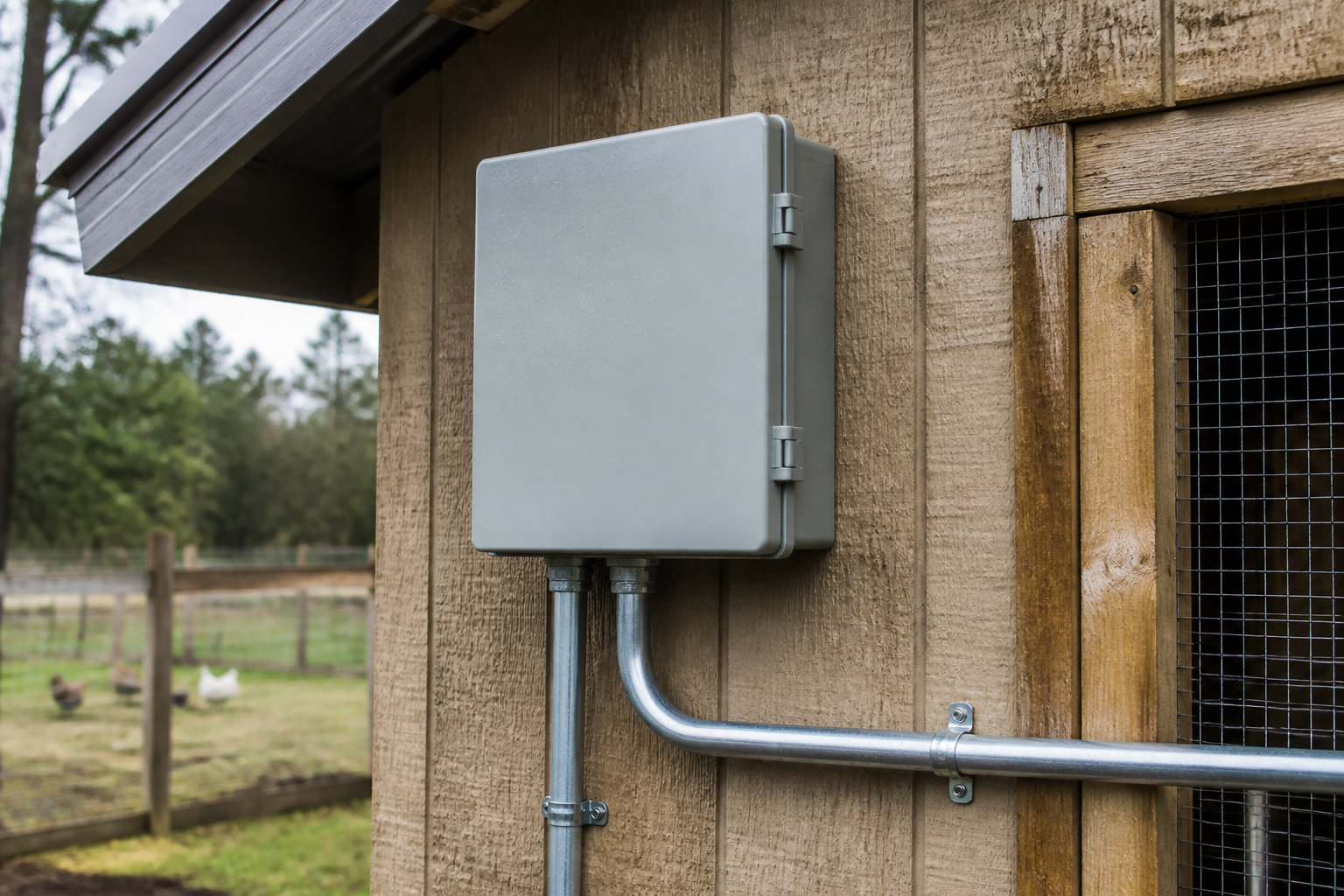
Protect your solar panel kit for chicken coop: automated power solutions with these essentials:
- Steel conduit for wires
- NEMA-rated boxes
- Silicone sealant for entries
Troubleshooting Frozen Tracks And Winter Battery Drain
Ice buildup often jams automated door tracks. Apply a silicone-based lubricant to prevent freezing. Check the tracks daily during extreme winter weather.
Low voltage cutoffs happen more frequently in winter. The battery struggles to hold a charge in the cold. Insulate the battery box to maintain a stable internal temperature.
Proper maintenance is the only way to maintain solar panel kit efficiency in winter effectively. Don’t let the frost kill your setup.
DIY Builds Versus Pre-Made Integrated Solar Solutions
Deciding between a custom build and a ready-to-use kit depends entirely on your budget and technical comfort level.
Comparing Costs And Installation Complexity For Beginners
Custom builds allow for specific component selection. This usually saves money on the total hardware cost. However, it requires basic knowledge of crimping and wiring. Mistakes can be costly.
Integrated kits offer plug-and-play convenience. They are perfect for beginners who want a fast setup. You pay a premium for the pre-configured compatibility and ease.
| Feature | DIY Build | Pre-made Kit |
|---|---|---|
| Initial Cost | Lower | Higher |
| Setup Time | Hours | Minutes |
| Customization | High | Low |
| Support | Low | High |
Seasonal Maintenance Routines To Maximize Energy Harvest
Clean your solar panels every two weeks. Dust and bird droppings significantly reduce energy output. Use a soft cloth and plain water for the best results.
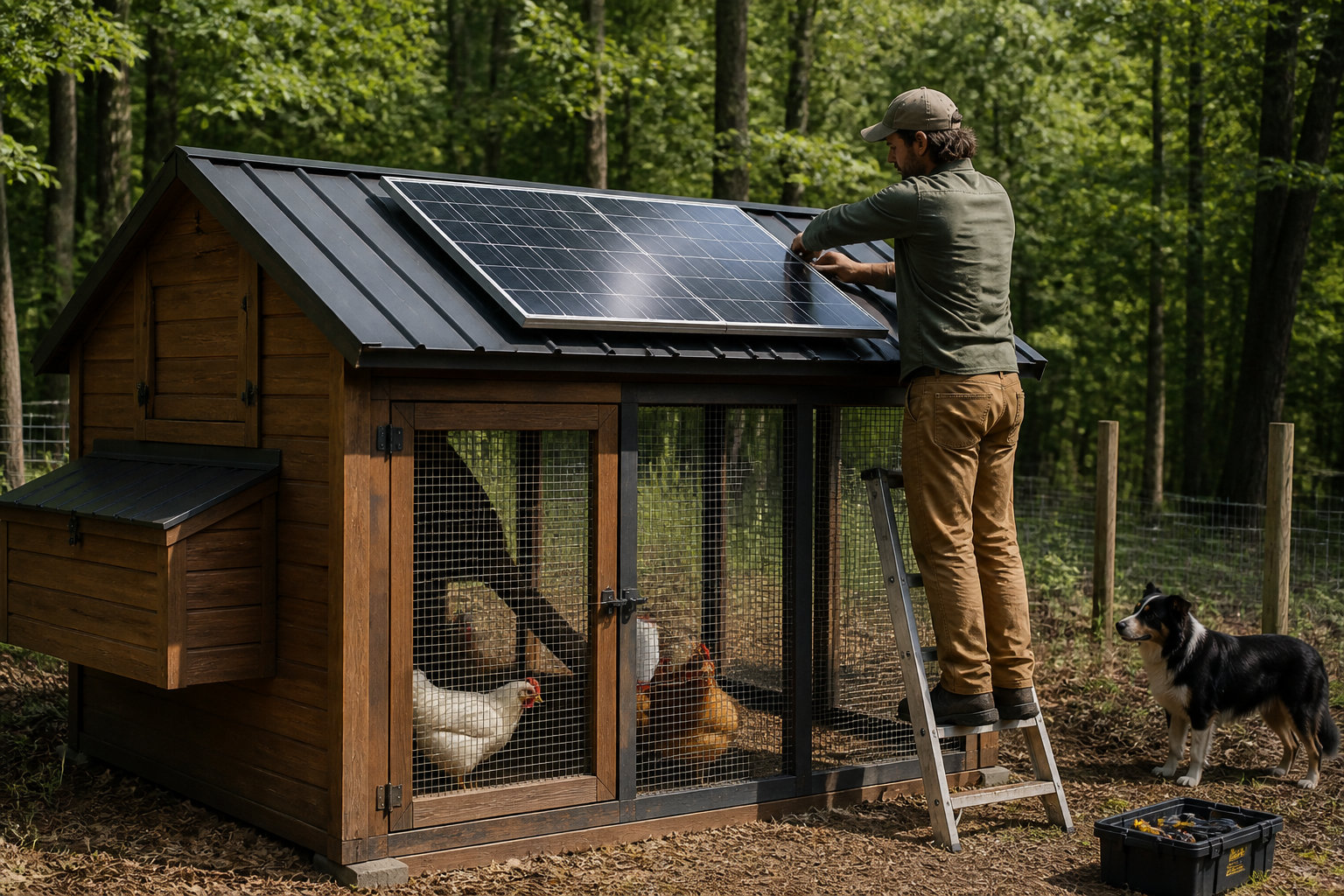
Inspect all wiring connections after major storms. Wind can loosen terminals or pull cables. Check for signs of corrosion on the battery terminals. Tighten every screw to ensure safety.
A clean solar panel can produce up to 25% more power than a neglected, dusty one.
Investing in a solar panel kit for chicken coop: automated power solutions ensures your flock stays safe without the headache of constant battery swaps. Whether you choose the Kerbl 70556 or a custom 10W rig, consistency is your best ally.
Switching to a solar panel kit for chicken coop automation ensures 24/7 predator protection and total energy independence. By pairing MPPT controllers with LiFePO4 batteries, you guarantee reliable power even through harsh winters. Secure your flock’s future today with sustainable, off-grid efficiency. Reliable automation starts with the sun.
FAQ
Why should I consider a solar panel kit for my chicken coop?
Switching to a solar-powered setup is a brilliant way to achieve total off-grid independence for your flock. By harvesting natural sunlight, you provide a sustainable and reliable power source for automated doors and lighting, even in the most remote areas where running electrical wires is impossible or too expensive. ☀️
Beyond the environmental benefits, these kits significantly lower your long-term operating costs. You’ll save money on electricity and eliminate the constant chore of replacing disposable batteries, all while ensuring your hens stay safe and productive in a modern, eco-friendly environment. 🌿
What specific equipment can I run with a solar setup in my coop?
A well-configured solar kit can effortlessly power a variety of essential tools to simplify your daily management. The most popular application is the automatic coop door, which protects your birds from predators at night. You can also run LED lighting to boost winter egg production, extraction fans for climate control, and even heated waterers to prevent freezing during harsh winters. ❄️
For larger commercial operations, solar energy can scale up to support automated feeding systems, surveillance cameras, and smart environmental controllers. Whether you have a small backyard flock or a large farm, solar solutions offer the flexibility and power needed to keep your operation running smoothly. 🐓
Which is better for my coop: an MPPT or a PWM charge controller?
Choosing the right “brain” for your system depends on your local weather and budget. MPPT controllers are the premium choice because they are highly efficient, converting excess voltage into usable power, which is vital during cloudy days or cold mornings. They can increase your energy harvest by up to 30% compared to simpler models. 🚀
On the other hand, PWM controllers are a fantastic, budget-friendly solution for smaller setups in warmer climates. While they are less sophisticated, they offer a reliable and cost-effective way to manage your battery charging if your power needs are minimal and the sun is consistent. 💡
Should I choose LiFePO4 or Lead-Acid batteries for energy storage?
For long-term reliability, LiFePO4 (Lithium Iron Phosphate) batteries are the absolute gold standard. They offer an incredible lifespan of over 3,000 cycles, lasting up to eight times longer than traditional lead-acid options. They are lighter, safer, and handle deep discharges without damage, making them the ultimate worry-free choice for automation. 🔋
While Lead-Acid batteries have a lower upfront cost, they require more maintenance and have a much shorter life, typically only 300 to 400 cycles. If you want a durable, high-performance system that won’t let you down when the temperature drops, investing in Lithium is the smartest move for your flock’s safety. ✅
How do I keep my solar electronics safe from winter weather and predators?
Protecting your investment is easy with a few smart physical safeguards. We highly recommend using steel conduits for all wiring to prevent rodents from gnawing on cables. Additionally, housing your sensitive circuit boards in NEMA-rated waterproof enclosures keeps moisture and dust at bay, ensuring your system remains functional year-round. 🛡️
To combat the winter chill, apply silicone-based lubricants to automated door tracks to prevent ice jams. If you live in an area with extreme freezes, insulating your battery box will help maintain a stable temperature, ensuring your power supply remains consistent even when the mercury dips. ❄️
Is it better to build a DIY solar system or buy a pre-made kit?
The choice comes down to your technical comfort and time. A DIY build allows you to hand-pick every component, which can save you money and offer high customization. However, it does require a basic understanding of wiring and crimping to avoid costly mistakes. 🛠️
If you prefer immediate results and ease of use, a pre-made integrated kit is the way to go. These “plug-and-play” solutions are designed for fast installation and guaranteed compatibility, taking the guesswork out of the setup so you can get back to enjoying your birds. ⏱️