Did you know that monocrystalline solar cells can reach efficiencies of up to 24.1%, providing maximum power even in tight spaces? Despite this high performance, many travelers struggle to maintain a consistent connection when working from remote locations. Staying productive off-grid is a constant battle against dying batteries and inefficient charging setups.
We are here to help you design a reliable solar panel setup for digital nomads that keeps your devices powered anywhere. We will break down the best hardware combinations to ensure your mobile office never runs out of juice. ☀️
- Core Components of a Solar Panel Setup for Digital Nomads ☀️
- 3 Steps to Calculate Your Daily Energy Budget ⚡
- Maximizing Solar Yield in Diverse Environments 🌍
- Maintenance Routines to Prevent Mid-Trip Failures 🛠️
Core Components of a Solar Panel Setup for Digital Nomads ☀️
Efficient mobile work requires a 100W-200W monocrystalline folding panel paired with a 500Wh+ LiFePO4 power station featuring MPPT controllers and USB-C PD ports. These specific components ensure stable output for laptops while maintaining portability for van life or remote travel.
Transitioning from basic gear to a professional mobile office starts with selecting the right energy capture technology for your specific needs.
Lightweight Foldable Solar Panel Options
Monocrystalline cells deliver superior efficiency, often exceeding 20% conversion rates. They perform significantly better in direct sunlight than thin-film alternatives. This makes them the top choice for nomads.
Durability is paramount for outdoor life. ETFE coatings offer better weather resistance than cheaper PET. Always check for IP67 ratings to ensure dust and water protection during use.
Smart travelers prioritize high weight-to-watt ratios. Finding the right balance ensures you stay powered without being weighed down. Explore Solar Panel Kits: Find the Right One for Your Setup to match your specific energy consumption.
Integrated Portable Power Station Features
LiFePO4 chemistry offers 3000+ charge cycles, far outlasting standard lithium-ion. Thermal stability ensures safety within mobile spaces like vans. It is the gold standard for long-term value.
Compare Lithium vs lead acid for solar storage – Solar Panel Kit to see why lithium wins for weight and efficiency.
MPPT charge controllers maximize energy harvest. High-wattage USB-C PD ports (60W-100W) charge laptops directly, saving energy by avoiding AC inverters. This setup keeps your workstation running smoothly.
Choosing a power station with an integrated MPPT controller can increase your solar charging efficiency by up to 30% compared to older PWM technology.
3 Steps to Calculate Your Daily Energy Budget ⚡
Understanding your hardware is only half the battle; now you must quantify exactly how much juice your specific workflow demands every single day.
Auditing Laptop and Smartphone Power Draw
Professional gear demands specific wattage to stay alive. A MacBook Pro often pulls 60W under heavy load. Smartphones are much lighter, needing only 5W to 10W per charge.
| Device Type | Energy Consumption | Typical Wattage |
|---|---|---|
| Laptop | 50-90Wh per charge | 60W (MacBook Pro) |
| Smartphone | 10-15Wh per charge | 5W – 10W |
| Mobile Hotspot | 5-10Wh per day | 2W – 5W |
| Camera Batteries | 7-12Wh each | 5W – 10W |
Always distinguish between peak charging and idle consumption. Don’t forget peripherals like external monitors or active hotspots. These small draws add up quickly during workdays.
Factoring in Inverter Efficiency and Losses
Energy loss is inevitable during DC-to-AC conversion. Most inverters lose 10% to 20% as heat. This overhead requires a larger battery than raw calculations suggest.
For your sensitive electronics, pure sine wave inverters are absolutely mandatory. They provide clean power similar to a wall outlet. This prevents damage to high-end laptops.
Calculate your total Watt-hour capacity for 24-hour independence. Multiply your daily usage by 1.2 to cover conversion losses. This buffer ensures you stay powered during cloudy spells.
Maximizing Solar Yield in Diverse Environments 🌍
Once your budget is set, you need to capture every possible photon, which depends heavily on how you position your gear in the wild.
Mobile Mounting vs Ground-Based Flexibility
Fixed roof mounts contrast with portable ground arrays. Roof panels charge passively while driving. Ground units allow parking in the shade while placing panels in direct sun.
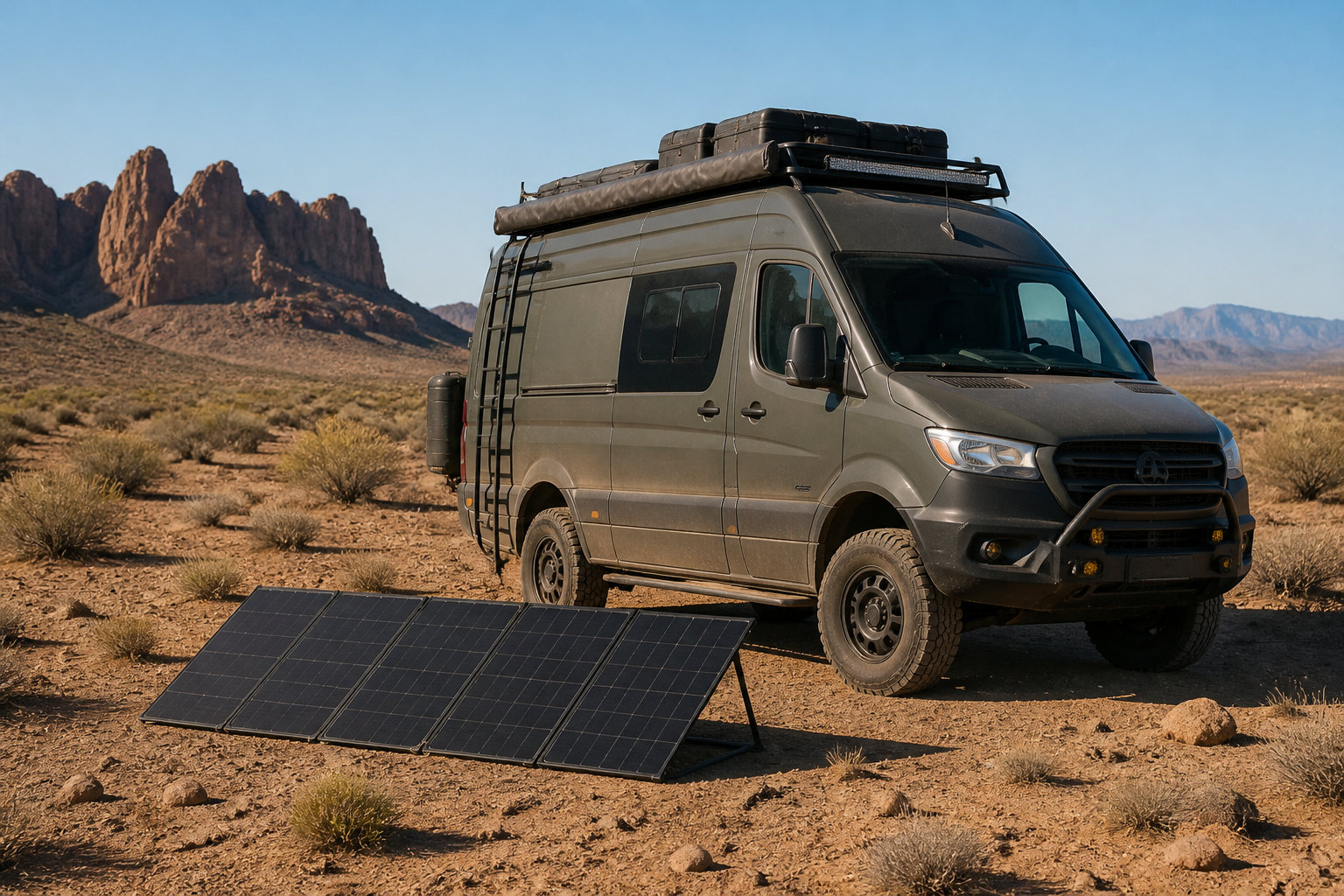
Deciding between Best solar panel mounting options for RV roofs or portable kits depends on your rig. Many nomads use Van Solar Panel Kits: Roof-Mount vs Portable to balance stealth and efficiency.
Optimal angling varies by latitude. Adjusting tilt twice daily boosts output by 25%. Avoid shading, as one blocked cell can tank the entire string’s performance.
Adjust the tilt of your portable panels twice a day to follow the sun; this simple action can boost your total daily energy output by up to 25%.
Smart Power Management with USB-C PD
Direct DC charging offers massive benefits. Using USB-C PD bypasses inefficient AC inverters entirely. This keeps devices cool and extends battery runtime during long work calls.
Battery tracking via Bluetooth apps is essential. Monitor real-time input versus output. These tools help identify power-hungry background processes that drain your station faster than expected.
Temperature management is vital. High heat causes thermal throttling in batteries and panels. Keep gear ventilated to learn How to optimize mobile solar energy in extreme climates effectively. ⚡
Maintenance Routines to Prevent Mid-Trip Failures 🛠️
Even the best setup will fail without a disciplined maintenance schedule, especially when bouncing down washboard roads or facing extreme weather.
Battery Safety in Extreme Temperatures
Winter demands thermal insulation for lithium batteries. Never charge a frozen LiFePO4 battery. Use internal heaters or insulated boxes to keep the core temperature above freezing during night shifts. ❄️
Never charge a frozen LiFePO4 battery. Ensure the core temperature is above freezing using insulated boxes or internal heaters to prevent permanent cell damage.
Summer requires proactive ventilation. Overheating shortens battery lifespan and triggers safety shutdowns. Ensure airflow around the power station’s fans and check for hot spots on connectors during peak solar noon. ☀️

Watch for cable and connector degradation. Look for frayed wires or melted plastic near MC4 connectors. Regular checks stop small issues from becoming fire hazards. ⚡
- Check for corrosion on terminals
- Inspect cable jackets for UV damage
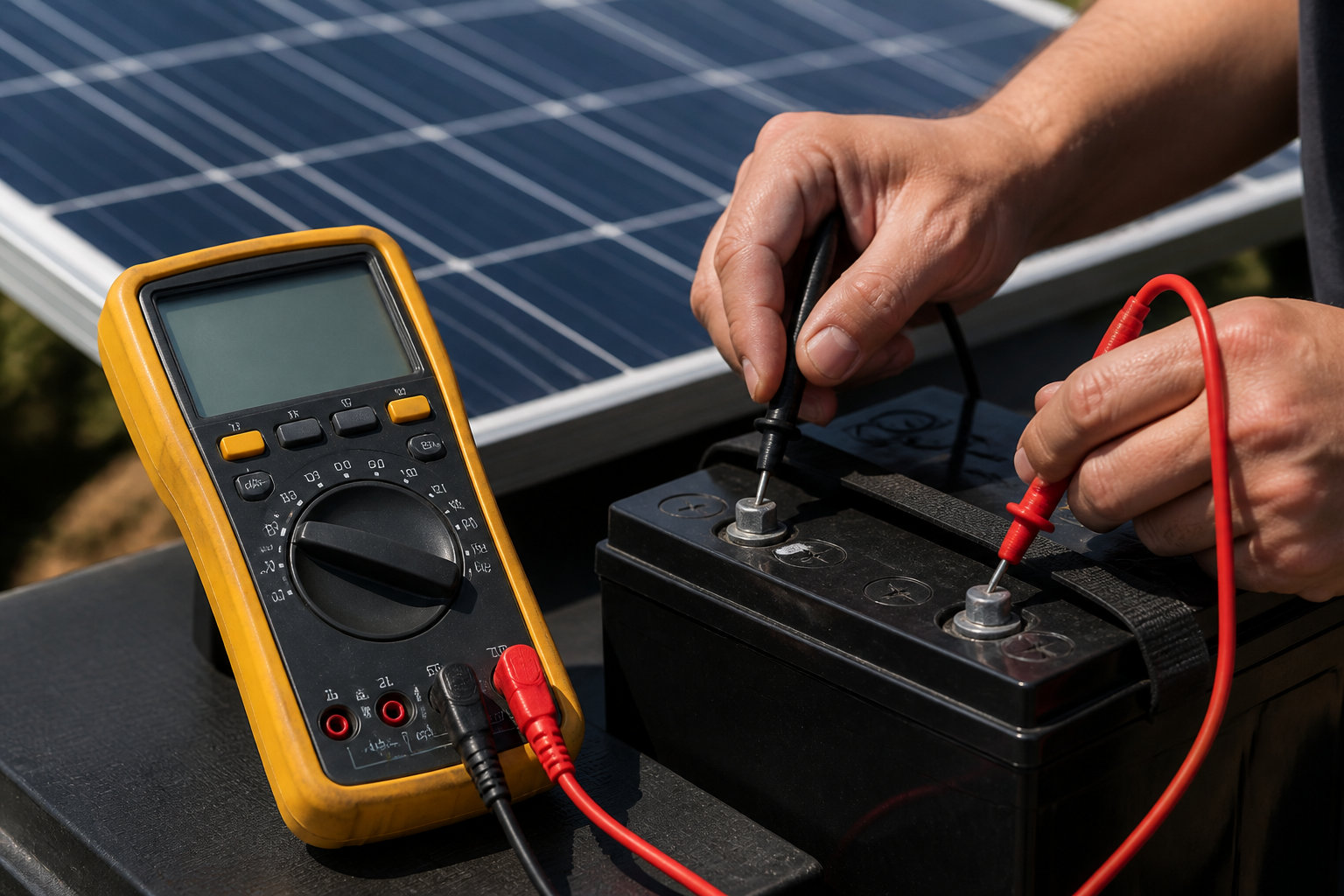
- Test voltage output monthly
- Tighten all screw terminals
Hardware Transit and Storage Best Practices
Protect fragile folding panels with casing. Vibrations during transit cause micro-cracks in solar cells. Use padded sleeves and store panels vertically to avoid pressure points on the glass or film. 🚐
Clean surface debris to maintain peak performance. Dust, pollen, and salt spray reduce efficiency by 10% or more. Use a soft microfiber cloth and plain water, avoiding abrasive chemicals on ETFE coatings. 🧼
Maintain specific voltage levels for long-term storage. Keep batteries at 40-60% charge when not in use. Proper storage prevents the chemical degradation that ruins expensive hardware during the off-season. 🔋
Storing a lithium battery at 100% or 0% for months is the fastest way to permanently lose 20% of its total capacity.
Mastering your solar panel setup for digital nomads requires pairing 200W monocrystalline panels with a 500Wh+ LiFePO4 station and using USB-C PD for maximum efficiency. Maintain your gear regularly to ensure total energy independence during your remote travels. Secure your mobile freedom now and never miss a deadline under the sun! ☀️
FAQ
How can I charge my professional laptop using solar power?
To charge your laptop efficiently, you need a setup that provides a stable voltage, typically between 15V and 21V. Because laptops are sensitive to fluctuations, we highly recommend using a portable power station as a buffer between your panels and your device. This ensures your battery stays safe from surges and receives a consistent flow of energy. ☀️
For the best results, look for a system featuring USB-C PD (Power Delivery) ports. This technology allows you to bypass inefficient AC inverters and charge your gear directly via DC power, which saves significant energy and keeps your workspace cooler during those long remote work sessions. 💻
What is the most reliable battery technology for a mobile lifestyle?
If you want a battery that lasts for years of daily travel, LiFePO4 (Lithium Iron Phosphate) is the gold standard. These batteries are incredibly stable and safe, offering between 2,500 and 3,500 charge cycles before losing significant capacity. Compare that to traditional lead-acid batteries that often fail after just 300 cycles! 🔋
Beyond longevity, LiFePO4 cells handle extreme temperatures much better and are more environmentally friendly since they don’t rely on rare metals like cobalt or nickel. Investing in this chemistry means you’ll have a reliable power source that won’t let you down when you’re working off the grid. 🌍
Why should I choose an MPPT controller over a PWM model?
An MPPT (Maximum Power Point Tracking) controller is like a smart brain for your solar setup. It constantly calculates the optimal voltage to harvest the maximum amount of juice from the sun, increasing your efficiency by 15% to 30% compared to older PWM technology. This is a game-changer during cloudy days or in colder climates! ⚡
While PWM controllers are simpler and cheaper, they waste energy by forcing your panels to operate at the battery’s lower voltage. For a digital nomad who relies on every watt to meet a deadline, the superior energy harvest of an MPPT controller is absolutely worth the investment. 🚀
How do I maintain my solar panels for maximum efficiency while traveling?
Keeping your panels clean is the easiest way to boost your output! Dust, salt spray, and pollen can reduce efficiency by 10% or more, so give them a quick wipe with a soft microfiber cloth and plain water. Avoid harsh chemicals that could damage the protective ETFE coating on your folding panels. 🧼
When you’re on the move, always store your panels in padded sleeves and keep them vertical to prevent micro-cracks caused by road vibrations. Also, remember to check your cables for UV damage or frayed wires regularly to prevent any mid-trip power failures. 🛠️
Can I use solar power to run my mobile office in extreme weather?
Yes, you absolutely can, but you must manage your battery’s temperature! Never charge a frozen LiFePO4 battery, as this can cause permanent damage; use insulated boxes or internal heaters to keep it safe in winter. In the heat of summer, ensure your power station has plenty of airflow to prevent thermal throttling. 🌡️
For your panels, remember that they actually perform better in cold, clear conditions, provided you have an MPPT controller to capture the higher voltage. By keeping your gear within its preferred temperature range, you’ll ensure a steady stream of power whether you’re in the desert or the mountains. 🏔️