Running a standard pool pump can account for a massive chunk of your home energy costs, but switching to a dedicated solar panel kit for pool pump systems can slash those specific electricity bills by up to 80%. It is a common frustration to watch your hard-earned savings evaporate just to keep your water clear and inviting.
We are going to explore how these clever off-grid setups work and how you can easily size your own system to achieve total energy independence. I will help you pick the perfect configuration so you can enjoy a sparkling pool with complete peace of mind.
- Why a Solar Panel Kit for Pool Pump Is Your Best Energy Ally
- 3 Steps to Size Your System Without the Guesswork
- How Much Can You Actually Save on Your Electricity Bill?
- Practical Tips for a Smooth Solar Transition
Why a Solar Panel Kit for Pool Pump Is Your Best Energy Ally
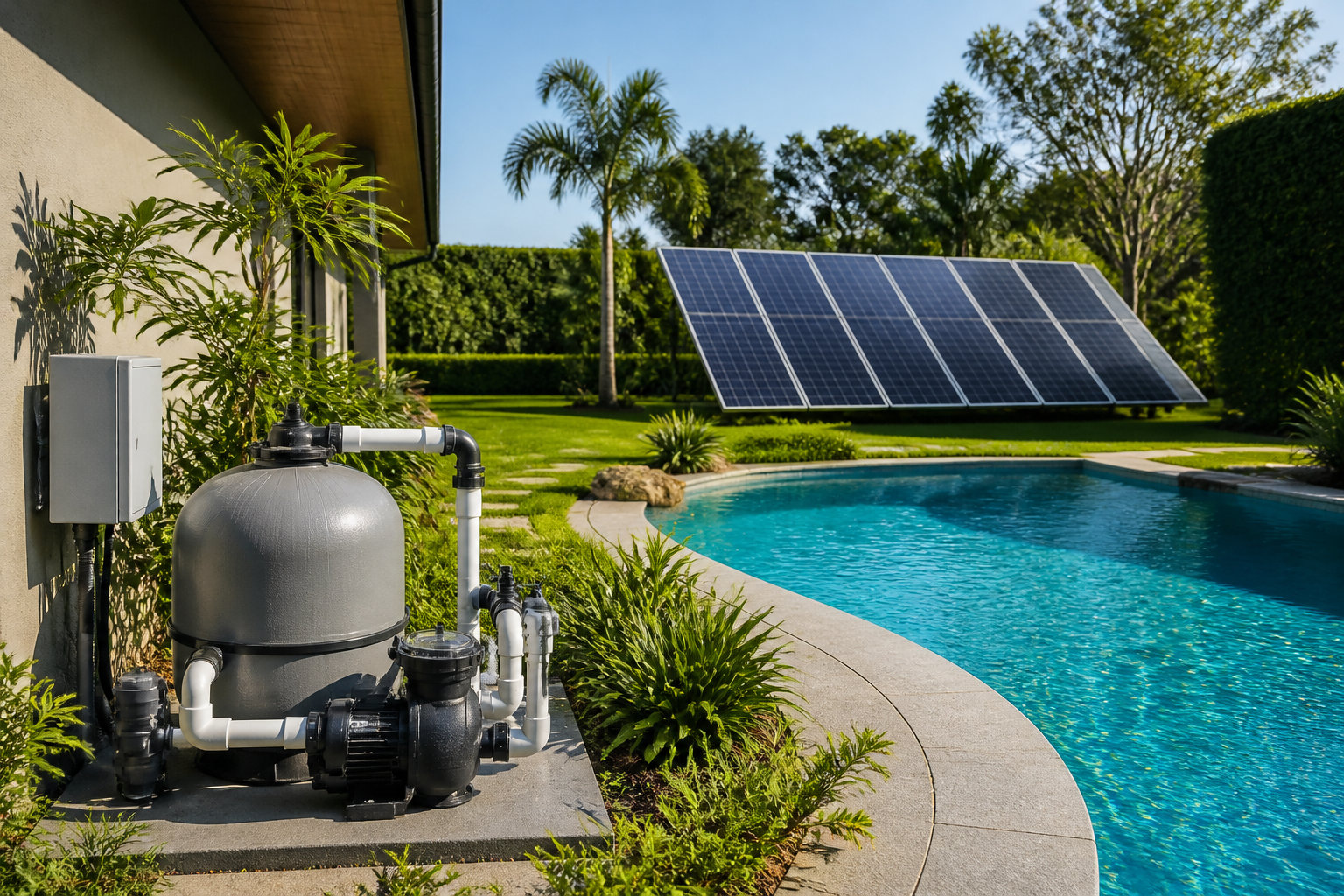
Off-grid solar pool kits typically save $250 annually by using DC brushless motors and 1000W photovoltaic arrays. These systems bypass inefficient inverters, relying on dedicated controllers to stabilize filtration during peak sunlight hours for maximum hardware longevity.
The mention of hardware longevity leads directly into the specific physical components required for the setup.
A motor running directly on DC current from panels, bypassing inverters for higher efficiency.
The Core Components of Your Off-Grid Filtration Setup
Essential hardware includes monocrystalline panels and an MPPT controller. These parts capture energy efficiently. It is a simple way to power your pool.
The pump motor is the heart of the system. It operates in a dedicated DC environment. This specific motor type ensures reliable solar direct drive.
Optional batteries extend filtration beyond daylight. They provide extra flexibility for maintenance. This choice impacts the solar battery price for home systems.
Removing inverters eliminates heat waste entirely. This creates a streamlined energy flow. You get better performance with fewer complex parts.
3 Steps to Size Your System Without the Guesswork
Moving from hardware basics to practical application requires precise calculations to ensure your pool stays clear without wasting money on oversized arrays.
Matching Panel Wattage to Pump Horsepower
Getting the right panel count for your motor is the first win. A 0.75 HP pump usually needs 800W. Meanwhile, a 1.5 HP motor requires at least 1600W of solar capacity.
| Pump Power (HP) | Suggested Panels (300W) | Total Capacity |
|---|---|---|
| 0.75 HP | 3-4 panels | ~800W |
| 1 HP | 5-6 panels | ~1200W |
| 1.5 HP | 7-8 panels | ~1600W |
I always suggest a safety margin. Extra wattage maintains flow during weak sunlight. This is vital for plug and play solar panel efficiency in varied conditions.
Calculating Pool Volume for the Right Flow Rate
Link your capacity to turnover. A 20,000-gallon pool needs full filtration daily. Calculate the gallons per hour required for a clean environment.
Determine runtime based on insolation. Most regions offer 5-6 peak sun hours. Align the pump’s flow rate with these specific daylight windows.
Translate Wh consumption into array size. Total daily energy needs dictate the final panel count. Use a how to calculate solar panel wattage approach for accuracy.
How Much Can You Actually Save on Your Electricity Bill?
Once the technical sizing is complete, the focus shifts to the financial rewards of cutting the cord from the traditional power grid.
- Annual Savings: Over $250
- ROI Period: 4-5 years
- Production Guarantee: 87% at 25 years
Projecting Your Return on Investment and Yearly Gains
“Switching a standard 1 HP pool pump to solar power can reduce annual electricity expenses by over $250, depending on local utility rates.”
This drop in overhead is a breath of fresh air.
Most users see a full return within three to five years. We use 2026 energy prices as a benchmark. It is a fast way to regain your capital.
Modern modules often last 25 years. This longevity helps to calculate the ROI of your residential solar kit effectively. You gain lasting peace of mind.
Comparing Dedicated DC Pumps and AC Retrofits
| Feature | Dedicated DC Pump | AC Retrofit |
|---|---|---|
| Efficiency | High | Medium |
| Maintenance | Low | High |
| Lifespan | 10+ years | 5-7 years |
Fewer electronic failure points mean less downtime. Brushless motors avoid common wear issues. This ensures your system stays reliable through every summer heatwave.
Inverter kits allow keeping old pumps. However, they introduce efficiency losses. Choosing DC is the smoother path to autonomy.
Practical Tips for a Smooth Solar Transition
Savings are guaranteed, but achieving them requires a careful installation that respects the unique electrical demands of water filtration hardware.
Managing Startup Surges and Controller Stability
Motors require a massive burst of energy to ignite. Solar controllers manage this high initial current, often 3 to 7 times the nominal rate, to prevent frustrating system trips.
Ensure proper grounding and wiring to prevent motor overheating; follow local USA plug-and-play regulations to avoid system trips.
Proper wiring and grounding are mandatory for your protection. Always follow legal regulations for plug and play solar in USA for safety. These rules keep your home secure.
Stable power prevents motor overheating and damage. Consistent voltage remains the primary factor in extending the lifespan of your pump. It protects your investment for years to come.
Handling Cloudy Days and Seasonal Performance
Reduced sunlight means slower flow rates for your system. Your filtration schedule must adapt to weather patterns to keep water sanitary. Overcast risks shouldn’t ruin your pool water quality.
Increase runtime during summer peaks to maximize sun capture. Learn how to maintain solar panel kit efficiency in winter for year-round success. Adjusting angles helps maintain performance.
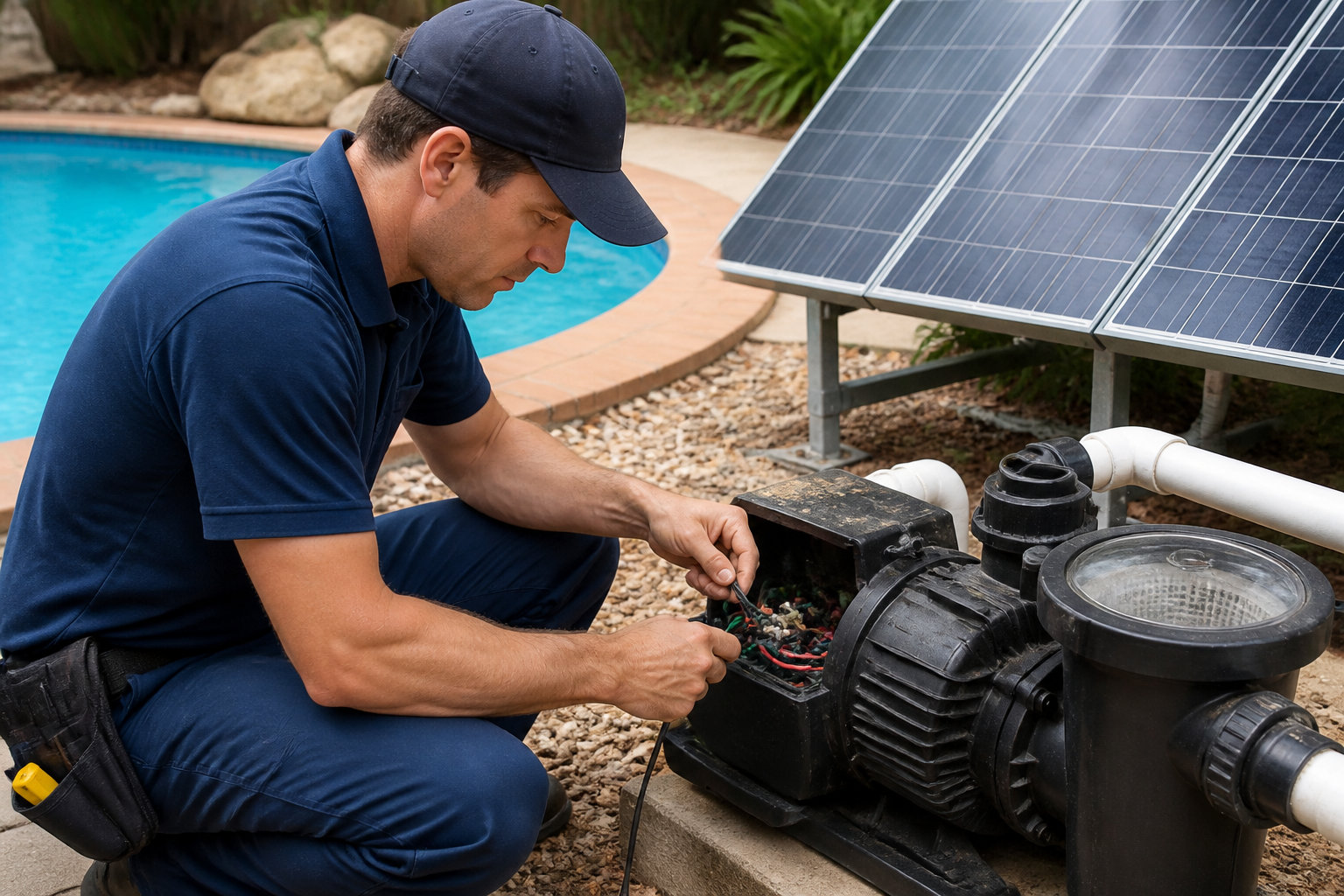
Check connections immediately if the pump stops unexpectedly. Ensure the controller display shows active charging right now. Verify that no shadows block the panels to restore full power quickly.
A Solar panel kit for pool pumps: reducing your energy bill is easy when you dimension the system to 125% of your pump’s needs to handle cloudy intervals.
Embrace lasting peace of mind by pairing a high-efficiency DC motor with an optimized MPPT controller to slash your pool’s energy expenses by 80%. This simple transition ensures crystal-clear water while securing a rapid return on investment. Start your solar panel kit for pool pump installation today to enjoy a future of free, sustainable filtration.
FAQ
How do I calculate the solar power capacity needed for my pool pump?
Determining your solar needs is a wonderful first step toward energy independence! First, identify your pump’s wattage and multiply it by the number of hours it runs daily to find your daily consumption in kWh. For example, a 1 kW pump running for 6 hours uses 6 kWh per day. Next, consider your local “solar yield,” which tells you how much energy a kilowatt-peak (kWp) of panels produces in your specific region.
To find the total wattage required, divide your annual consumption by your region’s solar yield. Finally, divide this total by the wattage of a single panel (like 400W or 500W) to see how many modules you need. We always recommend adding one extra panel as a safety margin to ensure consistent filtration even when the sun is playing hide-and-seek!
What is the best way to convert my pump’s horsepower into watts?
It is actually quite simple to bridge the gap between these two measurements! In the world of pool equipment, we typically use the electrical horsepower standard, where 1 HP equals 746 watts. This means a standard 1 HP pump draws about 746W, while a smaller 0.75 HP model uses roughly 560W. Knowing this number is your key to unlocking the perfect solar kit size.
Always double-check your pump’s manual, as some manufacturers might use slightly different metrics, but using the 746W rule is a very reliable starting point. Once you have this wattage, you are well on your way to selecting a system that provides total peace of mind and significant savings on your utility bills.
Are brushless DC solar pumps really more efficient for my pool?
Absolutely! Switching to a brushless DC motor is like giving your pool a high-tech upgrade that pays for itself. These pumps are designed without physical brushes, which eliminates mechanical friction and energy loss. Because they use advanced electronics to manage power, they can move significantly more water using the exact same amount of sunlight compared to traditional motors.
Beyond just saving energy, these pumps offer incredible longevity and require much less maintenance since there are no brushes to wear out. It is a win-win situation: you enjoy a crystal-clear pool with lower operating costs and a system that is built to last for years to come.
How can I prevent system trips caused by pump startup surges?
It is perfectly normal for a motor to need a quick “burst” of energy, often 3 to 7 times its running current, to get started. To handle this smoothly, you should choose a solar controller or inverter with a surge rating higher than your pump’s startup demand. For a 1 HP pump, an inverter rated between 1.1 kW and 1.5 kW is usually the sweet spot for total reliability.
You can also enjoy even greater stability by using a soft-start module or a Variable Frequency Drive (VFD), which gently ramps up the motor speed. Ensuring your cables are the correct thickness and your connections are secure will keep the voltage stable, protecting your equipment and giving you a seamless, worry-free solar experience.
How much can I realistically save by switching my pool to solar?
You will be thrilled to see how quickly the savings add up! By harnessing the sun, you can reduce the electricity costs associated with your pool by up to 80%. For a standard 1 HP pump, this often translates to over $250 in annual savings. It is a powerful feeling to watch your meter slow down while the sun does the hard work for you.
Most homeowners find that their solar pool kit pays for itself in just 4 to 5 years. Given that modern solar panels come with production guarantees lasting 25 years or more, you are looking at two decades of virtually free pool filtration. It is a smart, sustainable investment that brings both financial relief and environmental pride.