A standard 200W solar panel can typically sustain a 12V compressor fridge, provided you account for real-world efficiency losses and peak sun hours. But how do you determine the exact setup needed to keep your lights on and your food cold without draining your batteries mid-trip?
We often spend more time worrying about battery levels than enjoying the great outdoors. This guide will show you exactly how to calculate solar panel wattage for camping so you can build a reliable power system tailored to your specific gear and travel habits.
- Master The Basics Of Solar Panel Wattage For Camping
- Calculate Your Daily Power Load In 2 Steps
- Factoring In Sunlight Hours And Battery Capacity
- 3 Tips To Optimize Your Solar Setup Efficiency
Master The Basics Of Solar Panel Wattage For Camping
Efficient camping solar setups require matching daily Amp-hour consumption to panel wattage using a 12V baseline. A 200W panel typically sustains a standard fridge, provided the system accounts for peak sun hours and voltage.
Deciphering Electrical Units Like Volts And Amps
Think of Volts as water pressure and Amps as flow rate. Most camping rigs use the 12V standard to push energy through circuits.
To find total output, multiply these units. Watts equals Volts times Amps, representing the actual work done by your equipment.
Watts = Volts x Amps. In a 12V system, this formula is the foundation for every calculation you make.
Watts are the real measure of work being done by your solar panels every single hour.
Balancing these units is vital. Proper calculation prevents overheating wires and avoids dangerous electrical fires during your trip.
Converting Amp-hours To Watt-hours For Accuracy
Converting Ah to Wh provides a consistent baseline. Multiply Amp-hours by battery Voltage to get the total energy capacity available for your devices.
Watt-hours are superior for sizing as they account for voltage fluctuations. Consistency is key for long-term storage and comparing different battery types accurately.
Mastering how to calculate solar panel wattage for camping ensures your fridge stays cold. Don’t leave your power to chance.
Calculate Your Daily Power Load In 2 Steps
Once you grasp the units, you need to look at what is actually draining your battery every day.
Audit Your Appliances And Usage Hours
List common gear like 12V compressor fridges and LED lights. Note their specific hourly draws. These appliances form the baseline of your mobile energy needs.
Calculate total daily consumption next. Multiply Amps by hours of use. This total Amp-hours figure covers everything, including small phone chargers.
| Appliance | Estimated Draw (Amps) |
|---|---|
| 12V Fridge | 2-3A per hour |
| LED Lights | 0.5A per hour |
| Water Pump | 4A (intermittent) |
| Phone Charging | 1A |
Apply A 20% Safety Buffer For Real-World Losses
You must justify a margin. Wiring resistance and heat steal energy. Solar panels rarely hit their theoretical maximum output in typical outdoor conditions.
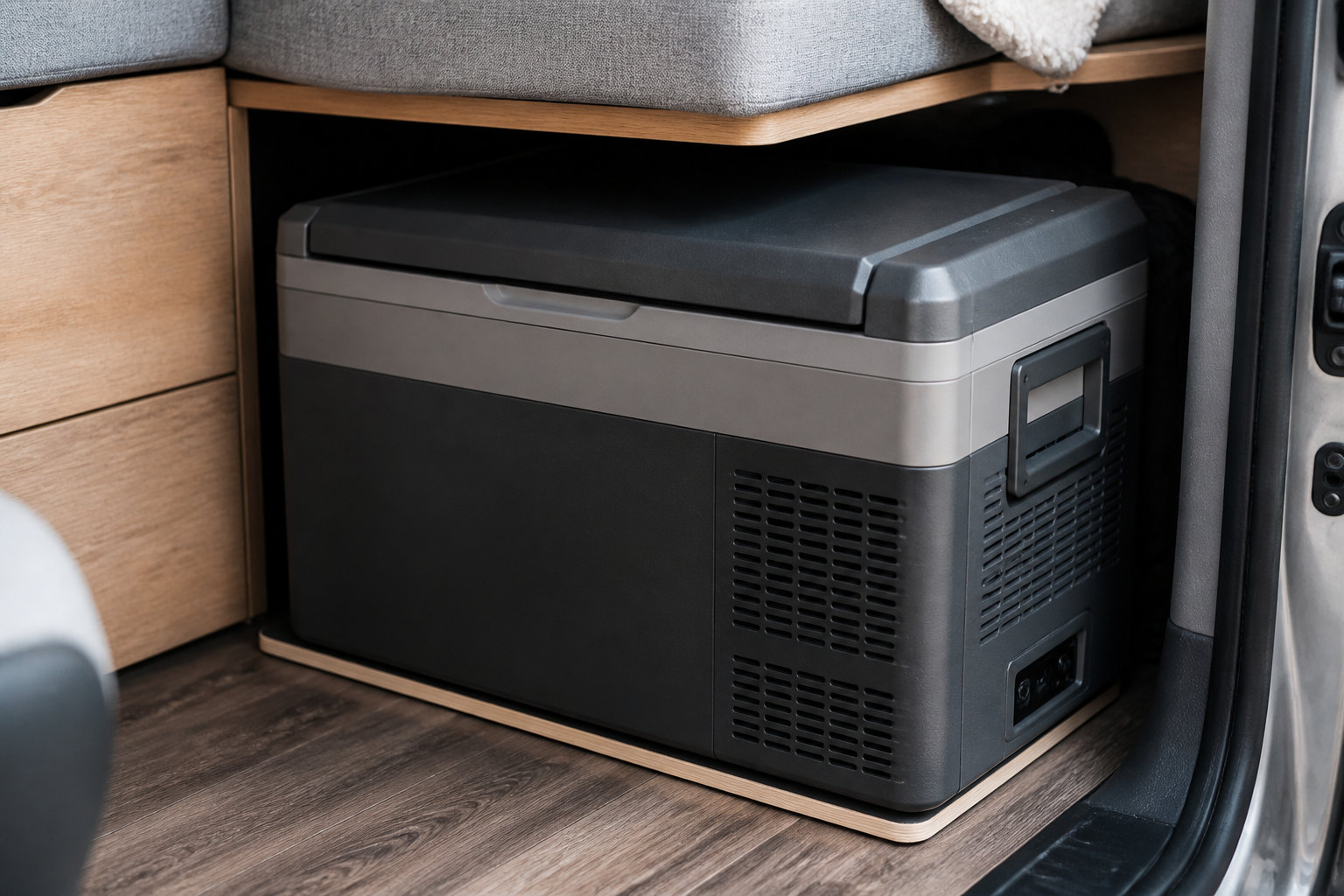
A buffer prevents total battery depletion. Cloudy spells can ruin a tight energy budget. Safety margins keep the lights on during unexpected storms.
Standard industry practice dictates a 20% buffer. This accounts for inverter efficiency losses and ensures your solar panel battery remains healthy.
Factoring In Sunlight Hours And Battery Capacity
Knowing your load is half the battle; the other half is understanding harvest potential. The sky might look bright, but panels only care about high-intensity photons.
Why Peak Sun Hours Dictate Your Panel Size
Total daylight is a myth. Distinguish between light and usable peak sun hours. Most regions offer 4 to 5 hours, which is crucial for sizing.
Seasonal shifts change everything. Winter sun is lower and weaker. Adjust expectations based on your specific camping location to avoid power shortages.
| Season | Avg Peak Sun Hours | Recommended Panel Wattage | Yield Expectation |
|---|---|---|---|
| Summer | 5-6h | 200W | High |
| Autumn | 3-4h | 300W | Moderate |
| Winter | 1-2h | 450W+ | Low |
| Spring | 4-5h | 250W | Steady |
Managing Battery Health And Discharge Limits
AGM batteries should only drop to 50% capacity. Lithium safely reaches 80%, giving you more usable energy from a smaller, lighter footprint.
Link battery capacity to recharge rates. Large banks need more panels. Balance your system to avoid chronic undercharging and premature cell failure.
Discharging a lead-acid battery below 50% consistently will kill its lifespan in months, not years.

3 Tips To Optimize Your Solar Setup Efficiency
Beyond the math, the hardware you choose determines how much sunlight reaches your batteries. Selecting components is as vital as knowing how to calculate solar panel wattage for camping.
Choosing Between MPPT And PWM Charge Controllers
MPPT controllers offer 90-95% efficiency, beating PWM models on overcast days. They convert excess voltage into usable current. This maximizes your energy harvest in varied conditions.
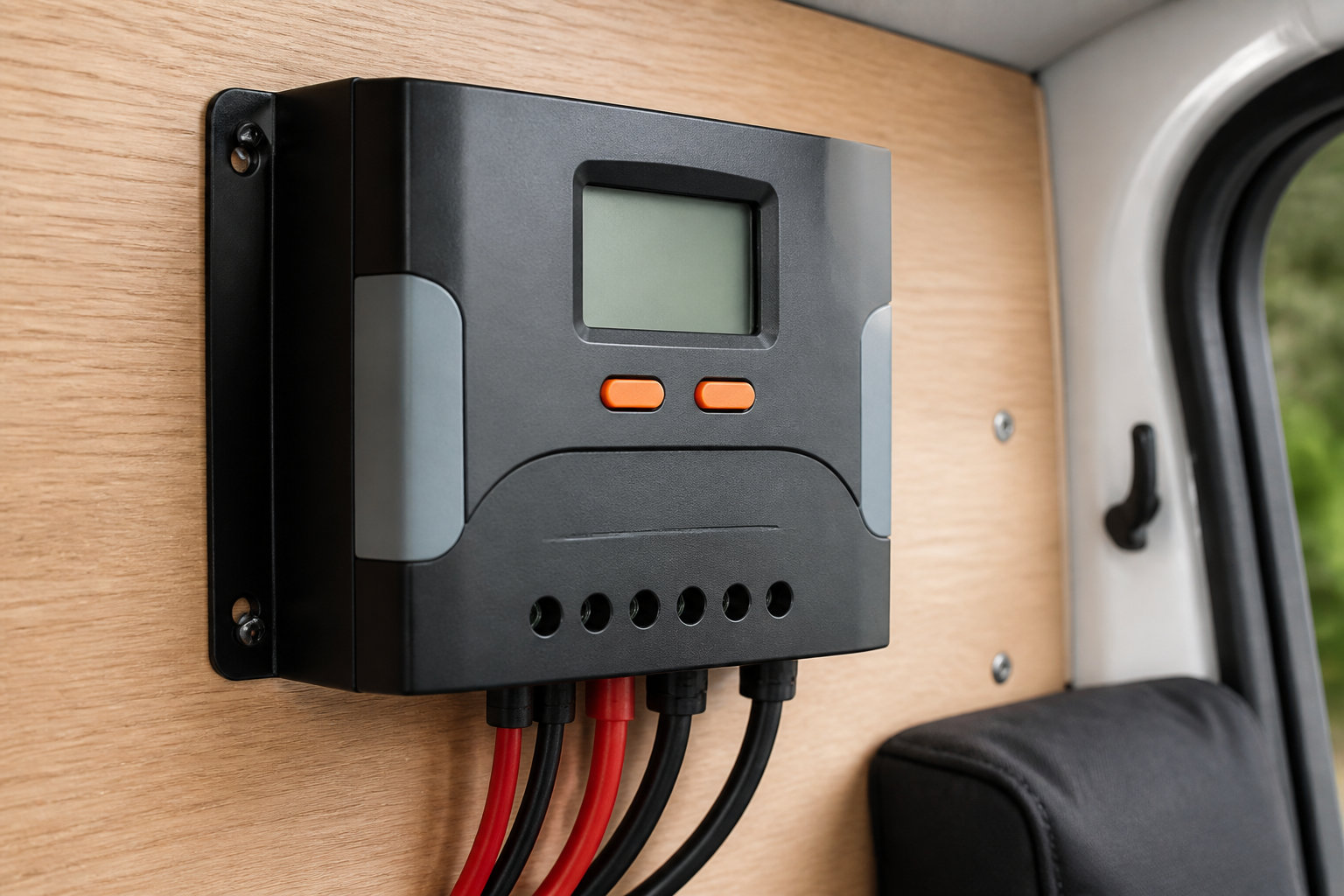
These regulators prevent damage by stopping overcharging and night-time reverse flow. Protect your investment with a quality regulator. It ensures your batteries last much longer through advanced charging cycles.
Comparing Fixed Panels And Portable Solar Blankets
Portable panels offer flexibility for chasing the sun. They allow parking in the shade while placing cells in direct light. Use them to supplement existing roof arrays.
Fixed systems provide constant charging while you drive. They offer stable performance for high-power needs. Check this solar panel for van guide to choose your mounting style.
Positioning And Maintenance For Maximum Yield
Adjusting tilt angles between 10 and 60 degrees optimizes seasonal output. Dust and bird droppings significantly reduce conversion. A clean panel is an efficient panel.
Regularly clean dust; even small shadows from roof racks can reduce output by 50%.
Troubleshoot underperforming arrays by checking for loose connections. Small obstructions cause massive voltage drops. Keep your line of sight to the sun clear for results.
Mastering how to calculate solar panel wattage for camping ensures you never run out of power. By auditing your daily Amp-hours, adding a 20% safety buffer, and choosing high-efficiency MPPT controllers, you secure total energy independence. Start sizing your rig today to enjoy worry-free, off-grid adventures under the sun.
FAQ
How do I determine the right solar panel wattage for my camping needs?
To find your ideal wattage, you must first audit your daily energy consumption in Amp-hours (Ah). List every device, from your 12V fridge to your LED lights, and multiply their hourly draw by the hours used. Once you have your total daily load, add a 20% safety buffer to account for wiring losses and heat, ensuring you never run out of juice in the wild.
Next, divide your total daily Watt-hours by the average peak sun hours in your region (typically 4 to 5 hours). For example, if you consume 836Wh per day with 4 hours of sun, a 279W setup is your target. Generally, a 150W to 300W system is the sweet spot for most campers running a fridge and basic electronics.
What is the difference between Amps, Volts, and Watts in a solar setup?
Think of your electrical system like a water pipe: Volts represent the water pressure, while Amps represent the flow rate. When you multiply these two together, you get Watts, which is the actual measure of work being done by your panels every hour. In the camping world, we almost always work with a 12V baseline for batteries and appliances.
Understanding this relationship is vital for sizing your system correctly. While batteries are often rated in Amp-hours, converting them to Watt-hours (Ah x Voltage) gives you a much more accurate picture of your storage capacity. This consistency allows you to match your panels’ output to your battery’s needs without risking electrical issues or undercharging.
Should I choose a fixed solar panel or a portable solar blanket for my van?
Fixed panels are the “set and forget” champions, mounted securely on your roof to charge while you drive. They are incredibly durable, feature protective aluminum frames, and offer the best long-term value. However, they force you to park your vehicle in direct sun, which can turn your van into an oven during the summer months.
Portable solar blankets offer the ultimate flexibility, allowing you to park in the shade while placing the panels in a sunny patch nearby. They are lightweight and easy to fold, though they are more vulnerable to theft and weather damage. For the best of both worlds, many experts recommend a hybrid setup: fixed panels for baseline charging and a portable blanket to chase the sun.
How does a charge controller impact my solar efficiency?
The charge controller is the “brain” of your system, preventing your panels from overcharging your battery. A PWM (Pulse Width Modulation) controller is a budget-friendly choice for small systems under 200W, but it is less efficient. It essentially acts as a switch that matches the panel voltage to the battery, losing potential energy in the process.
For maximum performance, we always recommend an MPPT (Maximum Power Point Tracking) controller. It can boost your efficiency by up to 30% by converting excess voltage into additional charging current. This is especially crucial during winter or overcast days when every bit of sunlight counts toward keeping your battery healthy and full.
How many solar panels do I need to run a 12V fridge while camping?
A standard 50L compressor fridge typically consumes about 30 Ah per day. When you add in phone charging and LED lights, your total daily requirement often hits around 40 Ah. In peak summer conditions, a single 100W to 120W panel can usually keep up with this demand, provided you get enough direct sunlight.
However, if you plan on camping during the spring or autumn when sun hours are shorter, you should aim for a 170W to 220W setup. This extra overhead ensures that even on cloudy days, your fridge stays cold and your battery doesn’t drop below safe discharge levels, protecting your expensive lithium or AGM storage.