Solar panels on fence lines can turn a plain boundary into a small power source.
Not every fence is strong enough, though, and not every spot gets enough light. This guide shows you how to check both and estimate what your yard could produce.
Solar panels on fence suit sites with sound posts and open exposure
Check the fence structure before you mount a single panel
A solar retrofit keeps your existing fence and adds rails, brackets, and wiring. A dedicated solar fence replaces the posts and panels with one engineered structure. The retrofit only comes out cheaper when the fence already has strong, well-anchored posts.
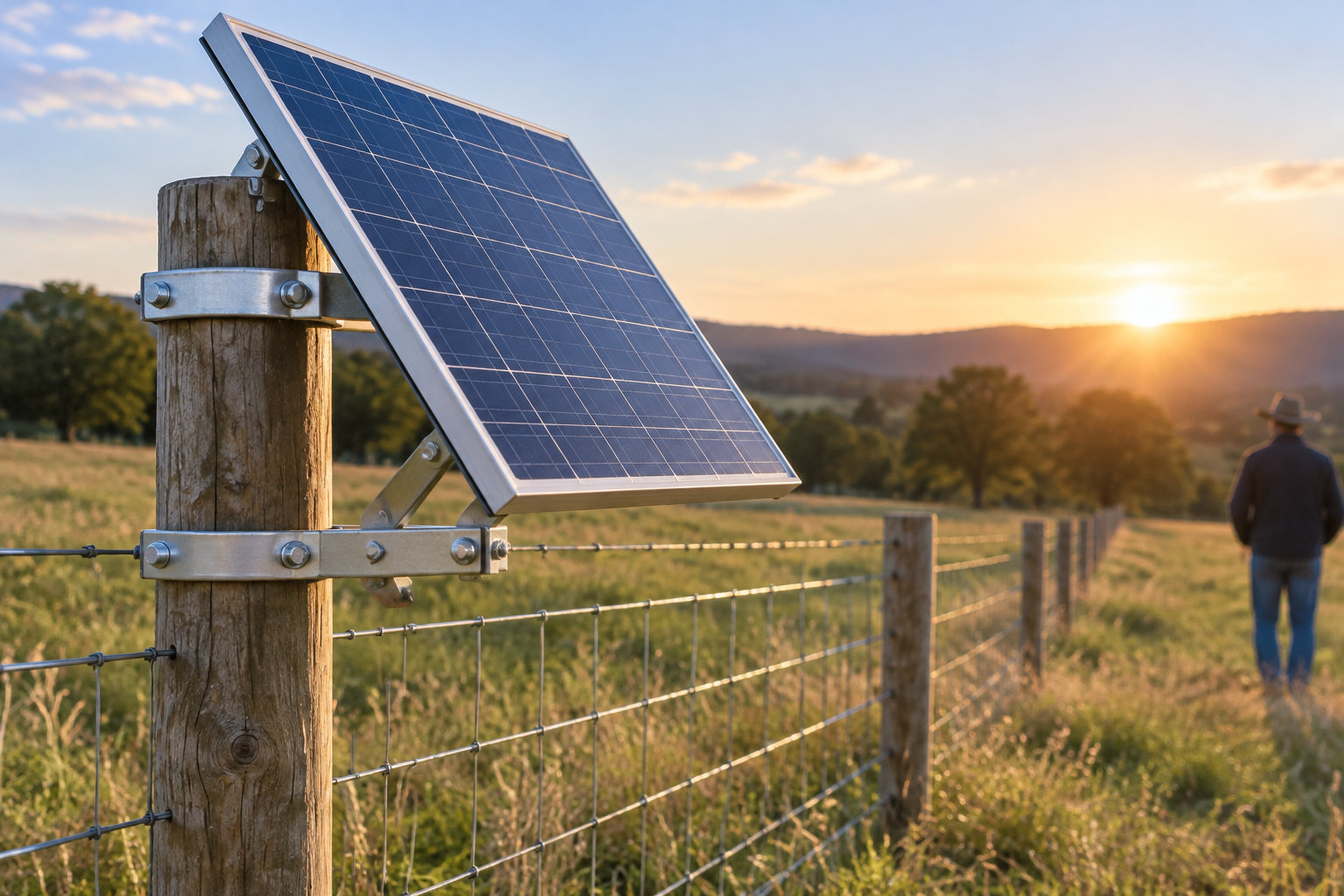
Go along every post for rot, cracks, movement, and shallow footings before you lift a panel into place. A 430-watt bifacial module can weigh roughly 50 pounds. A weak post that feels fine under a hand can work loose in a strong gust. Before you trust it, read the How to install balcony solar panels safely guide for the anchoring points it recommends.
Measure the post spacing, fence height, panel width, and the clearance between panel and fence. The panel must not block a gate, lean over the neighbour’s line, or hang cables low enough for a mower to catch.
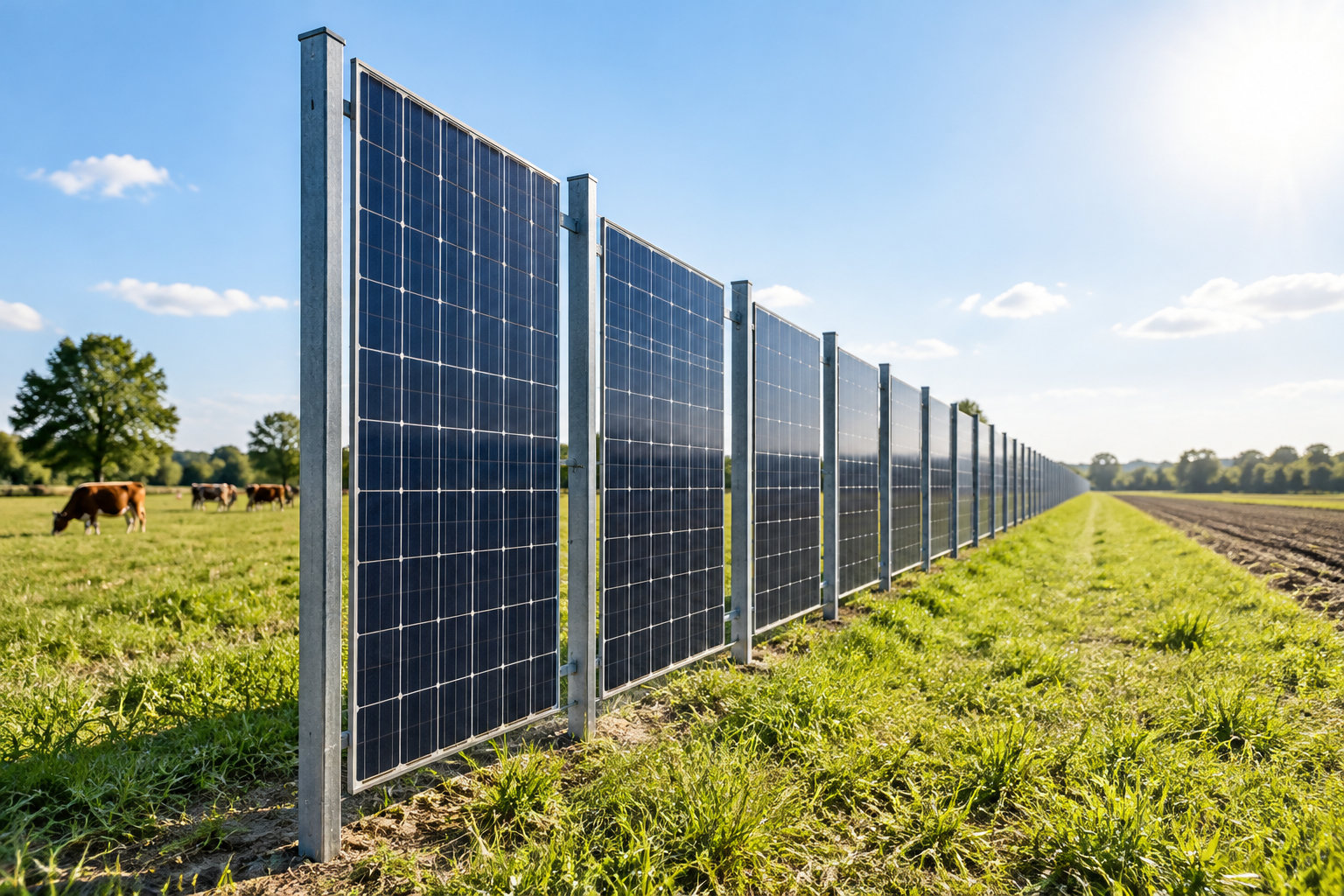
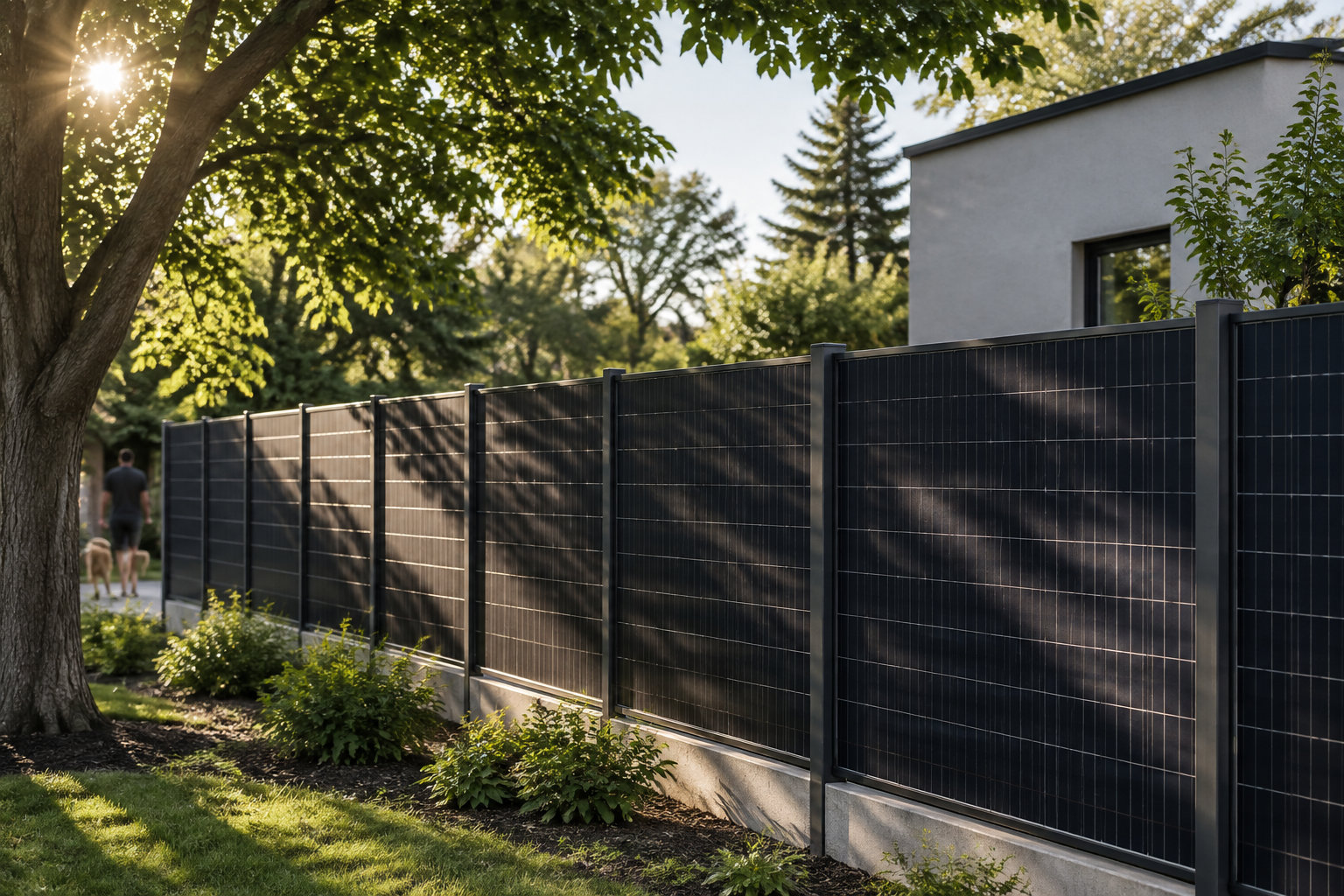
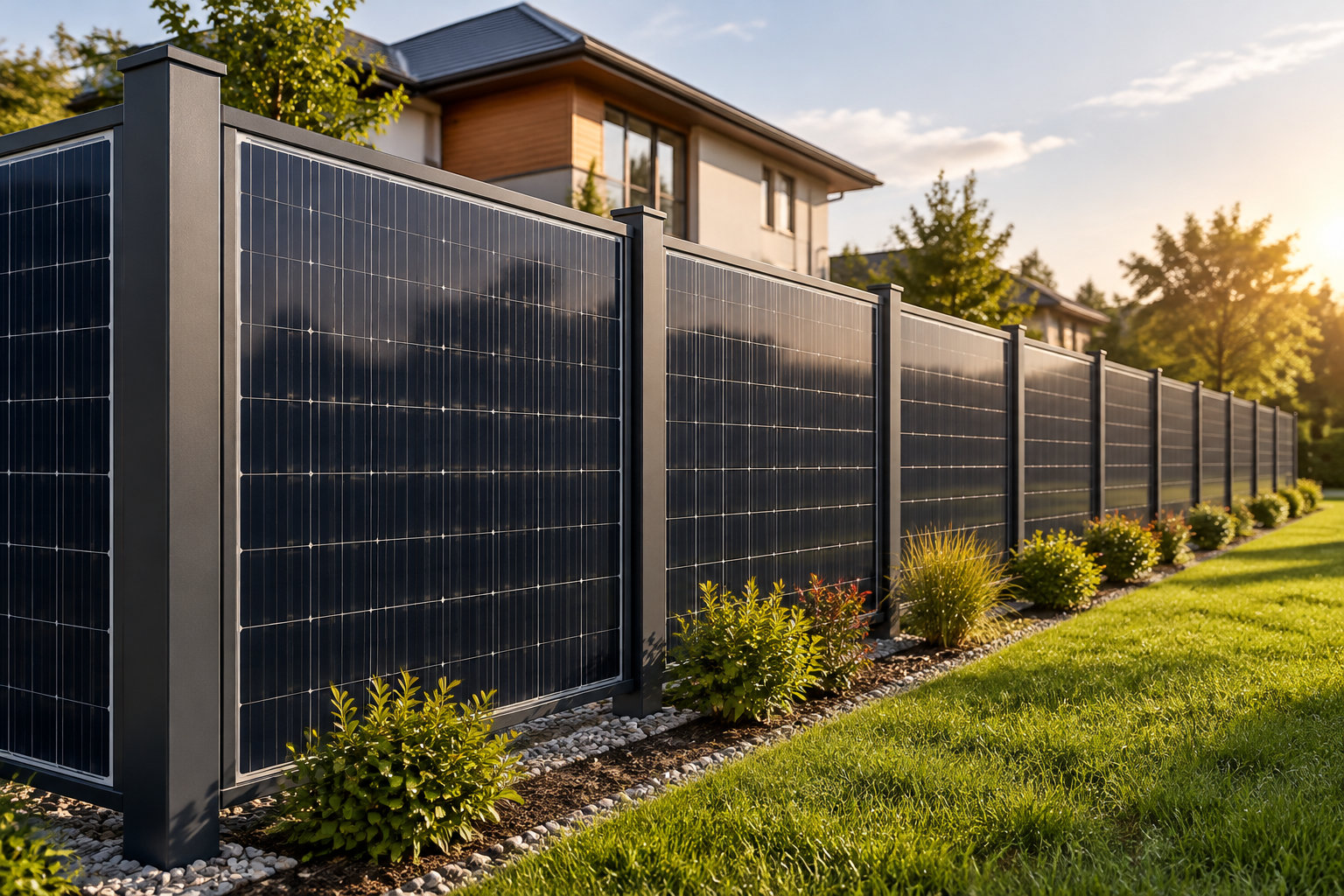
A dedicated solar fence usually combines galvanized-steel posts, an aluminium frame, tempered-glass bifacial modules, and attachment hardware. The fence line becomes the mounting structure itself.
Test the sunlight and clearance around the fence line
Walk the line at mid-morning, at solar noon, and again in late afternoon. Then repeat the walk in winter, when the sun sits lower. A spot that looks wide open in July can lose hours of light behind a bare tree in January.
South-facing tilted panels normally deliver the most annual energy in the United States. A vertical fence can still work well if its two active faces point east and west: one catches the morning sun, the other the late-day sun.
Keep open ground in front of both faces when you use bifacial panels, since they generate from the front and the rear. A tight privacy wall close behind one face turns half the panel into a dark window.
Pale gravel, concrete, snow, and light walls throw more light back onto the rear face than dark soil or grass does. Rear-side output depends on how bright the surface behind the module is, on an open viewing angle, and on no shadow falling across the back.
Leave enough ground clearance to keep grass, leaves, splashback, and drifting snow off the lower edge. Eight inches is a practical starting point for a low fence, but local snow, flood, and animal conditions can call for more.
Site check before you mount
Walk the line at mid-morning, at solar noon, and in late afternoon.
Repeat the walk in winter, when the sun sits lower.
Keep open ground in front of both faces of a bifacial fence.
Leave a clear gap under the lower edge, starting near eight inches on a low fence.
Vertical bifacial fence panels trade peak power for usable hours
Commercial bifacial fence modules come up to 430 watts each. That’s the maximum rating under test conditions. It isn’t what you’ll see on an ordinary cloudy afternoon.
For planning, start with 0.43 kW. Multiply it by three to five full-sun hours. Then subtract the losses from the inverter, heat, wiring, dirt, and orientation. You’re left with about 1.0 to 1.7 kWh per panel on a reasonably exposed day. Over a 30-day month, that’s roughly 30 to 50 kWh.
A bifacial panel needs a clear view of its rear to earn its extra cost. Bolted flat against a wooden privacy fence, even a high-rated panel can act like a one-sided panel.
Buildings, trees, utility poles, and neighboring fences can cancel out the east-west advantage. One shaded cell can cut the current from the rest of its string.
For a useful estimate, collect these inputs:
Fence azimuth and panel tilt
Module wattage and number of panels
Shading by month
Rear-facing surface
Inverter type
Expected system losses
A local installer can then model your actual fence layout. That beats treating it like an open rooftop.
Fence retrofits need stronger posts and wind-rated mounting
Push each post sideways and check its footing. If it moves at ground level, it is already unstable. A panel adds weight and a broad face for the wind to catch.
Check the post depth, the concrete, the spacing, and how the rails connect to the posts. A fence can hold its boards in place and still lack the sideways strength a glass module needs.
Design for dead load, wind pressure, snow, and hail, not just the panel’s weight. Rails and post connections need a wind rating for your actual location.
Never screw a panel straight through its glass or frame unless the manufacturer allows it. Use listed clamps or rails at the permitted points, and leave room for thermal movement.
Before you mount anything
Push each post sideways and confirm it does not move at ground level.
Dig down to check the post depth and the state of the concrete footing.
Confirm the post spacing and how each rail is fixed to its posts.
Get the wind rating for your location for the rails and post connections.
Find the clamp points the panel manufacturer permits, and leave room for thermal movement.
Solar fence costs vary with length, electrical work, and storage
A conventional installed wood fence usually costs $20 to $50 per linear foot. Vinyl runs $30 to $60. A solar fence adds the panels, the frame, the power electronics, the wiring, and the electrical labor on top of that.
Over a 200-foot run, ordinary wood fencing comes to about $4,000 to $10,000. Vinyl comes to about $6,000 to $12,000. A solar replacement can cost far more. Every panel bay is electrical equipment as well as fencing.
A quote should separate the cost of:
Frame and posts: aluminium and galvanised steel that carry the panel and wind loads.
Wiring and protection: outdoor-rated conductors, conduit, disconnects, grounding, and overcurrent protection.
Labour and ground work: post installation, trenching, panel mounting, electrical connections, inspection, and cleanup.
Your solar savings depend on several things. They include annual production, your utility rate, fixed charges, export credits, system price, maintenance, financing, and battery use.
The same kilowatt-hour can save very different amounts. It saves one amount in Arizona, another in Maine, and another in Florida.
To estimate simple payback, divide the net installed cost by the expected annual bill savings. Then test a case with low production and low export value. A vertical fence gets more shade than a clear, tilted roof, so its output is harder to predict.
Federal credit no longer applies
Under current IRS rules, the federal Residential Clean Energy Credit is not available for residential property placed in service after December 31, 2025. State, utility, and local incentives may still apply, so confirm eligibility before you build them into a quote.
If you already need a new boundary fence, the solar structure can replace part of the fence budget. If your wood or vinyl fence is still sound, a retrofit may cost less than a rebuild. The posts still need a structural check.
Fence-mounted solar still needs permits, safe wiring, and utility review
Confirm approvals before you order equipment
Start by asking the city or county which permits you need. A fence-mounted system can trigger a building, electrical, zoning, or fence review. It can also require structural drawings.
If the system is grid-connected, you also need an interconnection application with your electric utility. That approval is separate from the local permit. The system cannot send power to the grid until the utility gives permission to operate.
Before you order equipment
Ask the city or county whether you need a building, electrical, zoning, or fence permit
Ask whether the project requires structural drawings
Apply for an interconnection application with your electric utility
Wait for the utility’s permission to operate before the system sends power to the grid
Wire the fence like any outdoor electrical equipment
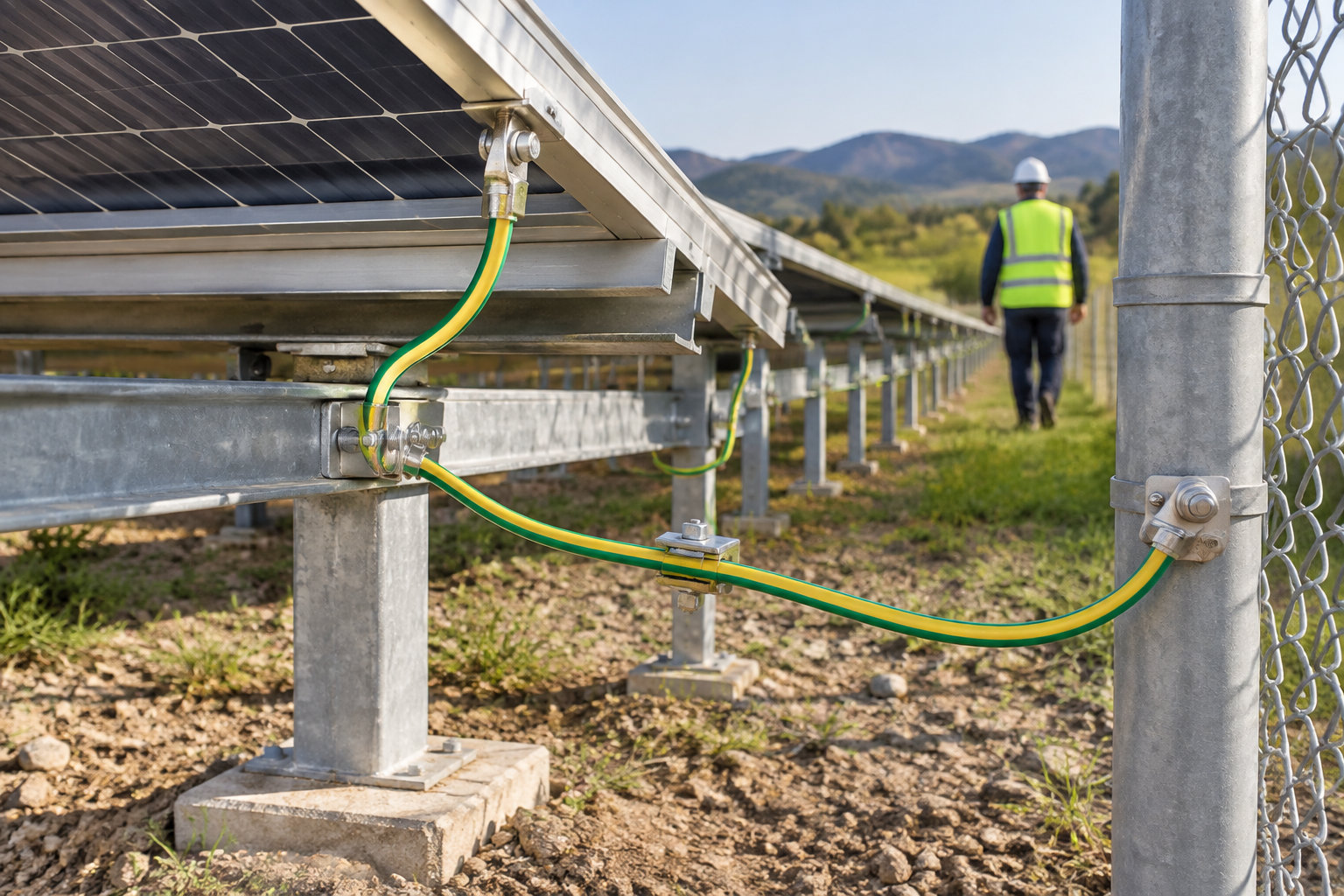
Bond the metal module frames, rails, and posts as the approved design requires. Grounding gives a fault current a controlled path. A damaged conductor then cannot energize the whole fence frame.
Rapid shutdown rules depend on your local electrical code and on the system layout. Where they apply, use a compliant shutdown method and clearly labeled equipment. Firefighters can then cut circuit voltage quickly in an emergency.
Fence-panel upkeep depends on access, cleaning, and warranty terms
Keep both panel faces accessible for inspection
Inspect the modules, clamps, posts, cable jackets, and ground clearance at least twice a year. Check again after hail, high wind, fallen branches, or flooding. Ground-level access is safer than a roof, but live electrical equipment still calls for caution.
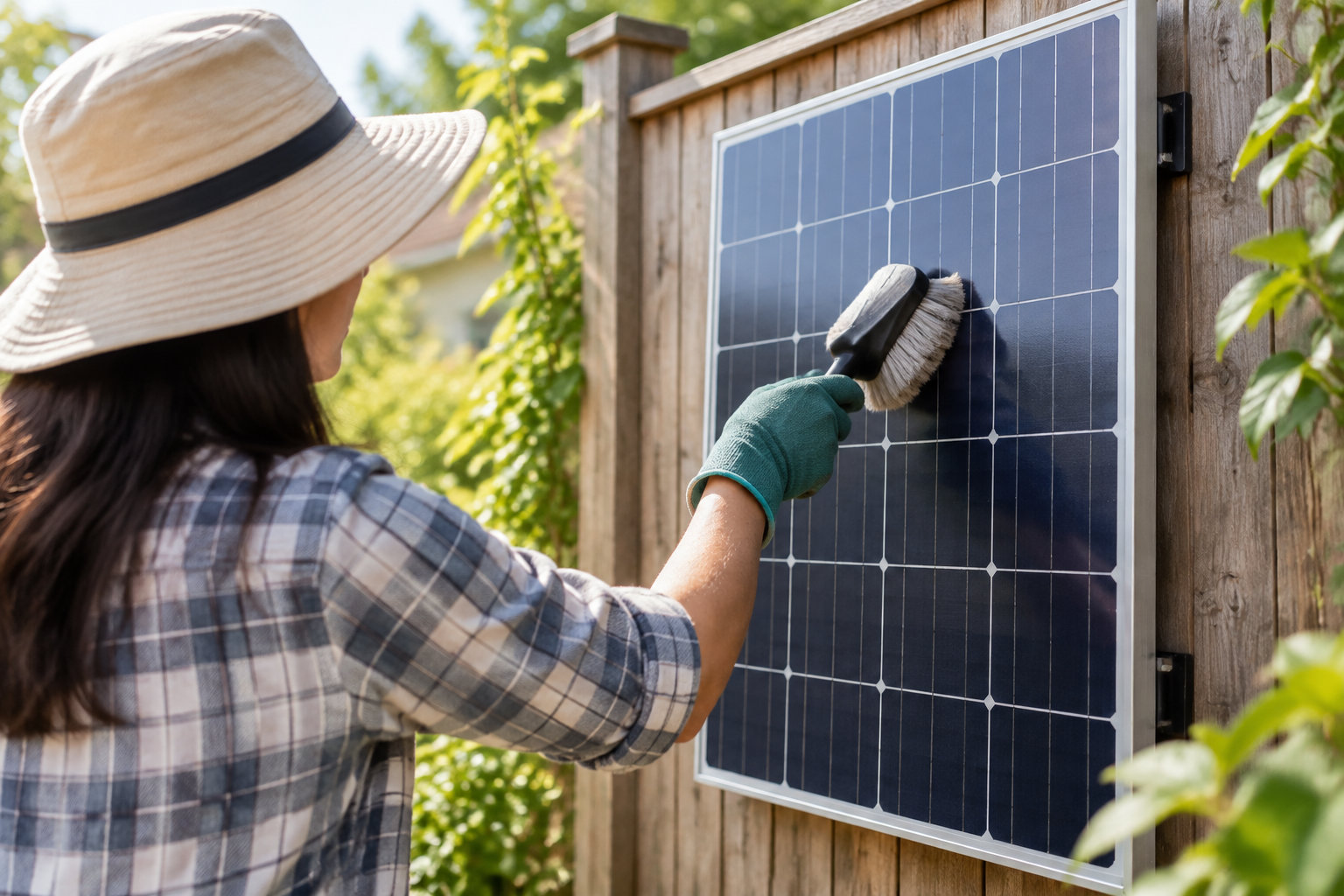
Rain clears loose dust. Pollen, bird droppings, mud splash, snow, and grime can still cut output. Clean only as the manufacturer permits, using soft tools. Never scrub hot glass on a bright afternoon.
Track monthly kWh through the inverter app, the meter, or the monitoring portal. Compare periods with similar weather. A sudden drop points to shade, a tripped device, a damaged cable, a failed optimiser, or inverter trouble, not normal ageing.
Before each inspection
Switch off the system at the disconnect before touching any wiring.
Log the date and the monthly kWh figure, so the next comparison has a baseline.
Note the weather of the past week, since rain, heat, or a cold snap changes what a reading means.
Carry a flashlight to check the underside of the modules and the ground clearance.
Separate panel warranties from full system coverage
A dedicated solar fence example lists a 30-year panel performance warranty. It also lists a lifetime frame warranty.
The written terms still decide coverage, exclusions, transfer rules, wind limits, and who pays for labour. Posts, inverters, batteries, and installation work may each carry separate warranties.
Before you order a single panel, push on every post, measure the winter shade along the line, and ask your city or county which permits apply. Then have a local installer model your actual fence geometry, and check the quote against your own electricity bill.
Frequently asked questions
Can solar panels be installed on walls?
Yes. A panel can mount on a wall when the structure, attachment points, wind loads, drainage, and wiring all support it. A wall-mounted panel usually makes less energy over a year than a tilted, south-facing array, so plan on a lower yield per panel. An east-west bifacial layout spreads output across the morning and afternoon, which can make up part of that gap.
Can I run AC on a solar panel?
Usually not with a single panel. An air conditioner compressor needs a startup surge of power and steady alternating current, and one panel cannot supply both. You need enough panel capacity, an inverter sized for the unit, and normally a battery or grid connection to cover clouds and startup demand.
Will a 400W solar panel run a fridge?
A 400-watt panel may make enough daily energy for an efficient refrigerator in a sunny spot, but it will not keep the fridge running on its own. You need an inverter, plus a battery or grid connection to cover nighttime use, cloudy days, and the compressor’s startup surge.
How many batteries do I need for a 400-watt solar panel?
Panel wattage alone does not set the battery count. Start with the energy your appliances use each day in watt-hours, then size the battery for nighttime and cloudy stretches. Factor in usable depth of discharge, inverter losses, and the battery’s continuous power rating.