Key takeaway: High-efficiency balcony solar kits like Beem On or Sunology Play2 empower apartment dwellers to slash electricity bills by up to $270 annually with zero technical expertise. These modular 300W-800W systems plug directly into standard outlets, offering a rapid ROI in just 3 to 6 years. Notably, some premium bifacial kits now offer performance warranties lasting up to 40 years.
The market for residential energy has shifted dramatically, with balcony solar installations now delivering up to 800W of power directly through a standard wall outlet. These systems have become a go-to solution for urban dwellers looking to offset rising utility costs without permanent renovations.
Finding the best plug and play solar kits for apartments can feel overwhelming when balancing HOA rules and technical specs. We have analyzed the top-performing models for 2026 to help you achieve immediate energy independence and slash your monthly bills starting today.
How to Pick the Best Plug and Play Solar Kits for Apartments
Balcony solar kits like Beem or Sunology deliver 400W-800W, cutting bills by $150 annually. These systems plug into standard outlets, requiring only VDE-AR-N 4105 certified microinverters to ensure immediate safety and grid compatibility.
Important Safety Standard
The NF C 15-100 standard limits power to 900W per wall socket circuit; VDE-AR-N 4105 certification is required for microinverters.
Selecting the right hardware is the first step toward energy independence, especially when considering the best plug and play solar kits for apartments in 2026.
Wattage and Microinverter Technology
Panel efficiency determines your total output. Most apartment kits range between 300W and 420W per panel. High-efficiency monocrystalline cells maximize energy capture in limited balcony spaces. We recommend checking specific cell ratings to ensure peak performance.
Legal landscapes are shifting rapidly. Many regions now protect the right to solar. However, you must check local municipal codes before mounting panels on railings. Ignoring these rules can lead to unnecessary fines.
Most kits pay for themselves within 4 to 6 years. This depends heavily on your local electricity rates and sun exposure. We see faster returns in sunnier regions where production is consistently high.
Solar production covers baseline appliances like fridges or routers first. This direct consumption provides the fastest path to significant annual utility savings. By targeting “always-on” loads, you maximize every watt produced.
A standard 400W balcony kit can reduce a typical apartment’s base electricity consumption by roughly 15% to 20% annually.
Advantages
Easy DIY installation without professional help.
Immediate reduction in monthly utility bills.
Portable systems ideal for renters.
Disadvantages
Lower total power compared to roof systems.
Limited by balcony orientation and shading.
No eligibility for most large-scale tax incentives.
Beem On: The Most User-Friendly Modular Setup
While technical specs matter, the ease of physical installation is what makes Beem On stand out for beginners.
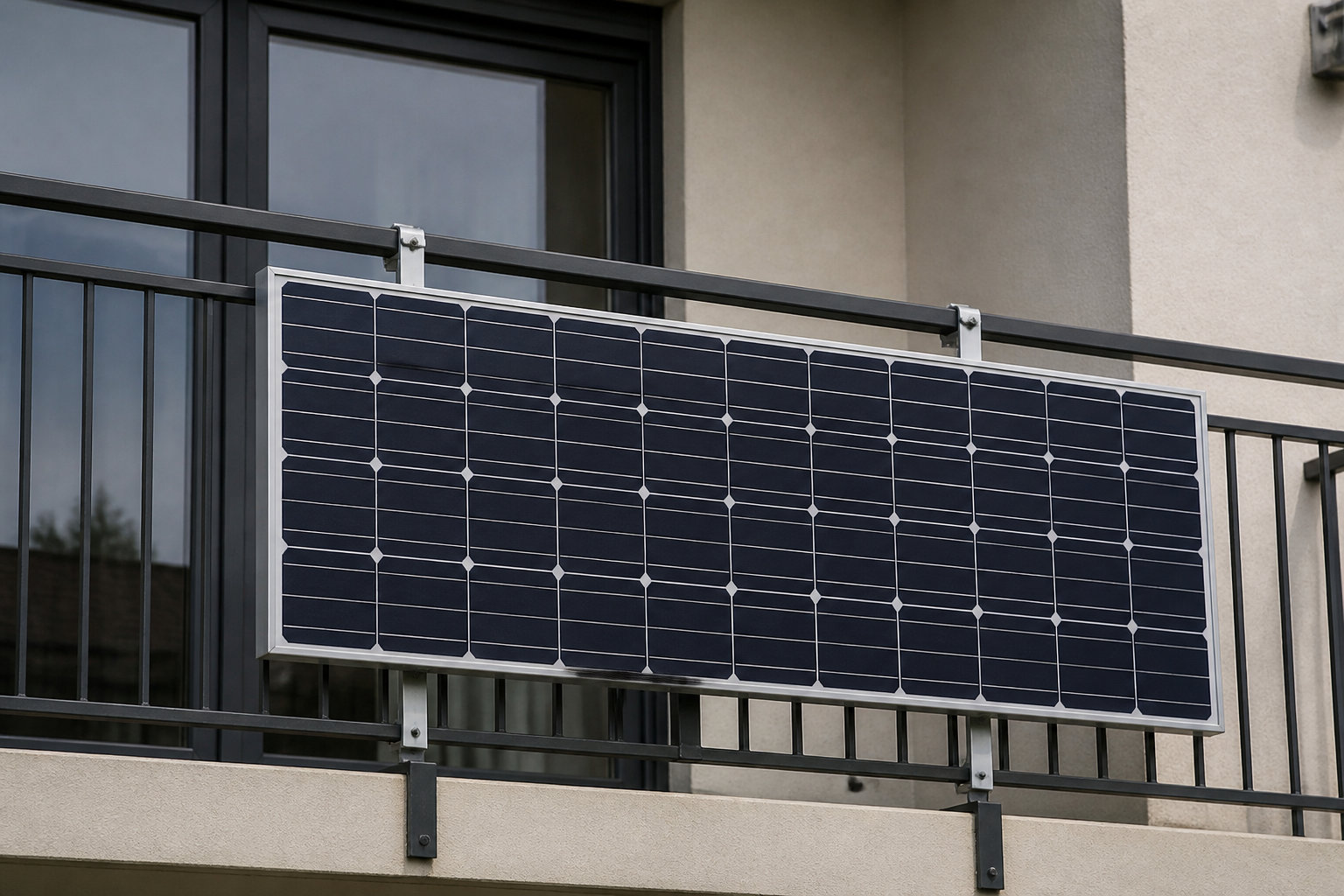
The design is brilliantly modular. Beem uses smaller, lighter panels that interconnect with ease. This portability is a lifesaver for renters who move often. Plus, the floral aesthetic helps bypass those notoriously strict HOA visual restrictions.
The “plug and play” experience is real. You simply mount the brackets and plug the cable into a standard wall socket. No specialized tools are needed. You don’t need to be an electrician to get this running.
Their mobile app is a standout feature. It tracks real-time production and total savings instantly. This data turns energy saving into a rewarding daily habit. It is a Solar Panel Plug and Play : ideal for saving money for any modern home.
Beem On simplifies solar. It is the top choice for design-conscious apartment dwellers in 2026.
Sunology Play2: High-Yield Performance for Tight Spaces
If your balcony is small but gets intense sun, Sunology Play2 offers a more powerful alternative to modular systems.
Sunology focuses on high-wattage output from a single panel. Their Play2 model uses bifacial technology to capture light from both sides. This significantly boosts yield in reflected urban environments.
The build quality is impressive. The frame is robust and designed for high-wind resistance on upper floors. A 25-year performance guarantee ensures long-term reliability. This makes the initial investment much safer for long-term residents.
You can change the angle to match the season with the adjustable tilt feature. This maximizes production during winter months. Performance meets durability here. It fits perfectly on standard apartment railings.
Model
Peak Power
Weight
Key Advantage
Beem On
460W
15.5 kg
Modular aesthetic
Sunology Play2
450W
30 kg
Bifacial yield
EcoFlow Powerstream
800W
11 kg
Battery integration
EcoFlow Powerstream: The Smart Choice for Energy Storage
Generating power is great, but storing it for evening use is the next logical step for apartment efficiency.
EcoFlow Powerstream is the first integrated balcony solar system with a portable battery. It allows you to store excess daytime energy effortlessly. You can then use it during expensive peak hours to save money.
Smart Energy Management
Smart plugs communicate with the microinverter to prioritize power to active appliances. This prevents energy from leaking back to the grid for free.
The Smart Plugs prioritize power to your active appliances automatically. This clever communication prevents energy from leaking back to the grid for free. It ensures every watt you produce stays within your home.
This system offers unmatched versatility. The battery is detachable for camping or emergency backup during blackouts. Such a dual-use case is something traditional fixed solar systems simply cannot match.
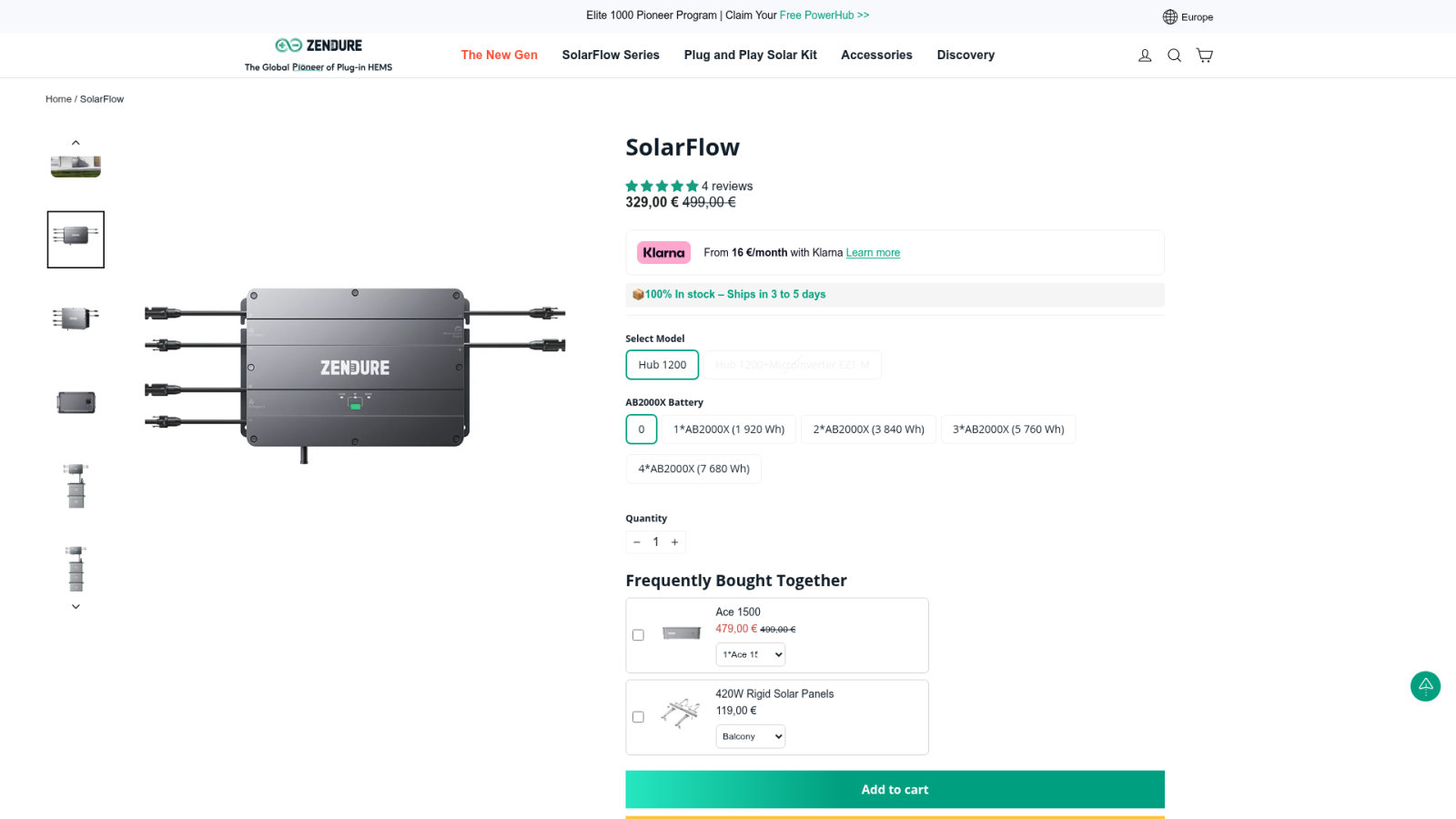
Zendure SolarFlow: Optimizing Your Evening Energy Usage
While EcoFlow offers portability, Zendure SolarFlow focuses on heavy-duty storage for those with high nighttime consumption.
Zendure provides a massive LiFePO4 battery capacity for your home. This unit sits directly between your solar panels and the microinverter. In fact, this setup is compatible with almost any existing plug-and-play kit. It effectively turns a simple panel into a full energy hub.
The engineering here is built to last. The unit is IP65 rated for outdoor use, meaning it stays outside year-round. It handles heavy rain and temperature fluctuations without losing efficiency. This durability is vital for exposed balcony placements where shelter is limited.
Everything is managed via smart app control. Users can set specific discharge times to suit their lifestyle. This ensures the battery covers the evening TV and lighting load when prices peak.
It is a robust storage solution. Zendure maximizes every watt your balcony produces.
Universal compatibility with existing microinverters.
Stackable battery design allowing expansion up to 3.8kWh.
Real-time energy monitoring via Bluetooth and Wi-Fi.
Long-term reliability with a 10-year battery lifespan.
Mon Kit Solaire: Maximum Wattage for Large Terraces
For those lucky enough to have a large terrace instead of a small balcony, Mon Kit Solaire offers industrial-grade power.
This brand specializes in high-output 800W kits. They use full-sized residential panels for maximum surface area. These are best suited for ground-floor patios or expansive rooftop terraces.
Installation Insight
Heavy-duty floor stands require no drilling. You can weight them down with standard paving stones. This provides stability against high winds while remaining completely removable for renters.
They provide assistance with administrative filings. This simplifies the process for users in complex regulatory zones. You can also check how much do plug and play solar kits really cost? to compare budgets.
Scale up your production. Mon Kit Solaire brings residential power to the apartment market. The best plug and play solar kits for apartments in 2026 demand this level of efficiency.
Choosing the best plug and play solar kits for apartments ensures immediate savings of up to $800 annually through high-efficiency panels and certified microinverters. Start by matching wattage to your monthly bill and verifying local HOA rules to secure your energy independence. Turn your balcony into a powerhouse today for a greener, cheaper tomorrow.
FAQ
What is the typical power output for apartment solar kits in 2026?
In 2026, plug and play solar kits for apartments are designed to be highly versatile. Most balcony setups range from 400W (single panel) to 800W (dual panels). These systems are perfect for covering your “always-on” appliances like fridges and routers, producing between 400 and 1,100 kWh annually depending on your local sunshine.
For those with larger terraces, kits can scale up to 2000W. While the legal limit for plug-in systems often reaches 3kW, staying within the 400W-800W range ensures the easiest installation without complex administrative hurdles.
Which factors impact the energy production of a balcony solar system?
The efficiency of your kit depends heavily on orientation and tilt. A south-facing balcony is the gold standard for maximum yield. While vertical mounting on railings is common, tilting your panels between 20° and 60°, depending on the season, can significantly boost performance compared to a flat vertical position.
Regional sun exposure also plays a massive role. A 250W kit might generate 250 kWh annually in northern climates, while the same kit could reach 350 kWh in sunnier southern regions. Finally, ensure your balcony is free from shadows to keep your monocrystalline cells working at peak capacity.
What are the legal requirements and costs for plug and play solar?
Good news: the process is now frictionless! For kits under 800W, many regions require no formal paperwork, you simply plug it in and start saving. If you go above 800W, a simple online declaration (like the CACSI in France) is usually all that is needed to stay compliant with the grid.
Budget-wise, expect to invest between $300 and $900 for a quality kit. A 400W entry-level system starts around $300, while high-performance 800W kits sit near $900. Adding a storage battery can increase the cost but maximizes your autonomy by saving daytime energy for evening use.
How quickly will an apartment solar kit pay for itself?
Calculating your Return on Investment (ROI) is simple and encouraging! Most users see their kits pay for themselves within 4 to 6 years, and in high-efficiency scenarios, it can even be less than two years. The formula is clear: the more you consume your own “free” solar energy instead of buying from the grid, the faster you save.
With electricity prices rising, every watt produced by your Beem or Sunology kit becomes more valuable. By leveraging local incentives and high-efficiency bifacial panels, you can reduce your annual utility bills by $150 to $400, making solar a smart financial move for any renter or owner.
Can I really install solar panels if I live in a rented apartment?
Absolutely! Plug and play kits are the ultimate solution for renters because they are 100% removable. Since they require no drilling and simply plug into a standard outlet, they don’t modify the building’s structure. It is always a proactive step to inform your landlord or HOA, but many regions now protect your “right to solar.”
Brands like EcoFlow and Zendure offer sleek, aesthetic designs that satisfy even the strictest HOA visual rules. When you move, you simply unplug your panels and take your clean energy factory with you to your next home!