Modern garden greenhouses can cost up to $17,000 for high-capacity photovoltaic setups, yet many enthusiasts struggle to keep their crops alive during the winter months. You likely find that maintaining the perfect balance of heat and ventilation becomes a constant drain on your time and your wallet.
Investing in a solar panel kit for greenhouse applications allows you to achieve total energy autonomy while protecting your plants from humidity risks. We are going to break down how to select the right components and automate your garden to ensure a productive year-round harvest.
- Why a Solar Panel Kit for Greenhouse Setups is a Game-Changer
- 4 Core Components for a Robust Off-Grid System
- How Do You Protect Solar Electronics from Greenhouse Humidity?
- Smart Strategies to Reduce Energy Demand and Humidity Risks
Why a Solar Panel Kit for Greenhouse Setups is a Game-Changer
Off-grid greenhouse kits power 12V fans, 400W heaters, and pumps. A 400Wh daily budget covers basic ventilation, while LiFePO4 batteries ensure durability in high-humidity garden environments. This budget leads directly into the calculation of watt-hours in the next subsection.
Calculating Daily Energy Consumption in Watt-Hours
List LED lights, fans, and pumps. Multiply wattage by hours used. Seasonal winter light drops significantly, affecting your available power. You must account for these darker periods carefully.
Summing these totals gives your daily watt-hour requirement. This figure dictates your battery bank size. Don’t forget to add a safety margin for cloudy days to maintain reliability.
Understand how to maintain solar panel kit efficiency in winter to keep your solar panel kit for greenhouses: powering your year-round garden project running.
Choosing Between DC-Powered and AC-Powered Equipment
Compare DC appliances to AC versions. Native DC fans avoid the 15% energy loss of inverters. This efficiency is vital for small off-grid hobby setups.
Large pumps require 120V AC power. Inverters are mandatory here. Balance convenience against extra battery drain for long-term success. Every watt saved matters for your harvest.
Efficiency in a greenhouse isn’t just about production; it’s about minimizing the waste of every single watt-hour collected.
4 Core Components for a Robust Off-Grid System
While knowing your energy needs is the first step, selecting the right hardware to withstand the garden environment is what makes the system last.
Picking the Right Battery Chemistry for Garden Environments
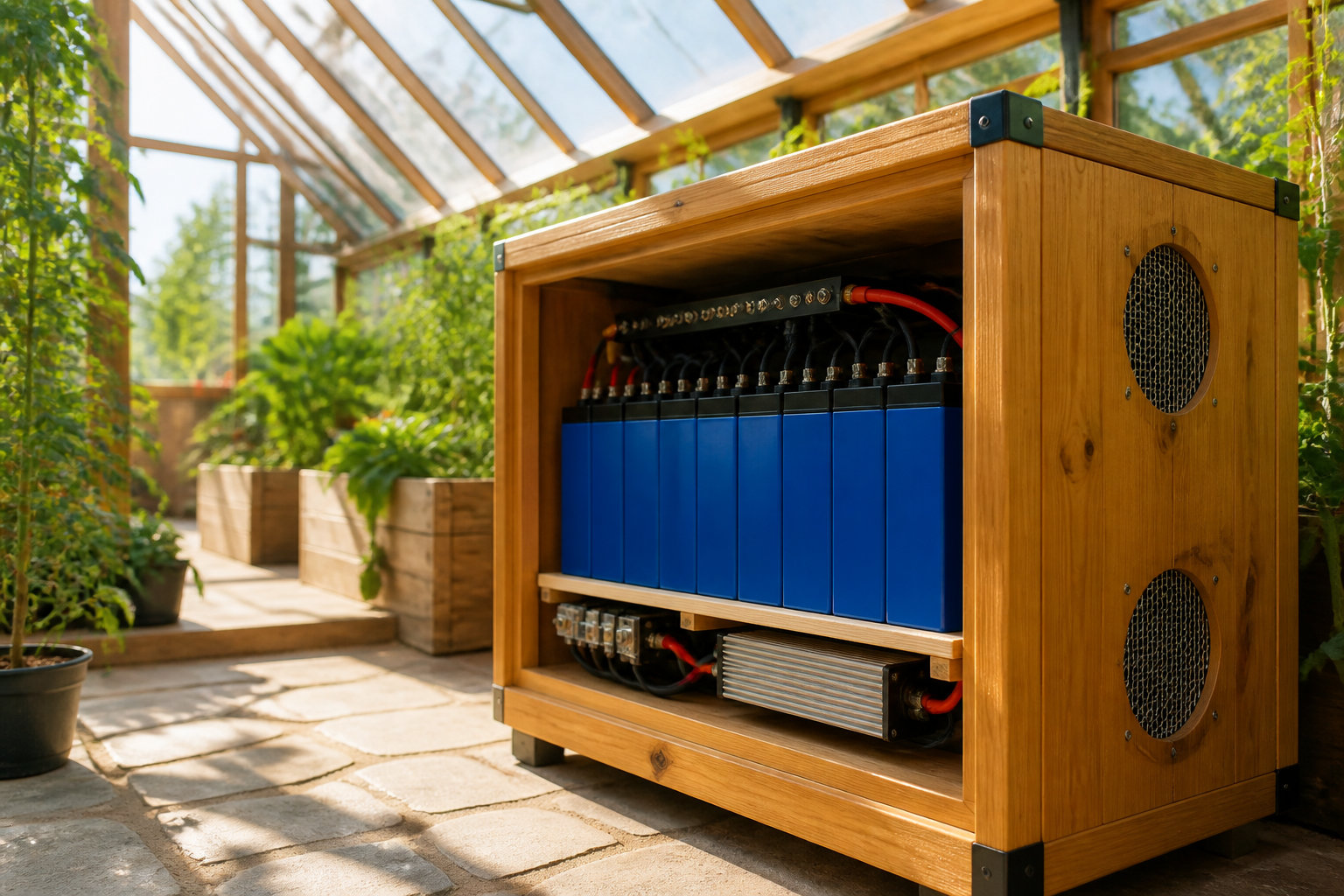
LiFePO4 batteries clearly outperform traditional lead-acid options in modern setups. Lithium handles deep discharges efficiently and offers a much longer lifespan. Lead-acid is cheaper initially but fails quickly under extreme greenhouse heat.
Temperature fluctuations inside the glass structure present a real challenge. High heat degrades storage capacity rapidly over time. Proper insulation or ventilation for your battery box is a mandatory safety step for longevity.
We recommend comparing storage needs using this Solar Kit for Shed: Complete Off-Grid Buying Guide for better perspective. Lithium lasts up to 15 years. Lead-acid usually requires replacement within five years.
Matching Solar Panels with Charge Controller Technology
MPPT controllers significantly outperform PWM units in low-light greenhouse conditions. They extract up to 30% more power from your array. This is vital when clouds or nearby trees cast temporary shadows. Use MPPT technology for better yields.
Evaluate mounting styles carefully to avoid shading issues. Ground mounts are often better than roof mounts if tall trees are close. Semi-transparent panels can even let vital light through to your plants while generating power.
| Component | Best Choice | Why |
|---|---|---|
| Battery | LiFePO4 | Durable, deep discharge, high efficiency. |
| Controller | MPPT | 30% more power in variable light. |
| Panel Type | Monocrystalline | Highest efficiency for small spaces. |
| Mounting | Ground-mount | Easier maintenance and better airflow. |
How Do You Protect Solar Electronics from Greenhouse Humidity?
Even the best hardware will fail if you don’t account for the relentless moisture found in a growing environment.
Managing Condensation in Electrical Enclosures
Use NEMA-rated waterproof boxes for all electronics. These enclosures keep mist and humidity away from sensitive circuits. Always mount them in a cooler, ventilated corner of the greenhouse.
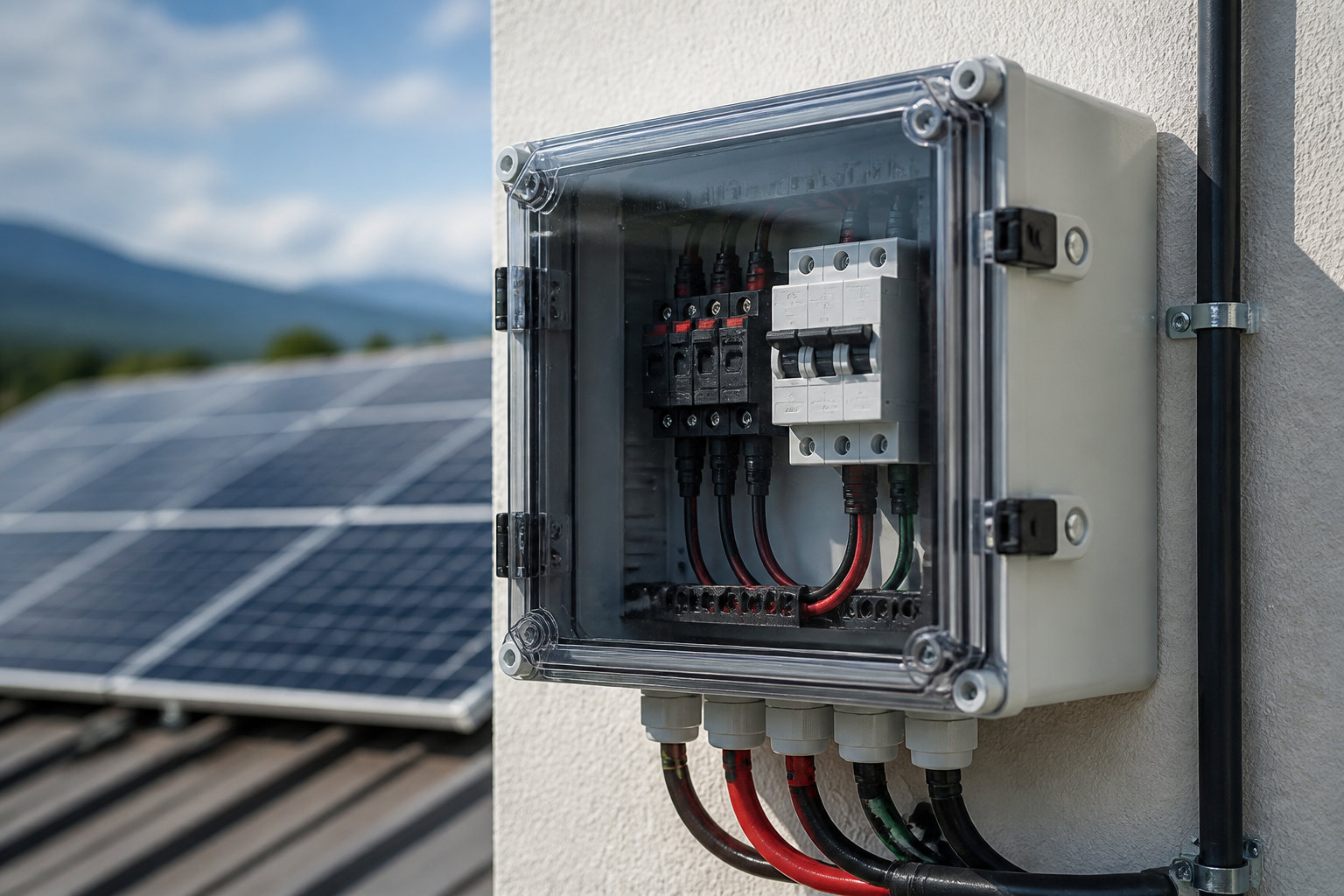
Detail the use of cable glands and drip loops. These prevent water from sliding down wires into your controller. It is a simple but effective physical barrier.
Check out our expert guide on how to install balcony solar panels safely for professional tips on connector waterproofing. Proper sealing is your first line of defense against short circuits.
Maintenance Checklists for High-Humidity Solar Arrays
Outline a cleaning schedule to remove algae and dust. High humidity promotes growth on panel surfaces which blocks sunlight. Wipe them down monthly with a soft cloth. Check all wiring connections for green corrosion.
Monitor battery health during low-light weeks. Deeply discharged batteries freeze or degrade faster in damp conditions. Keep them topped up to ensure long-term reliability.
- Check for corrosion
- Clean algae
- Tighten terminals
- Inspect seals
Check for corrosion on wiring connections to prevent power loss.
Clean algae and dust from panel surfaces for maximum efficiency.
Tighten electrical terminals to avoid heat buildup or arcing.
Inspect seals and cable glands to block moisture entry points.
Beyond protecting your gear, the smartest way to manage power is to need less of it through automation and design.
Smart Strategies to Reduce Energy Demand and Humidity Risks
Precision is the key to efficiency. By using a solar panel kit for greenhouses: powering your year-round garden, you automate environmental controls without spiking utility bills.
Integrating Automation to Preserve Battery Life
Use thermostats and light sensors to trigger equipment. Fans should only run when heat peaks. This prevents energy drain during night or cloudy spells.
Automated irrigation reduces peak load demands. Water early when solar production rises. This keeps batteries full for essential night ventilation.
Smart controllers allow for a seamless How to integrate plug and play solar with smart home systems. These tools ensure your garden thrives autonomously.
Leveraging Passive Solar Principles to Downsize Your Kit
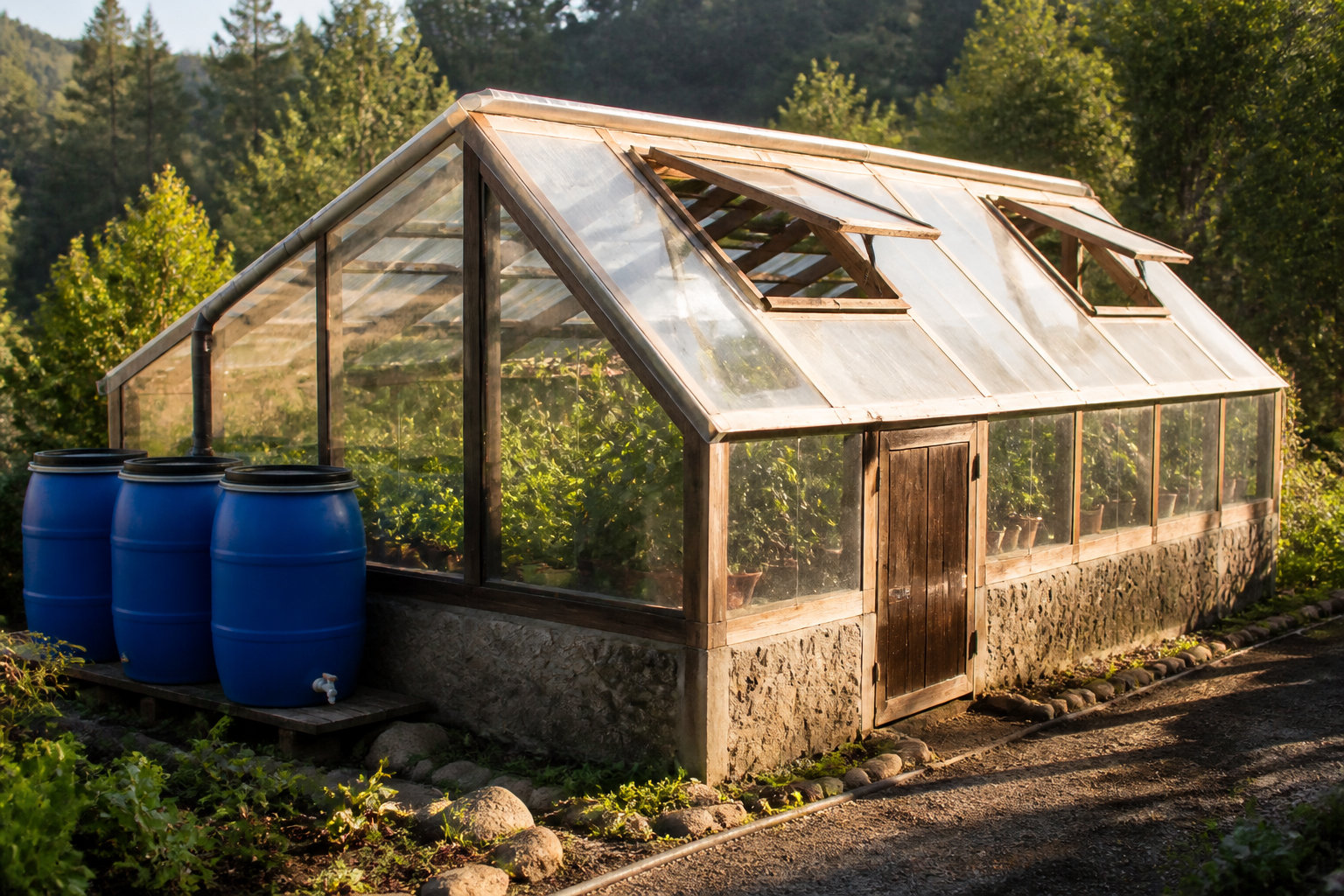
Incorporate thermal mass like water barrels to store heat. This reduces the need for electric heaters at night. Passive design is always cheaper than adding panels.
Incorporate thermal mass like water barrels to store heat and use manual vents to reduce reliance on electric fans.
Proper glazing impacts heat retention. Prioritize natural airflow with manual vents. This significantly downsizes your mechanical fan requirements.
Efficiency is our priority.
The greenest watt is the one you never have to generate through your solar panels.
Mastering your solar panel kit for greenhouse setups ensures year-round growth through efficient MPPT controllers, LiFePO4 storage, and moisture-resistant enclosures. Transitioning to automated, solar-powered climate control slashes costs while securing total energy autonomy. Start optimizing your garden today to harvest the future of sustainable productivity.
FAQ
Is it possible to power a greenhouse entirely with solar energy?
Absolutely! A solar panel kit for greenhouses is a game-changer for gardeners seeking energy autonomy. By combining photovoltaic panels with a battery storage system, you can power essential equipment like ventilation fans, LED grow lights, and automated irrigation pumps without relying on the grid.
Whether you choose standard panels for solid roofs or semi-transparent panels to maintain natural light for your plants, these systems allow for a truly year-round garden. Not only does this reduce your electricity bills, but it also provides a reliable backup during power outages, ensuring your crops stay protected.
How do I determine the right size solar kit for my garden setup?
The first step is calculating your daily energy consumption in watt-hours. You can do this by multiplying the wattage of each device by the number of hours it runs daily. For instance, a 100W heater running for 5 hours consumes 500Wh. Summing these totals gives you your daily energy budget.
Keep in mind that factors like greenhouse dimensions, insulation, and local climate will influence your needs. For a small hobby greenhouse, a storage capacity of 1 to 2 kWh is often sufficient. We always recommend adding a safety margin to account for cloudy days and seasonal drops in winter sunlight.
Which battery type is best for storing solar power in a greenhouse?
When it comes to durability and efficiency, LiFePO4 (Lithium) batteries are the superior choice for garden environments. They are compact, handle deep discharges exceptionally well, and offer a much longer lifespan compared to traditional options. While the initial cost is higher, their performance in high-humidity settings makes them a wise long-term investment.
Alternatively, lead-acid batteries (Gel or AGM) are more budget-friendly upfront but are bulkier and tend to degrade faster, especially when exposed to extreme greenhouse heat. For a robust off-grid system, lithium remains the gold standard for reliability.
How can I protect my solar electronics from high humidity and moisture?
Protecting your gear is vital in a growing environment. You should always house your controllers and wiring in NEMA-rated waterproof boxes (such as NEMA 4X or IP65). these enclosures provide a physical barrier against mist, dust, and accidental sprays, ensuring your sensitive circuits remain dry and functional.
Additionally, we recommend using cable glands and drip loops to prevent condensation from sliding down the wires and into your connections. Regular maintenance, such as checking for green corrosion on terminals and cleaning algae off panel surfaces, will further extend the life of your installation.
Do I need a permit to install a solar-powered greenhouse?
Regulations vary, but generally, the size of the structure dictates the requirements. In many regions, small greenhouses under 5 m² require no formalities. However, structures between 5 m² and 20 m² typically require a preliminary declaration of work, while anything larger may necessitate a full building permit.
If you are adding panels to an existing greenhouse, it may still require a declaration as it modifies the exterior appearance. We always suggest checking with your local planning office, especially if you live in a protected or historical zone, to ensure your sustainable garden meets all legal standards.