A plug-and-play solar kit depends on the cord between its parts, and that cord can be DC or AC.
A cord that plugs in can still be the wrong one, and a wrong one can slow charging or overheat. This article helps you pick the right type, connector and length, and shows what the main US options cost.
What kind of cord your plug-and-play setup actually needs
Start by checking what sits between your panel and your outlet. A power station means a DC run from panel to station. A microinverter that plugs into the wall adds an AC run from microinverter to outlet.
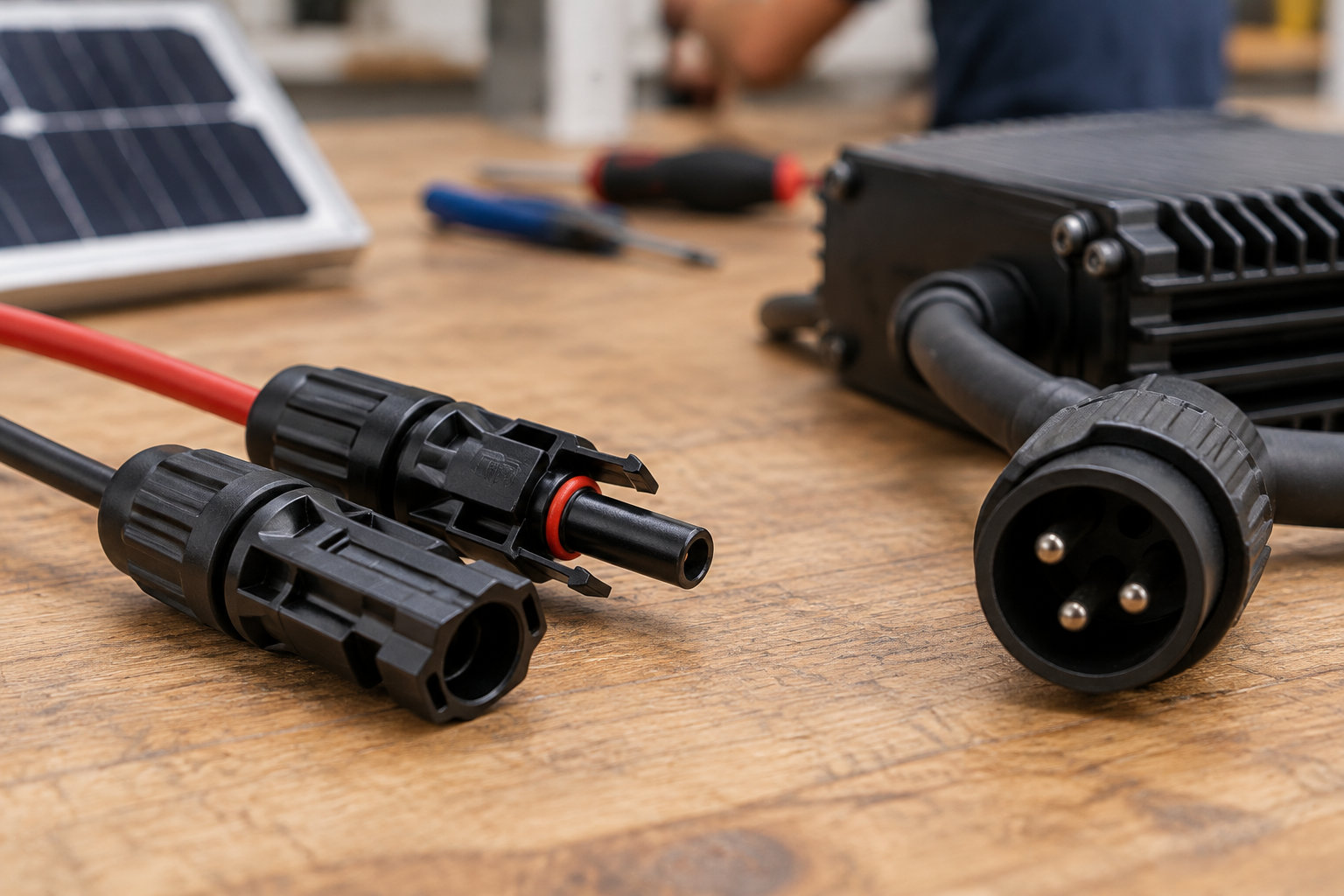
The APsystems EZ1 has both runs, so know which one your cord will serve. For a full view of how these kits are wired, see how plug-and-play solar kits work.
Cutting, splicing or changing the connector of an APsystems EZ1-LV can overheat and cause a fire. Don’t use a power strip, splitter or adapter in its place. If you need more AC cable, ask APsystems technical support for the right cable and connection setup. For the wiring rules in your area, check before you connect anything.
Portable panel cords or outlet cords: which one you need
DC extension cables for portable panels
A DC extension cable carries power from the panel to the station, so it must match both. Check the voltage, the current and the limits of each device. A cable too weak for the current heats up and wastes power.
Jackery’s 16.4-foot DC Extension Cable, with DC8020 connectors, is made for Jackery panels and compatible stations. Keep it out of rain and wet conditions.
Check these DC cables before you buy:
- Jackery 32.8 ft DC Extension Cable Plus: DC8020 connectors at both ends, 14 AWG copper wire, 300 V DC maximum. Fits most Jackery solar panels, so confirm your setup.
- Jackery 10 ft Anderson Extension Cable: listed for the SolarSaga 500 X, with a 120 V maximum system voltage.
- EcoFlow 3 m Solar Extension Cable: extends the EcoFlow MC4 Solar Cable. Confirm your panel and receiving device accept it.
AC extension cords for plug-in microinverters
AC extension: when it’s allowed
Allowed on a microinverter
- Outdoor-rated, UV-resistant and weather-sealed cord
- Sized for the real distance, and no longer than needed
- Installed under your local wiring rules
- For the outlet itself, see home setup rules for plug and play solar
Not a substitute
- A DC solar cable: AC and DC cables cannot replace each other
- A household extension cord or power strip
- Any cord the equipment instructions do not list
MC4, DC8020 and Anderson: why a fitting plug is not enough
A plug that slides in and locks does not prove the two connectors are approved to work together. MC4, DC8020 and Anderson are different connectors. Mixing them can cause installation errors and lower reliability.
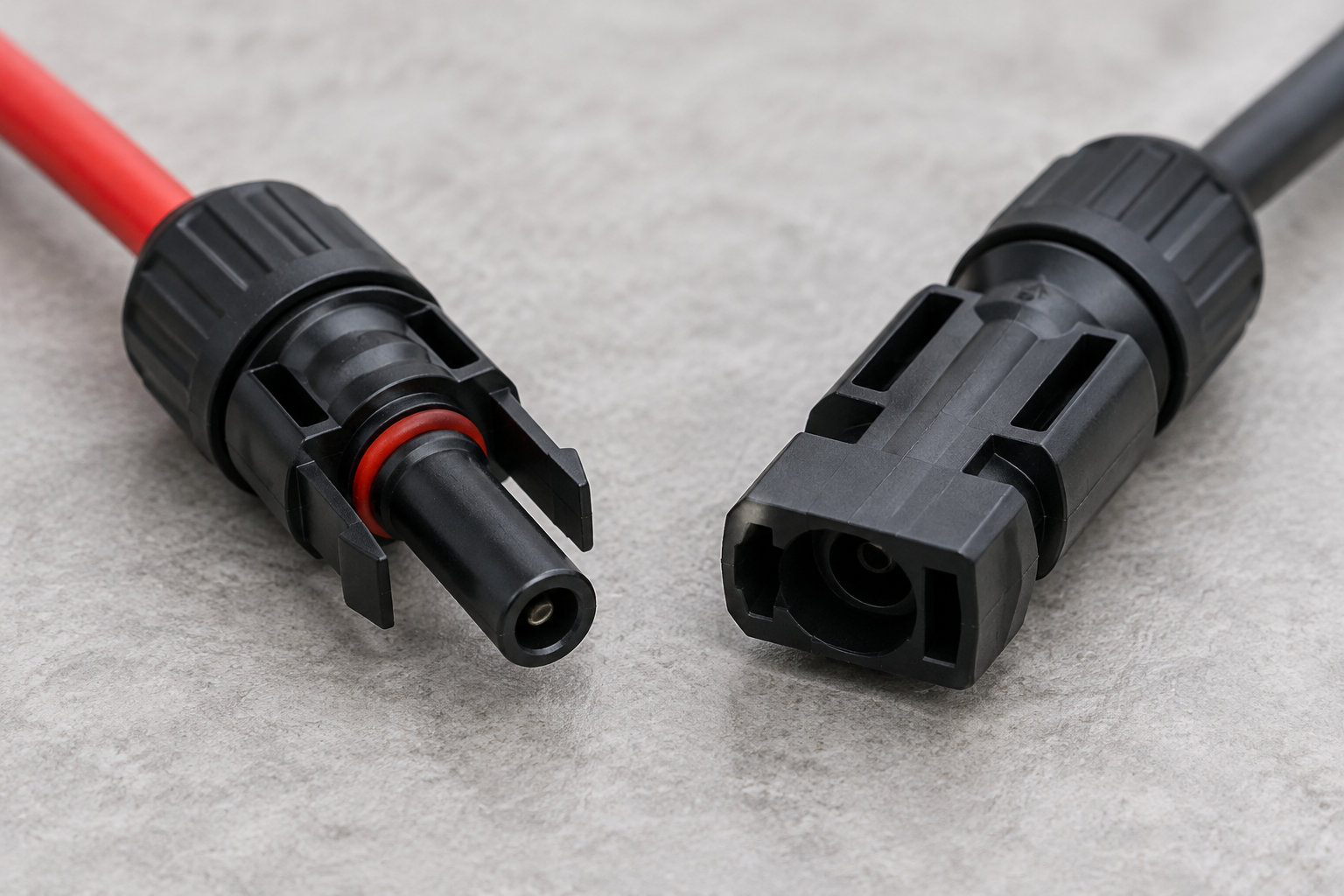
Use only the pairing approved for your panel and station. If you are unsure, ask the manufacturer first. For the pairing that suits your kit, see plug and play solar kit comparison.
Check before you connect
What Works
Check polarity, voltage and current limits against the manual for your exact panel and station.
What to Avoid
Assume a matching shape means the ratings are right.
What Works
Confirm the cable gauge is rated for the panel’s current.
What to Avoid
Use an adapter unless the equipment instructions name that exact connection.
What Works
Ask the manufacturer before you connect anything unfamiliar.
Length, voltage drop and weather: where extensions fail
A longer or thinner cable, or a higher current, means more voltage loss. Keep the run as short as your setup allows, and check its ratings for your load.
To estimate a DC run, multiply 2 × amps × resistance per foot × one-way feet. The 2 counts both wires. Divide that drop by system voltage, then multiply by 100 for a percentage.
Check the circuit first. For an AC plug-and-play kit, see how to connect it to the grid safely.
| Criterion | Jackery 16.4 ft DC cable | APsystems EZ1 AC extension |
|---|---|---|
| Circuit | DC, panel to station | AC, microinverter to outlet |
| Wet weather | Not for rain or wet places | Outdoor-rated, UV-resistant, weather-sealed |
| Voltage drop target | 3% or less on critical runs | Properly sized for the run |
How to size the cable for your run
Measure the one-way route from the panel to the device, not the straight line between them. Choose the shortest cable that reaches without pulling on the connectors.
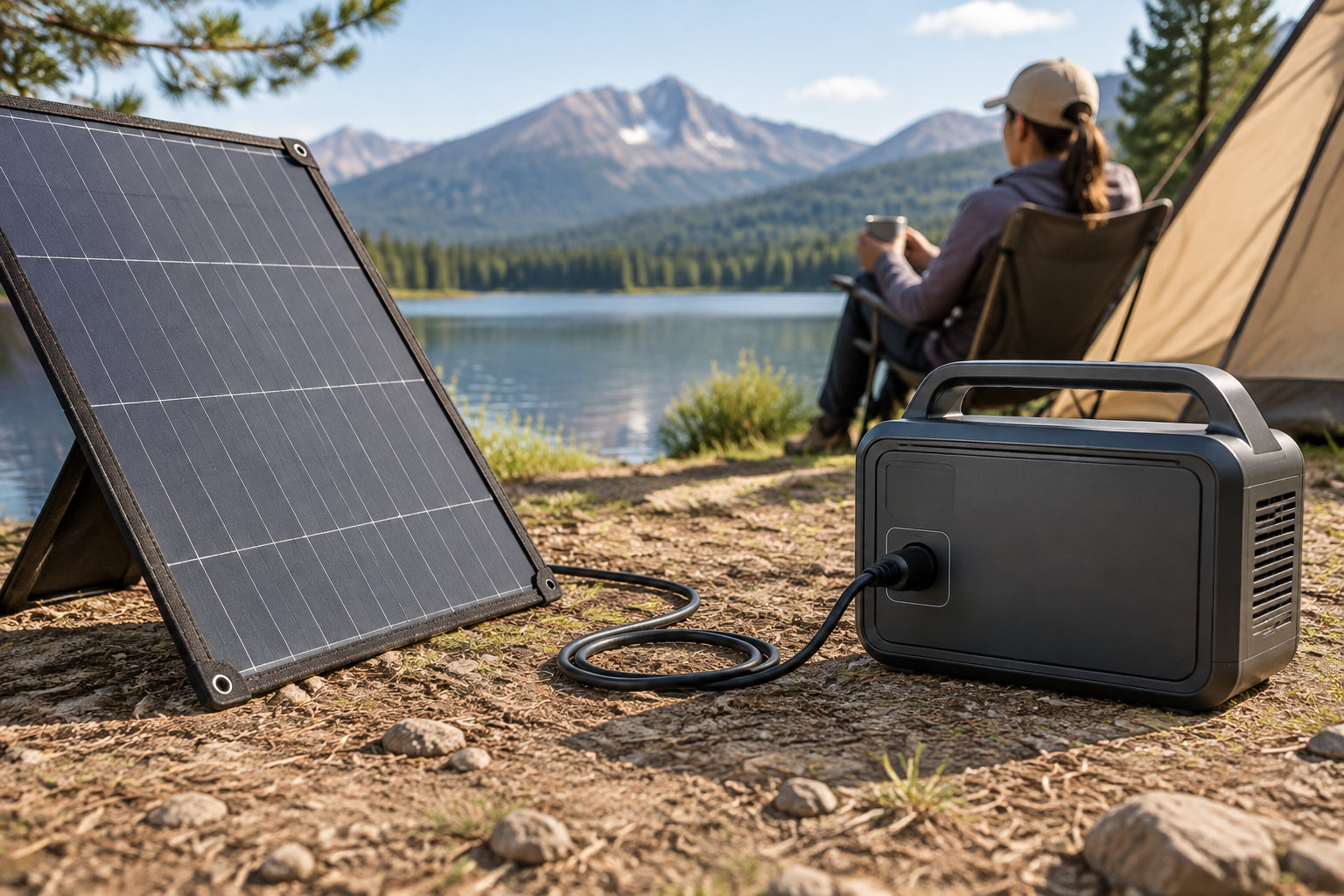
Wire gauge alone does not prove a cable suits your panel and power station. Check current, system voltage, one-way length, cable resistance, connector ratings and equipment limits together. For outdoor runs, see plug and play fire risks before connecting.
Calculate the drop in five steps:
- Multiply the current (amps) by the cable’s resistance per foot.
- Multiply by the one-way length in feet.
- Multiply by 2, since the current flows out and back.
- Divide by the system voltage, then multiply by 100 for a percentage.
- Compare that percentage with the input reading on your power station.
What the main US cables cost and what each one covers
EcoFlow Solar Extension Cable, 3 m
The EcoFlow Solar Extension Cable, 3 m, costs $29.99. It only extends EcoFlow’s MC4 Solar Cable, so it works only with the exact EcoFlow equipment it was made for.
Before you buy, check the exact product name and its pairing with your panel and station. If your setup is another brand, this cable won’t work, even if the plugs look the same.
Jackery DC Extension Cable, 16.4 ft
The Jackery DC Extension Cable is 16.4 ft long and costs $39. Both ends use DC8020 connectors. It is made for Jackery solar panels and compatible power stations.
Don’t use this cable in rain or in wet places. Water can get into the connectors, so keep them dry at all times.
Jackery DC Extension Cable Plus, 32.8 ft
Look at the plug on your panel and the input on your station. Both must be DC8020, the same as the cable ends.
Read the open-circuit voltage on your panel’s label. It must stay under 300 V DC.
Measure the path from panel to station. If it is 32.8 ft or less, the cable reaches.
Jackery Anderson Extension Cable, 10 ft
Compare the four cables, then check the model and price on the maker’s page before buying. For full kit costs, see what plug and play solar kits cost.
| Anderson 10 ft | EcoFlow 3 m | Jackery DC 16.4 ft | Jackery Plus 32.8 ft | |
|---|---|---|---|---|
| Price | $39 | $29.99 | $39 | $59 |
| Works with | SolarSaga 500 X | EcoFlow only | Jackery panels | After fit test |
| Limit | 120 V max | EcoFlow only | Keep dry | Under 300 V |
Start with the cord’s job. DC cable runs panel to station; AC cord runs microinverter to outlet. Match the connectors to your kit, and keep the run short.
Next, open the manual for your exact panel and station. Note the connector type and voltage limits, then buy only a cable that matches them. If unsure, ask the maker before connecting.
Frequently asked questions
Can I use a regular indoor extension cord with a plug-in solar system?
No. An indoor cord is not rated for sun, rain or long outdoor runs. For an APsystems EZ1 AC extension, use a cord rated for outdoor use, UV-resistant, weather-sealed and sized for the distance, and follow your local wiring rules.
Does a longer extension cord reduce how much power my solar panel delivers?
Yes. A longer or thinner cable loses more voltage, so less of the panel’s power reaches the station. Higher current increases that loss too. Keep the run short, and check the cable’s ratings against your panel and station.
Can I connect an MC4 extension cable to a Jackery or EcoFlow power station?
Only if the manufacturer approves that exact pairing for your panel and station. A generic MC4 label or a physical fit does not prove the two work together, so check the approved pairing first.
Are solar extension cables rated to stay outdoors all year?
Not all of them. Outdoor rating depends on the exact cable and connector, so check their ratings before you leave a run outside. The Jackery 16.4-foot DC extension, for example, is not meant for rain or wet places.