What happens to your perishables when the grid goes dark for hours? A single power failure can lead to hundreds of dollars in wasted groceries and significant stress for your family.
Investing in a solar battery for refrigerator backup provides the ultimate peace of mind and energy autonomy. We will help you calculate your power needs and select the most reliable system to keep your food fresh during any emergency.
- Understanding Solar Battery for Refrigerator Backup Systems
- 3 Steps to Calculate Your Fridge’s Real Power Draw
- Quick Comparison of the Top Refrigerator Backup Batteries
- EcoFlow Delta 2 Max for Expandable Home Cooling
- Jackery Explorer 2000 Plus for Heavy Surge Demands
- Bluetti AC200L for High-Efficiency Lithium Storage
- Anker SOLIX F2000 for Long-Lasting LFP Reliability
- How to Safely Connect Your Battery to the Fridge?
- 2 Ways to Stretch Your Battery Life During a Blackout
Understanding Solar Battery for Refrigerator Backup Systems
LiFePO4 batteries offer 3,000+ cycles and superior thermal stability for refrigerator surges. A dedicated BMS prevents voltage drops, ensuring safe 12V or 24V power delivery during extended grid outages and compressor cycles.
The mention of LiFePO4 stability leads directly into the specific chemistry advantages of lithium iron phosphate.
Lithium Iron Phosphate; a battery chemistry known for safety and 3,000+ cycle life.
Battery Management System; electronics that protect cells from over-voltage and thermal issues.
LiFePO4 Chemistry Advantages
Lithium iron phosphate excels at frequent cycling. It remains safe under heavy use. You get a 10-year lifespan, far outlasting old lead-acid options.
Thermal stability is a game-changer here. LFP cells handle intense heat during high-draw compressor starts. Using LiFePO4 battery chemistry keeps your home safe from overheating.
Long-term costs stay low. Thousands of discharge cycles mean no capacity loss. Your initial investment simply pays for itself over time.
BMS Protection Roles
The BMS prevents damage from sudden voltage drops. It uses safety shut-off mechanisms for spikes. This keeps your solar battery for refrigerator backup during power outages running perfectly.
Sensitive refrigerator electronics need a robust BMS. It protects the compressor from irregular power flows. You avoid costly mechanical failures during emergencies.
A Battery Management System acts as the brain, preventing catastrophic failure by monitoring cell temperature and balancing voltage during heavy refrigerator startup loads.
3 Steps to Calculate Your Fridge’s Real Power Draw
Understanding the battery tech is only half the battle; you must now quantify exactly how much juice your specific refrigerator gulps down.
Starting Surge vs Running Wattage
Differentiating between the initial compressor kick and steady operation is vital. Modern fridges use less energy overall. However, they still peak high during startup.
Typical wattage ranges vary by model. Energy Star units might run at 100W but surge to 800W. Learn how plug and play solar panels work to manage these loads.
The inverter must handle this peak surge. Otherwise, the system will trip immediately.
Measuring Consumption Accurately
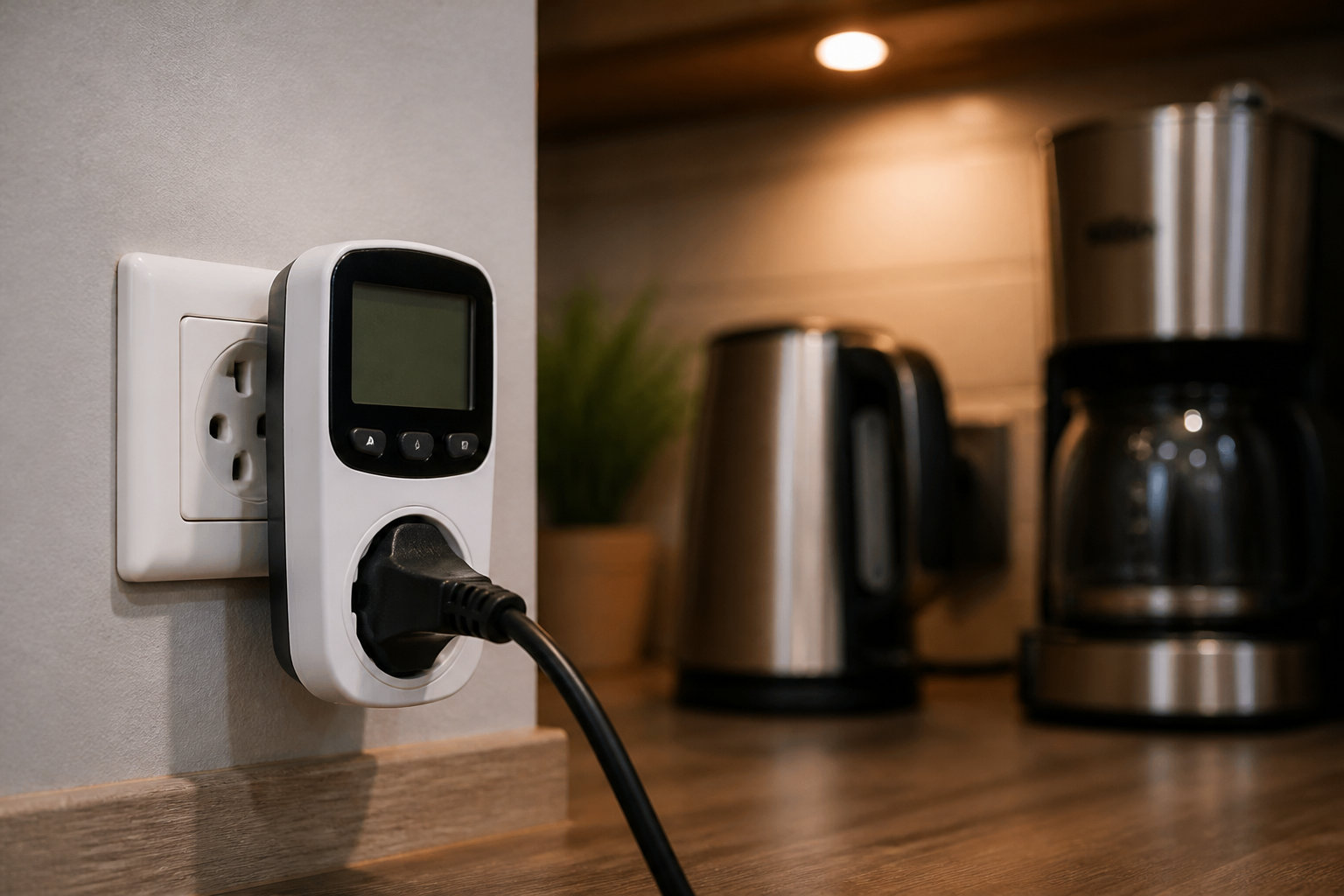
Grab a plug-in power meter for the best results. Leave it for 24 hours. This captures all cooling cycles accurately.
Read the kilowatt-hours (kWh) per day shown. This number determines the total battery capacity needed for backup. It is your baseline.
Manufacturer labels are often optimistic. Real-world usage depends on room temperature. Age also plays a massive role.
A 150W fridge running for 24 hours requires 3,600Wh of total capacity. Note: Account for inverter efficiency losses (approx 10-20%).
Temperature and Duty Cycles
Ambient heat directly increases compressor frequency. A hot kitchen forces the fridge to work much harder. Efficiency drops as heat rises.
Your door opening habits matter more than you think. Every opening lets cold air escape. This causes a spike in power consumption.
Follow these simple steps to keep your solar battery for refrigerator backup during power outages running longer:
- Keep the fridge full to maintain thermal mass
- Check door seals for leaks
- Maintain 70°F ambient temperature if possible
Quick Comparison of the Top Refrigerator Backup Batteries
Once you know your numbers, you can pick a power station that actually fits the bill without overspending. Finding the right solar battery for refrigerator backup during power outages is about balancing raw capacity with reliable output. You need a system that handles the compressor’s initial surge yet remains efficient overnight. Bref, it is simply about matching watt-hours to your cooling needs.
| Model | Capacity (Wh) | Surge Power (W) | Battery Type | Best For |
|---|---|---|---|---|
| EcoFlow Delta 2 Max | 2048Wh | 4800W | LFP (LiFePO4) | Fast recharging |
| Jackery 2000 Plus | 2042Wh | 6000W | LFP (LiFePO4) | Heavy appliances |
| Bluetti AC200L | 2048Wh | 3600W | LFP (LiFePO4) | Versatile use |
| Anker SOLIX F2000 | 2048Wh | 4800W | LFP (LiFePO4) | Durability |
We selected these units for their LFP chemistry, offering over 3,000 cycles for long-term protection. Choosing one of these powerhouses ensures your food stays fresh while others are left in the dark. It is a direct, effective step toward total home resilience.
EcoFlow Delta 2 Max for Expandable Home Cooling
The EcoFlow Delta 2 Max stands out for those who might want to add more juice later. This unit features X-Boost technology, which safely powers high-wattage appliances up to 3400W. With a solid 2048Wh base capacity, it handles your fridge with ease.
Need more runtime? You can scale your setup by adding extra batteries to reach a massive 6kWh capacity. This flexibility makes it a top choice when comparing portable power stations vs fixed batteries for long-term reliability. It grows with your needs.
Fast charging is a key win here. The system hits 80% charge in just over an hour, ensuring you are ready before the next storm hits.
Jackery Explorer 2000 Plus for Heavy Surge Demands
If your fridge is an older, power-hungry beast, the Jackery Explorer 2000 Plus is the muscle you need.
This powerhouse delivers a robust 3000W rated output. It effortlessly manages almost any residential refrigerator surge without breaking a sweat. You can trust it to keep your food fresh during extended blackouts.
The quiet operation makes it a perfect companion for indoor use during a blackout. Its LFP cells prioritize safety and long-term stability. You get reliable power without the noise of traditional gas generators.
The Jackery 2000 Plus provides a massive 6000W peak surge capacity, making it the most reliable choice for high-torque compressor startups in older appliances.

With a 10-year lifespan, this LiFePO4 battery is a smart investment for your home. It charges quickly in just 2 hours via solar. You gain true energy independence and peace of mind.
Bluetti AC200L for High-Efficiency Lithium Storage
Bluetti offers a middle ground with high efficiency and a very competitive price point.
The 2400W AC output handles heavy startup surges with ease. This unit operates with impressive efficiency and minimal idle power draw. Such performance significantly extends your actual runtime during a crisis.
Smart management is simple via the dedicated mobile app. You can monitor real-time consumption and battery health directly from your phone. Integrating this unit into a smart home solar integration guide setup ensures you stay informed. It even allows for remote firmware updates to keep the system peaky.
The build quality is exceptionally rugged. It feels like a professional tool rather than a consumer gadget. The reinforced handles and port covers are built for real-world resilience.
Anker SOLIX F2000 for Long-Lasting LFP Reliability
Anker brings its reputation for battery longevity to the home backup market with the SOLIX series.
The core of this system is the InfiniPower technology. It integrates industrial-grade components specifically designed to last over a decade with daily use. You get a setup built for endurance.
With a 2048Wh capacity, this unit is ideal for keeping a standard fridge running for 15-20 hours straight. Reliability is the focus here. You can trust your food stays fresh during outages.
But what really sets it apart? Here are the technical advantages that ensure your peace of mind:
- GaN technology for cooler operation
- 5-year full device warranty
- Impact-resistant unibody design

How to Safely Connect Your Battery to the Fridge?
Buying the battery is step one; connecting it without blowing a fuse or spoiling food is step two.
Transfer Switches vs Direct Plugging
Manual transfer switches offer a permanent, integrated solution for your electrical panel. Extension cords serve as a quick fix during sudden emergencies. I believe switches are far superior for long term reliability.
Switching power sources while the compressor runs risks damaging your appliance. Phase synchronization is a real technical hurdle you cannot ignore. Check the solar battery price home cost to plan your budget for these safety components.
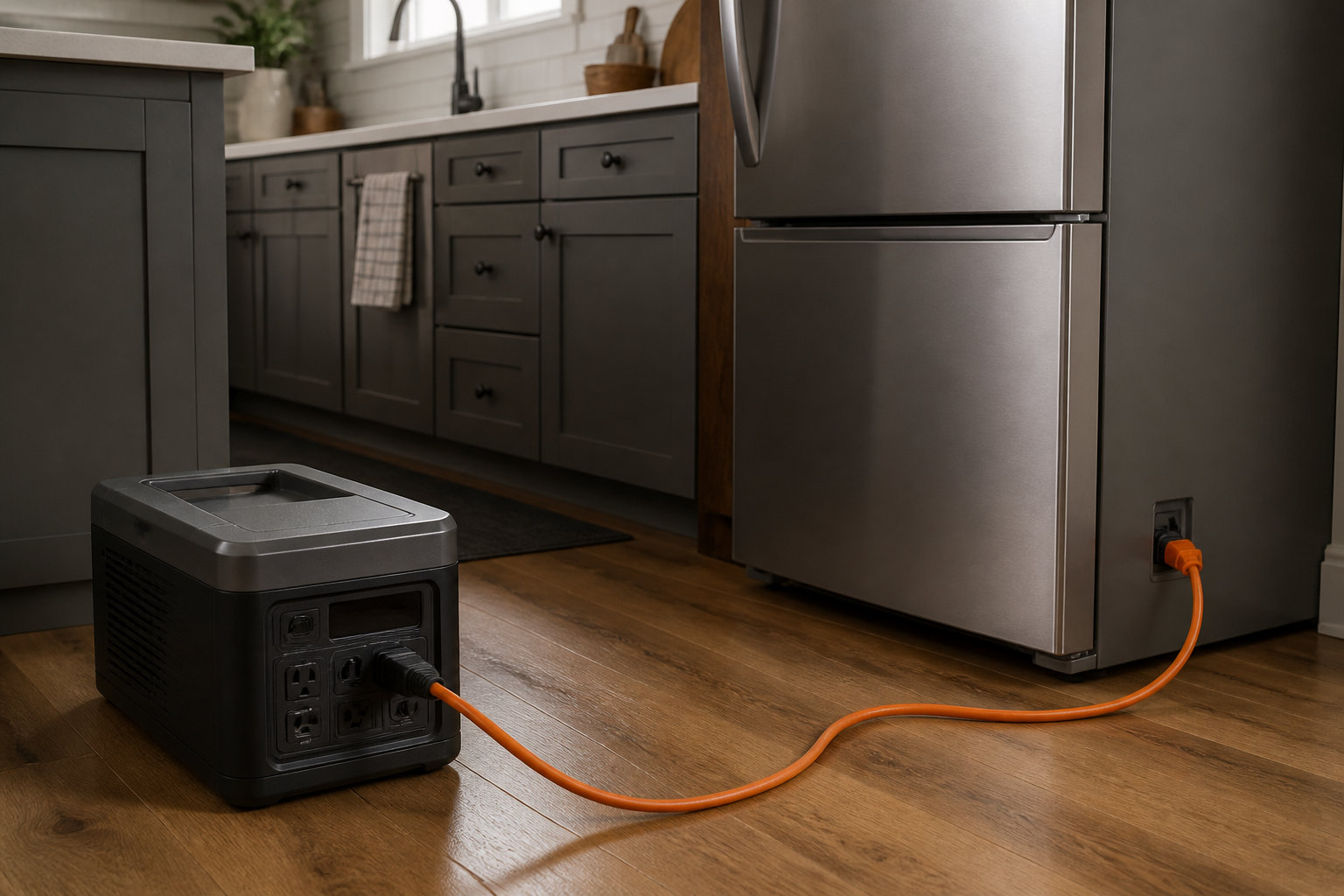
Pass-through charging is a game changer for continuous cooling. It allows the battery to function like a UPS. Your fridge stays powered seamlessly during the grid-to-battery transition.
Solar Panel Sizing for Runtime
Calculate your panel needs based on local peak sun hours. A 400W array typically represents the bare minimum for indefinite fridge operation. Don’t cut corners on your energy harvest.
The 30% federal tax credit is a massive win for homeowners. Battery systems over 3kWh qualify for this incentive if installed for residential use. This credit significantly lowers your total investment cost.
The 30% Federal Tax Credit applies to battery storage systems over 3kWh, reducing initial investment costs for systems installed between 2022 and 2032.
Over-provisioning your solar array is the only way to sleep soundly. You need extra panels to handle cloudy days. This strategy ensures the solar battery for refrigerator backup during power outages remains fully charged.
2 Ways to Stretch Your Battery Life During a Blackout
When the grid stays down for days, every watt-hour becomes precious currency. You need to think like a strategist to keep your food safe without draining your solar battery for refrigerator backup during power outages.
Use frozen water jugs as thermal mass to act as “cold batteries” and keep the fridge full to reduce air exchange.
Managing Internal Thermal Mass
Use frozen water jugs as “cold batteries.” They absorb heat effectively. This keeps the interior cool without using extra electricity.
Minimize door openings constantly. Each second the door is open wastes minutes of battery runtime. Keep a list of contents outside.
A full fridge stays cold longer. Fill gaps with water bottles. Density maintains temperature.
Inverter and Voltage Optimization
Inverters draw power even when the fridge isn’t cooling. These are self-consumption losses. Turn off unused USB and DC ports immediately.
Compare 12V vs 24V systems. Higher voltage is more efficient for large loads. It reduces heat loss in the wiring significantly.
Use the Eco-mode if available. It shuts down the inverter during idle periods. Efficiency is key.
Secure your food supply by integrating a LiFePO4 battery with smart BMS protection to handle high compressor surges. Investing in a reliable solar battery for refrigerator backup ensures energy independence and total peace of mind. Act now to build your autonomous power system and never fear a blackout again.
FAQ
Is it possible to run a standard refrigerator using a solar battery system?
Absolutely! You can keep your food fresh and your drinks cold by using a solar battery backup. By pairing high-efficiency solar panels with a robust battery storage unit, you create an autonomous energy source that steps in the moment the grid fails. This setup ensures your appliance continues to operate, protecting you from costly food spoilage during extended outages.
To make this work, you’ll need a complete kit including panels, a charge controller to protect your cells, and an inverter to convert stored DC power into the AC electricity your fridge requires. It is a smart, sustainable investment that offers incredible peace of mind and energy independence.
What specific battery capacity do I need for my fridge?
The “right” size depends on your refrigerator’s daily consumption, which typically ranges between 1.0 and 4.0 kWh. For a standard unit consuming about 150 watts, you would need at least a 3600Wh battery to cover a full 24-hour period without any solar recharge. We generally recommend choosing a capacity that is 20% to 30% higher than your daily needs to account for energy losses in the inverter.
If you are looking for reliable multi-day backup, a 2000Wh station like the EcoFlow Delta 2 Max or Jackery 2000 Plus is an excellent starting point. These units provide enough juice to handle both the steady running watts and the high initial surge when the compressor kicks in.
Why are LiFePO4 batteries recommended for refrigerator backup?
LiFePO4 (Lithium Iron Phosphate) chemistry is the gold standard for home backup because of its incredible longevity and safety. These batteries can handle up to 4,000 charge cycles, lasting nearly ten years even with frequent use, which is four times longer than traditional lead-acid batteries. They are also significantly lighter, making them easier to position in your home or take on camping trips.
Safety is a huge plus here; LiFePO4 battery chemistry is thermally stable, meaning it won’t overheat or catch fire like older lithium technologies. They don’t emit toxic gases, so you can safely store them inside your living space while they quietly guard your kitchen appliances.
How does a BMS protect my refrigerator during a power outage?
Think of the Battery Management System (BMS) as the “brain” of your backup power. Its primary job is to monitor every cell in real-time, preventing dangerous overcharging or deep discharges that could ruin the battery. For your refrigerator, the BMS is vital because it manages the heavy electrical spikes that occur every time the compressor starts up.
By balancing the voltage and monitoring temperatures, the BMS ensures a steady, clean flow of power. This protects the sensitive electronics in modern “smart” fridges from damage, ensuring that your appliance runs just as smoothly on battery power as it does on the grid.
Should I plug my fridge directly into the battery or use a transfer switch?
For a quick emergency fix, you can plug your refrigerator directly into the AC outlet of a portable power station. It’s simple, cost-effective, and requires no electrical work. However, for a more permanent and seamless solution, a manual or automatic transfer switch is the way to go. This professional setup prevents “backfeeding” into the grid, which is a major safety hazard for utility workers.
A transfer switch also allows you to power other essentials, like lights or a well pump, through your home’s existing wiring. While it requires a professional installation, it offers the highest level of safety and convenience, acting like a UPS for your entire kitchen.
How can I make my battery last longer during a long blackout?
To stretch every watt-hour, start by keeping your refrigerator door closed as much as possible; every time you open it, the compressor has to work harder to dump the heat. You can also use “cold batteries” by placing frozen water jugs inside to help maintain the temperature. A full fridge actually stays cold longer than an empty one, so fill those gaps with water bottles!
On the technical side, try using the Eco-mode on your power station to shut down the inverter when the fridge isn’t actively cooling. Turning off unused USB or DC ports on the battery unit also reduces “vampire” power drain, ensuring more energy is reserved for keeping your perishables safe.