An overland truck setup requires roughly 200W of solar power just to offset a standard 12V fridge draw. You finally reach that remote, breathtaking ridge only to find your battery levels plummeting because your gear cannot keep up with the heat. It is incredibly frustrating to cut a trip short simply because you ran out of juice in the middle of nowhere.
We have analyzed the most rugged solar panel kits for overland trucks to help you achieve total off-grid freedom. We will show you how to choose the right hardware to ensure your lights stay on and your food stays cold, no matter how harsh the terrain becomes.
- Solar Panel Kits for Overland Trucks: The Foundation of Off-Grid Freedom
- 3 Types of Rugged Solar Panels for Demanding Terrains
- How to Integrate Solar Kits with Auxiliary Battery Systems?
- Maintenance Strategies for Harsh Off-Road Environments
Solar Panel Kits for Overland Trucks: The Foundation of Off-Grid Freedom
A standard 12V overland setup requires roughly 200W of solar to offset a 40Ah daily fridge draw. Lithium batteries and MPPT controllers maximize this harvest, ensuring indefinite power autonomy in remote terrains.
Transitioning to true independence starts with understanding your specific load requirements for off-grid survival.
Calculating Daily Energy Consumption for 12V Appliances
Start by listing gear like 12V fridges, LED lights, and water pumps. Equip your overland truck with rugged solar panel kits to meet these needs, typically 30Ah to 60Ah daily.
Factor in high ambient temperatures. Heat forces compressors to run longer, which significantly increases your total daily energy demand during summer trips.
Calculate the minimum wattage to sustain levels using peak sun hours. Ensure the harvest exceeds the discharge. This prevents deep battery depletion during stationary camping.
Sizing Your Battery Bank to Match Solar Input
Match your harvest to storage. A 100Ah solar panel battery needs enough wattage to recharge within five peak sun hours, avoiding chronic undercharging.
Compare lithium vs lead-acid solar storage. Lithium offers deeper discharge and faster charging, handling overland vibrations much better than lead-acid alternatives.
Evaluate longevity based on discharge depth. Lead-acid must stay above fifty percent. Lithium allows eighty percent usage without damaging internal cells. Proper sizing ensures reliability on long trips.
3 Types of Rugged Solar Panels for Demanding Terrains
While knowing your numbers is the start, choosing the right hardware for the roof or the ground is what actually generates that power.
Rigid Monocrystalline Panels for Permanent Roof Setups
Rigid panels use glass-faced monocrystalline cells. They offer high energy density for limited space. These cells remain efficient even as temperatures rise on dark surfaces.
Aluminum frames provide essential structural rigidity. They act as a heat sink for cells. Elevated mounting allows airflow to dissipate heat effectively underneath the panel.
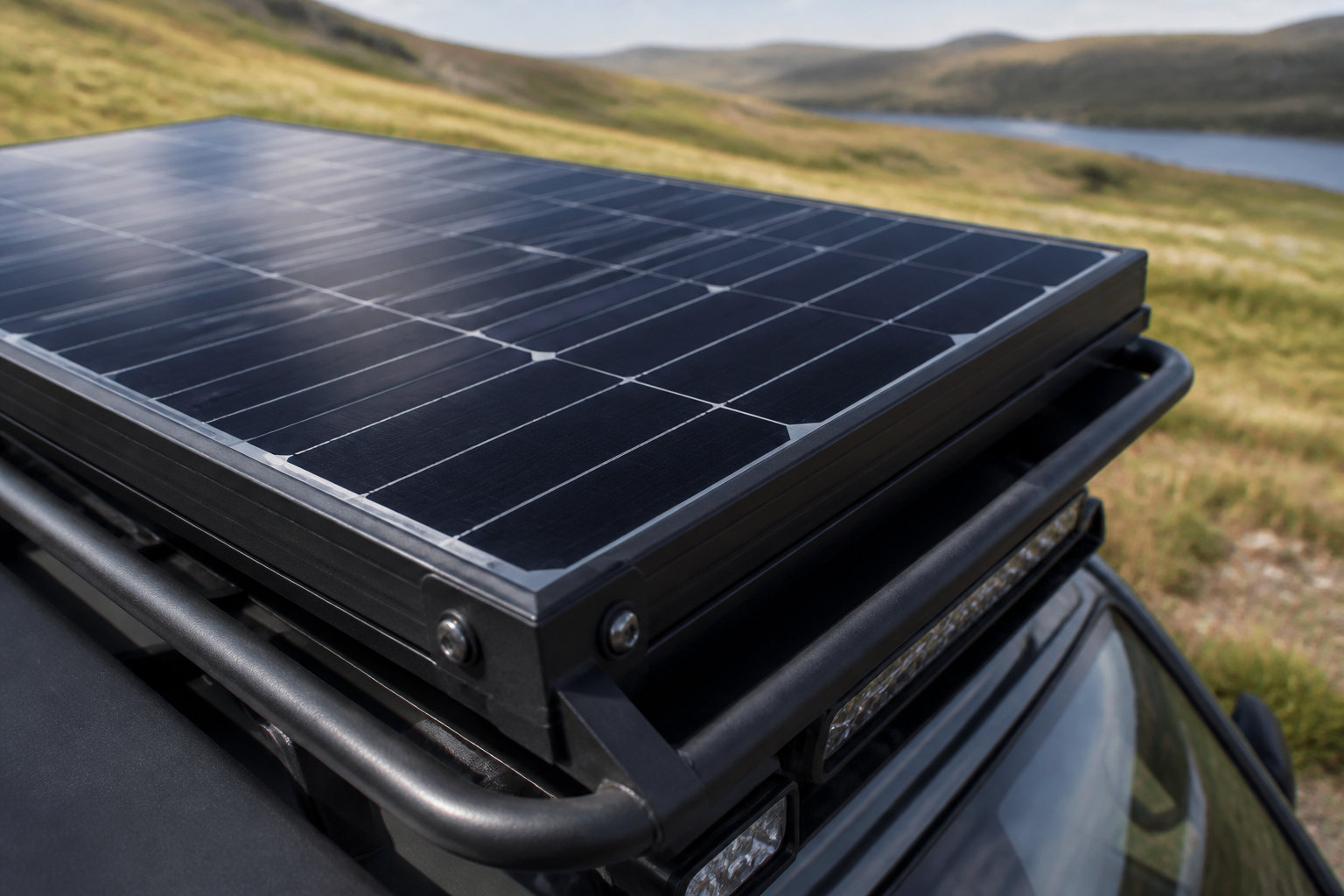
Tempered glass protects against environmental hazards. It withstands hail and low-hanging branches during driving. This durability is why most overlanders choose fixed roof installations.
| Panel Type | Durability | Efficiency | Best Use Case |
|---|---|---|---|
| Rigid Glass | High | 20-22% | Fixed Roofs |
| Flexible ETFE | Medium | 18-20% | Curved Surfaces |
| Portable Blanket | Low | 20-23% | Shade Parking |
Flexible Blankets and Portable Kits for Shade-Dwellers
Portable kits offer flexibility in the shade. You can park under trees and move panels into the sun. This keeps the vehicle cabin cool.
ETFE-coated blankets are incredibly lightweight. They fold down for easy storage. The rugged coating resists scratches and UV degradation.
Deploying ground kits requires managing long cables. Security is also a concern in public sites. Equip your overland truck with rugged solar panel kits by considering best portable solar panels for camping or specific solar panels for vans to maximize freedom.
How to Integrate Solar Kits with Auxiliary Battery Systems?
Selecting the panels is only half the battle; the real magic happens in how you wire them to your batteries.
Choosing MPPT Regulators Over PWM for Efficiency
MPPT controllers convert excess voltage into usable amperage. This process maximizes harvest during cloudy days. It is significantly more efficient than older PWM technology.
Performance varies by climate. In cold weather, voltage increases and MPPT captures that extra energy. PWM simply clips voltage, wasting power your battery needs.
MPPT units offer up to 30% more efficiency than PWM. Most include presets for Lithium, AGM, and Gel batteries.
Check compatibility with your battery chemistry. Modern MPPT units have presets for Lithium and AGM. Ensure the charging profile matches the manufacturer’s specific voltage requirements.
An MPPT regulator can increase your solar charging efficiency by up to 30% compared to a standard PWM controller in real-world overlanding conditions.
Wiring and Cable Entry Plates for Vibration-Proof Seals
Use thick wire gauges for long runs. This minimizes voltage drop between the roof and the controller. Undersized wires lead to heat and poor performance.
Install water-tight entry plates for all roof penetrations. Use high-quality marine sealants to prevent leaks. A double-entry gland ensures cables stay secure and dry.
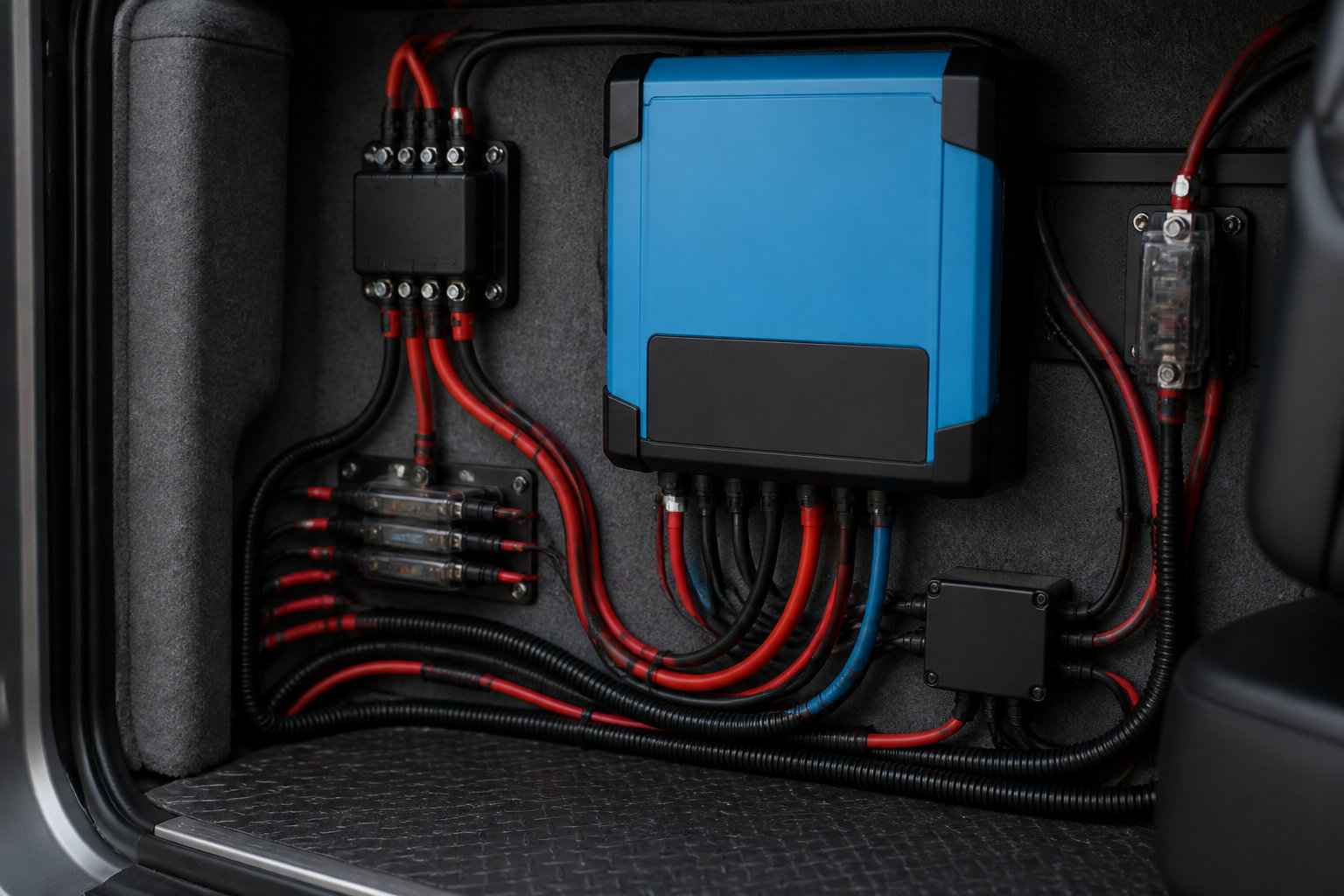
Corrugated roads create intense vibrations. Use strain relief loops and secure cables every few inches. This prevents copper strands from snapping inside the insulation.
When you equip your overland truck with rugged solar panel kits, proper mounting is vital. Explore these solar panel mounting options to ensure your setup handles the toughest trails without a hitch.
Maintenance Strategies for Harsh Off-Road Environments
Even the most robust electrical integration will fail if you neglect the physical upkeep of the hardware exposed to the elements.
Cleaning and Heat Management in Dusty Conditions
Dust and droppings block sunlight. Wipe panels regularly with water and soft cloth. Grime reduces energy output significantly.
Maintain air gaps under fixed panels. Airflow is vital for cooling cells. Excessive heat reduces efficiency and causes failure.
Avoid high-pressure washers on the glass. Force causes micro-cracks. These cracks eventually destroy the ability to generate power.
- Use only clean water
- Avoid abrasive sponges
- Clean early when panels are cool
- Check for roof rack shade
Securing Mounts Against Corrugated Road Vibrations
Inspect mounting hardware after rough trails. Look for stress fractures. Loosening bolts are a common cause of lost equipment.
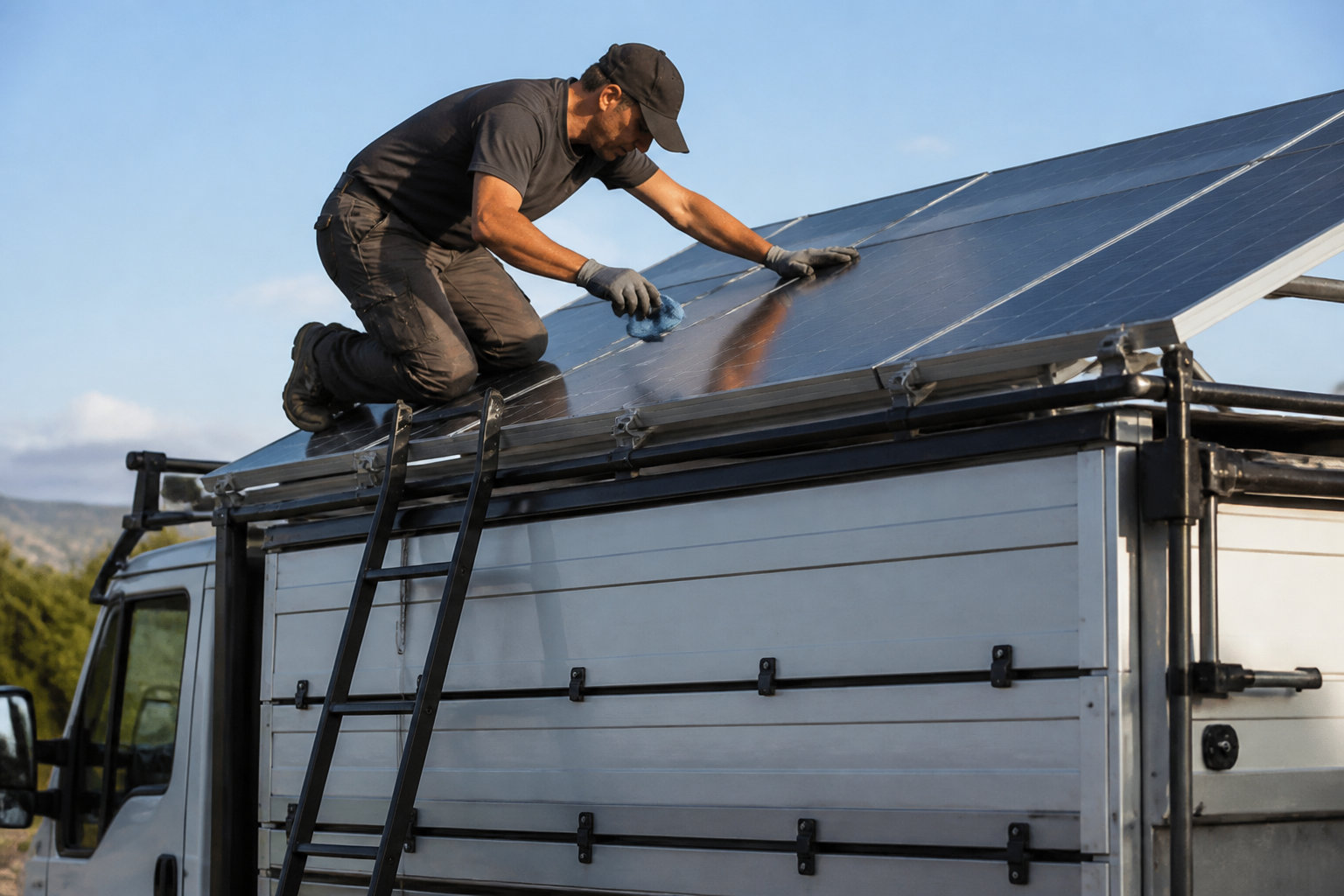
Use nylon-locking nuts for connections. Apply a thread-locking compound. This prevents fasteners from backing out during constant vibration.
Corrugations act like a jackhammer on your gear; if a bolt isn’t locked with nylon or Loctite, it will eventually vibrate loose.
Avoid high-pressure washers to prevent micro-cracks. Use nylon-locking nuts and check brackets for stress fractures after every trail.
Evaluate roof rack integrity. Solar panels add dynamic weight during maneuvers. Ensure mounts handle increased leverage on steep side-slopes.
Maximize your off-grid freedom by pairing high-efficiency monocrystalline panels with resilient LiFePO4 batteries and MPPT controllers. By precisely calculating your 12V loads and securing rugged solar panel kits for overland trucks, you ensure total energy autonomy. Equip your rig now to conquer the wildest terrains without limits.
FAQ
How can I accurately calculate the daily 12V energy consumption for my overland truck?
To master your energy independence, start by listing every single 12V appliance, from your compressor fridge to LED camp lights and water pumps. You need to multiply the wattage of each device by the number of hours it runs daily to find the total Watt-hours (Wh), then divide by 12 to get the Amp-hours (Ah). ⚡
Don’t forget to factor in environmental challenges! High ambient temperatures force your fridge compressor to work overtime, significantly increasing your daily draw. We always recommend overestimating your needs slightly to ensure you never wake up to a dead battery in the middle of nowhere. 🌲
What is the best way to size a battery bank for a solar-powered rig?
Sizing your storage is all about balance; your battery bank must be large enough to sustain your gear during cloudy days while matching your solar panels’ recharge capacity. For instance, a 100Ah battery requires sufficient panel wattage to reach a full charge within approximately five peak sun hours to avoid chronic undercharging. 🔋
We strongly advocate for LiFePO4 (Lithium) batteries over traditional lead-acid or AGM options. Lithium allows you to safely use up to 80% of its capacity, whereas lead-acid should never drop below 50% if you want it to last. Investing in quality storage means more usable power and a much lighter truck! 🚀
Should I choose rigid or flexible solar panels for my off-road vehicle?
The choice depends entirely on your vehicle’s architecture and your specific travel style. Rigid monocrystalline panels are the gold standard for durability and efficiency, featuring tempered glass that survives hail and low-hanging branches. They are generally more cost-effective and offer a longer lifespan due to better heat dissipation through their aluminum frames. 🛠️
On the other hand, flexible ETFE-coated panels or portable blankets are perfect if you have a curved roof or need to park in the shade while keeping your panels in the sun. While they are incredibly lightweight and easy to store, they are more sensitive to high temperatures, so ensuring a small air gap during installation is vital for maintaining peak performance. ☀️
Why is an MPPT regulator better than a PWM controller for overlanding?
Choosing an MPPT (Maximum Power Point Tracking) regulator is one of the smartest upgrades you can make for your overland setup. Unlike basic PWM controllers that simply clip excess voltage, an MPPT unit converts that extra voltage into usable charging current. This allows you to harvest significantly more energy, especially in cold or overcast conditions. 📈
An MPPT regulator can increase your solar charging efficiency by up to 30% compared to a standard PWM controller in real-world overlanding conditions.
This extra efficiency ensures your batteries stay topped up even when the weather doesn’t cooperate, providing the ultimate peace of mind for off-grid living. ✅
How do I protect my solar installation from intense road vibrations?
Corrugated roads are the enemy of electrical systems, acting like a jackhammer on every connection. To prevent failure, you must use nylon-locking nuts and apply a medium-strength thread-locking compound to every bolt. This simple step ensures your mounts stay secure even after hundreds of miles of washboard tracks. 🚜
Corrugations act like a jackhammer on your gear; if a bolt isn’t locked with nylon or Loctite, it will eventually vibrate loose.
Additionally, ensure you use strain relief loops for your wiring and install water-tight entry plates with high-quality marine sealants to keep your cabin dry and your connections vibration-proof. 💧
What maintenance is required to keep my overland solar kit performing?
Keeping your system running at 100% requires regular, simple maintenance. Dust, mud, and bird droppings act as a shield against the sun, so you should wipe your panels regularly with clean water and a soft cloth. Avoid using high-pressure washers, as the force can cause micro-cracks in the cells that destroy efficiency over time. 🧼
Beyond cleaning, you should perform a physical inspection after every rough trail. Check for stress fractures in brackets and ensure that roof rack accessories aren’t casting shadows over your cells. A well-maintained system isn’t just about power; it’s about ensuring your gear survives the harshest environments on Earth. 🌍