Transitioning to a standalone power system can cut long-term energy costs by thousands while protecting you from rising utility rates. We often see beginners struggle with complex wiring and sizing errors that lead to frustrating power failures.
This guide simplifies off grid solar power for beginners by breaking down the essential hardware and calculations. We will help you master the four pillars of energy freedom to ensure your setup runs flawlessly from day one.
- Off Grid Solar Power for Beginners: The Four Pillars of Energy Freedom
- Deciphering the Language of Electricity Without the Headache
- Calculating Your Daily Energy Appetite for Accurate Sizing
- Choosing the Right Battery Technology for Long-term Reliability
- Maximizing Efficiency with MPPT Controllers and Pure Sine Inverters
- Practical Installation Steps and Safety Protocols for DIYers
Off Grid Solar Power for Beginners: The Four Pillars of Energy Freedom
Off-grid systems rely on four core components: photovoltaic panels for generation, MPPT controllers for regulation, LiFePO4 batteries for storage, and pure sine inverters. This hardware synergy ensures 24/7 power for remote cabins or workshops.
Photovoltaic (PV) cells convert light to electricity. MPPT (Maximum Power Point Tracking) optimizes that harvest. LiFePO4 (Lithium Iron Phosphate) is the modern standard for energy freedom.
Solar panels as the primary energy generator
Photovoltaic cells convert photons into DC electricity through the photoelectric effect. Standard monocrystalline TopCon modules offer high efficiency. Bifacial modules further increase yield by capturing light from both sides.
Monocrystalline panels offer the best footprint-to-power ratio. Bifacial modules capture reflected light from the ground. TopCon technology represents the current industry standard for residential off-grid setups. These units harvest direct sunlight efficiently.
Proper placement ensures maximum harvest. Orientation remains the biggest factor for daily energy production success.
Charge controllers for battery protection
The charge controller acts as the brain between panels and batteries. It regulates incoming voltage and current flow. This prevents catastrophic overcharging or dangerous deep discharge cycles.
Charge controllers act as a firewall for your cells. Regular off-grid solar battery maintenance tips suggest keeping these units clean. They are vital for system health.
Modern units offer digital monitoring. They ensure the battery bank stays within safe operating parameters throughout the entire day.
Inverters for appliance compatibility
Batteries store direct current (DC) power. Most household tools require alternating current (AC). The inverter performs this vital conversion. It bridges the gap between storage and usage for standard appliances.
Pure sine wave inverters are superior to modified versions. They protect sensitive electronics from damage. High-quality output mimics the utility grid perfectly for smooth operation.
Choosing a high-quality pure sine wave inverter is the only way to protect modern electronics from harmonic distortion and premature failure.
Deciphering the Language of Electricity Without the Headache
Understanding the hardware is only half the battle; you also need to speak the language of energy to size things right.
Understanding Volts, Amps, and Watts
Think of Volts as electrical pressure. Amps represent the actual flow of current. Watts are the total power produced when these two forces work together in a circuit.
The formula is simple: Volts multiplied by Amps equals Watts. This calculation helps you understand your total capacity. Every device has a specific wattage rating. Knowing these numbers prevents system overloads.
Starting with off grid solar power for beginners requires you to calculate solar power needs accurately for your specific setup.
The relationship between current and pressure
Imagine a water pipe system. Voltage is the water pressure. Amperage is the volume of water flowing through the pipe. Resistance is the pipe size itself.

Thin wires create high resistance. This causes energy loss in the form of heat. Voltage drop occurs when cables are too long or too small for the load.
Proper cable sizing is mandatory. It ensures that the electrical pressure remains constant from the battery bank to your specific tools.
Why DC vs AC matters for your setup
Batteries are inherently DC devices. Solar panels also generate DC power. Most lights and USB chargers can run directly on 12V or 24V DC. This avoids the conversion losses associated with using an inverter.
AC power is for larger appliances. Fridges and power tools usually need 120V or 230V AC. Balancing these two types of loads improves overall system efficiency significantly.
Direct DC usage saves battery life. Use DC-native appliances whenever possible to maximize your stored energy reserves.
Calculating Your Daily Energy Appetite for Accurate Sizing
Once you grasp the terminology, you can start crunching the numbers to see how much power you actually consume.
Auditing daily and nightly kWh consumption
List every appliance you plan to use. Record their wattage and estimated daily hours. This gives you the total watt-hours (Wh) consumed per day.
Nighttime usage is critical. You must size your battery bank to cover everything from sunset to sunrise. This includes lights, fans, and refrigeration units.
| Appliance | Typical Wattage | Hours/Day | Daily Wh |
|---|---|---|---|
| LED Bulb | 10W | 6 | 60 Wh |
| Laptop | 60W | 4 | 240 Wh |
| Small Fridge | 50W | 24 | 1200 Wh |
| Phone Charger | 5W | 3 | 15 Wh |
| Fan | 30W | 8 | 240 Wh |
| TV | 80W | 3 | 240 Wh |
Managing peak power demand and surge
Peak demand is the most power used at once. High-draw items like water pumps or compressors create huge startup surges. These can be three times their running wattage.
Stagger your appliance usage. Don’t run the vacuum while the pump is active. This prevents the inverter from tripping due to overload. Managing these peaks allows for a smaller, cheaper system.
Check out our off-grid solar workshops to master load management. Starting with off grid solar power for beginners requires this strategic planning.
Accounting for seasonal sun arc variations
Summer yields are always higher. Winter brings shorter days and lower sun angles. You must size your array for the worst-case scenario in December.
Panel tilt affects harvest. Adjusting the angle twice a year can boost production by 15%. Latitude determines the optimal fixed angle for your specific location. Always account for local shading issues.

Learn more about maintaining solar efficiency in winter. Proper tilt ensures your LiFePO4 batteries stay charged even during the darkest months.
Choosing the Right Battery Technology for Long-term Reliability
Sizing your needs tells you how much storage you require, but the type of battery you choose dictates how long that storage lasts.
Lithium vs Lead-Acid performance comparison
LiFePO4 (Lithium) is the modern gold standard. It lasts for 3,000 to 5,000 cycles. Traditional Lead-Acid or AGM batteries rarely exceed 500 cycles. The initial cost of lithium is higher but cheaper per cycle.
Lithium is much lighter. It charges faster and maintains steady voltage until nearly empty. Lead-acid batteries suffer from significant voltage sag under heavy loads.
Investing in the best solar batteries for off-grid cabins ensures consistent power. Quality lithium units outperform old tech every single time.
| Feature | LiFePO4 (Lithium) | Lead-Acid (AGM/Gel) |
|---|---|---|
| Lifespan | 3,000 – 5,000+ cycles | 300 – 700 cycles |
| Usable Capacity (DoD) | 80% – 90% | 50% |
| Weight | Light (approx. 3kg for 100Ah) | Heavy (15-30kg for 100Ah) |
Impact of Depth of Discharge on lifespan
Depth of Discharge (DoD) is how much capacity you use. Lead-acid should never go below 50%. Lithium can safely handle 80% to 90% discharge regularly.
Pushing batteries too hard kills them early. Oversizing your bank extends the total years of service. It provides a safety buffer for cloudy days. Battery longevity is directly tied to how shallow you cycle them.
A battery bank sized for 20% daily discharge will often last three times longer than one regularly pushed to its limits.
Designing battery enclosures for thermal safety
Starting with off grid solar power for beginners requires understanding that batteries need a stable environment. Lead-acid requires ventilation to prevent hydrogen gas buildup. Lithium needs protection from extreme cold to allow for safe charging.
Heat is the enemy of all batteries. Ensure your enclosure has adequate airflow. Insulated boxes help maintain thermal stability in harsh climates. Proper spacing between cells prevents localized hot spots during heavy charging.
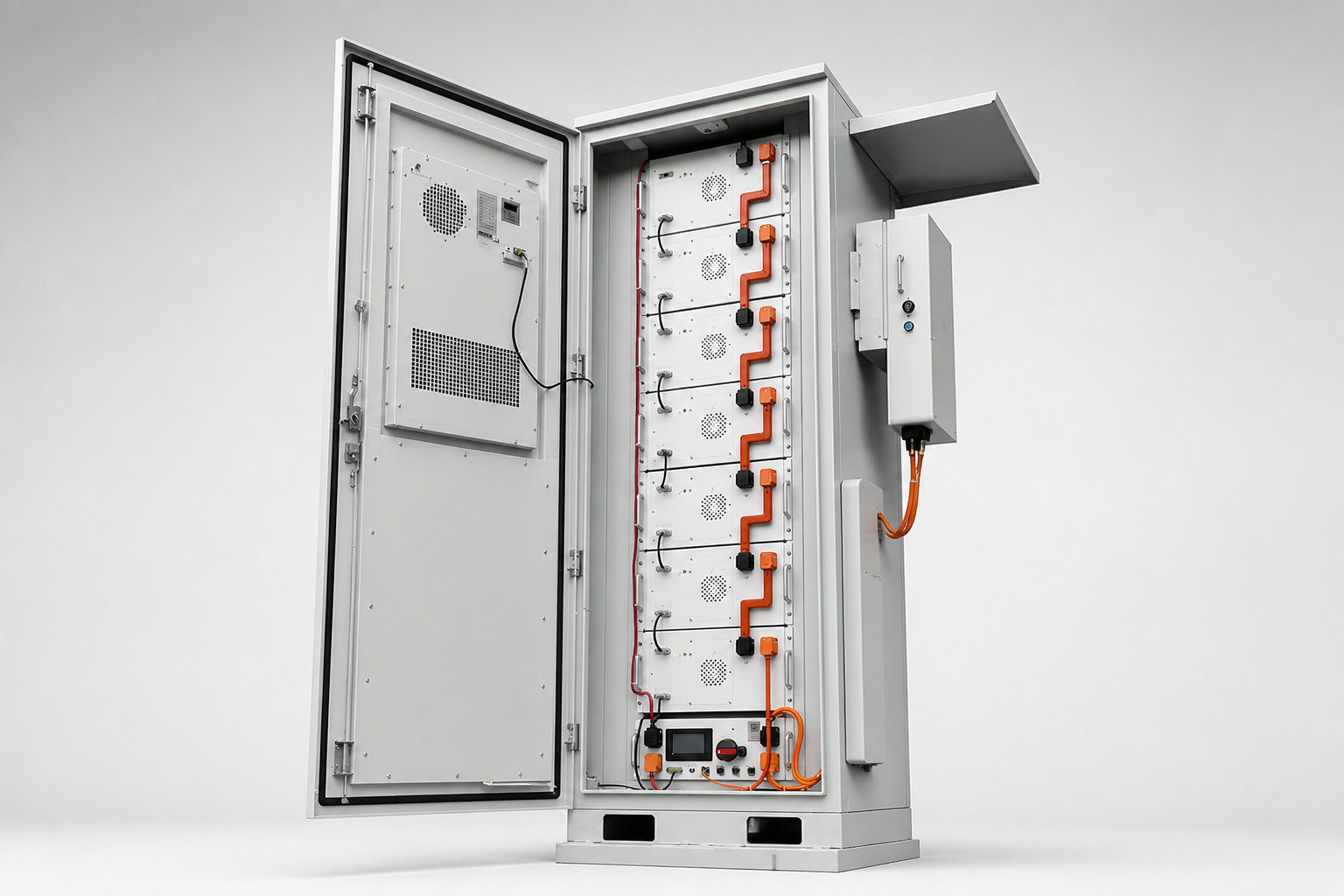
Before buying, check the solar battery price for home systems to budget for safety enclosures. Proper housing is a non-negotiable insurance policy for your energy independence.
Maximizing Efficiency with MPPT Controllers and Pure Sine Inverters
With the right batteries in place, you need high-efficiency electronics to manage the energy flow without wasting a single watt.
Why MPPT beats PWM for residential setups
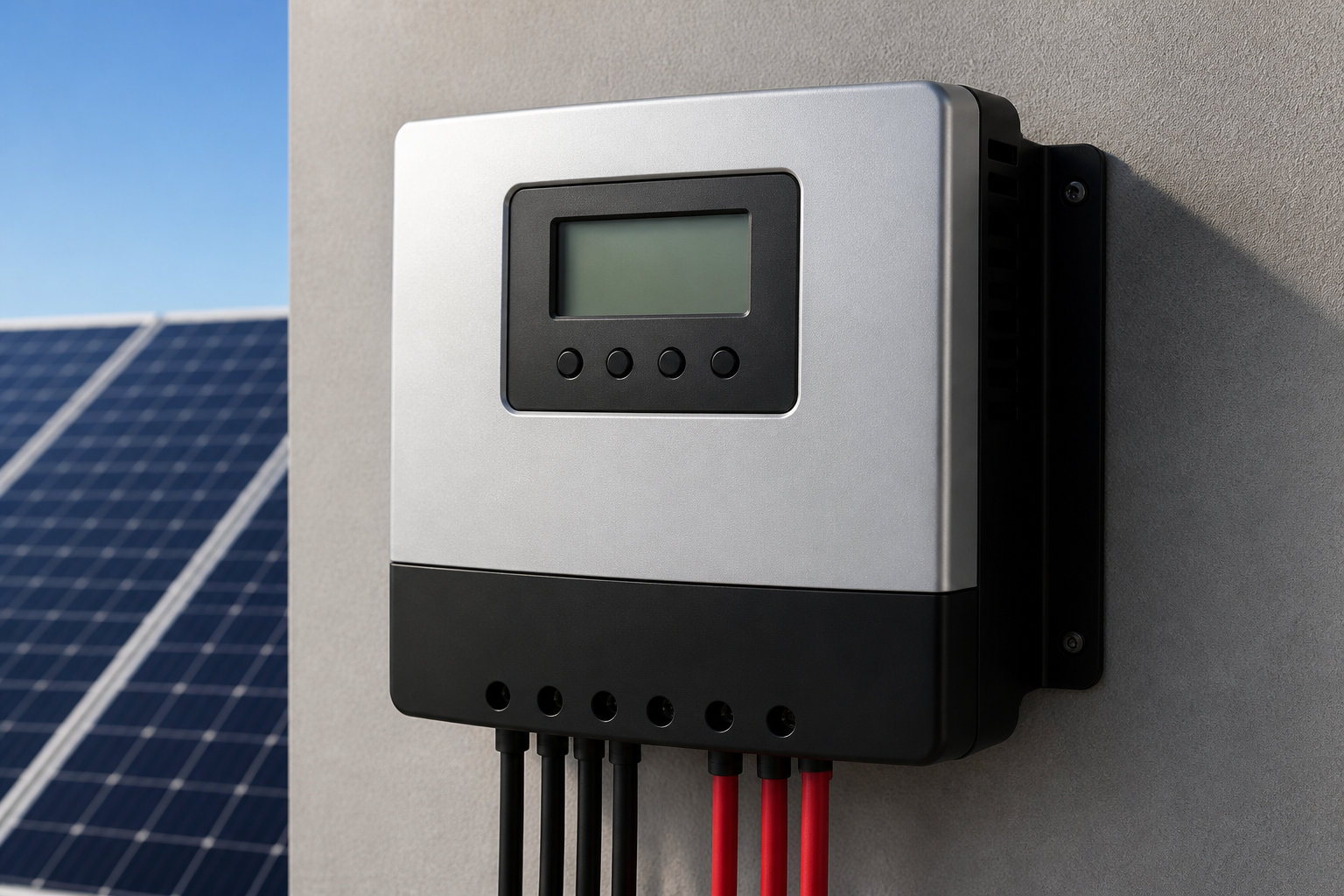
MPPT controllers use voltage-matching technology. They convert excess voltage into extra amperage for the battery. This increases efficiency by up to 30% compared to PWM.
PWM controllers are simple switches. They waste energy when panel voltage is much higher than battery voltage. MPPT technology shines during cold or cloudy weather. It extracts every possible watt from the sun.
Starting with off grid solar power for beginners requires understanding how to maintain plug and play solar panel efficiency through smart component selection.
Sizing inverters for continuous vs surge loads
Your inverter must handle the total running watts of all active devices. It also needs enough surge capacity for motor startups. Undersizing leads to frequent system shutdowns.
Check the continuous power rating carefully. A 2000W inverter might only handle 4000W for a few seconds. Motor-driven tools like drills or saws are particularly demanding. Always leave a 20% safety margin in your calculations.
This precision is vital when setting up solar panel kits for a detached garage or workshop where power tools are used.
Wiring and cable sizing to prevent voltage drop
Long wire runs cause voltage drop. This is especially true in low-voltage 12V systems. Choosing the correct wire gauge is essential for safety and performance.
Undersized conductors can overheat and start fires. Use thick copper cables for the battery-to-inverter connection. Keep these runs as short as possible. Proper crimping of terminals ensures a low-resistance path for the current.
- Use thick 2/0 or 4/0 AWG for inverters
- Use solar-rated PV wire for panels
- Always use copper over aluminum
- Check for tight connections monthly
Practical Installation Steps and Safety Protocols for DIYers
Even the best equipment can fail or become dangerous if you don’t follow strict safety protocols during the final setup.
Proper grounding and circuit breaker placement
Grounding protects your system from lightning and static. Install an earth ground rod near the array. Connect all metallic frames to this central grounding point.
Fuses are mandatory between every major component. Place a breaker between the panels and the controller. Another fuse must sit between the battery and the inverter.
Breakers allow for safe maintenance. They act as the primary defense against short circuits and electrical fires.
Always install mandatory fuses and breakers between components. Ensure batteries are in a well-ventilated area to prevent gas buildup and avoid high-heat appliances like electric kettles on solar circuits.
Appliance Green Light and Red Light lists
Not all appliances belong on a solar system. LED lights and laptops get a “Green Light.” High-heat offenders like electric kettles or space heaters get a “Red Light.” These thermal loads drain batteries too quickly.
Use gas for cooking and water heating. This preserves your electricity for electronics and lighting. Propane is a much more efficient way to generate heat off-grid.
Starting with off grid solar power for beginners requires knowing your limits:
- Green Light: LED bulbs, Phone chargers, Laptops, DC fans
- Red Light: Hair dryers, Electric ovens, Toasters, Space heaters
Routine maintenance for panel and battery health
Dust and bird droppings block sunlight. Clean your panels every few months with water and a soft brush. This maintains maximum light absorption and yield.
Clean panels with water and a soft brush every few months. Regularly check for loose or corroded terminals to prevent heat buildup and energy loss.
Use software monitoring to track battery health. Check for loose or corroded terminals regularly. Tight connections prevent heat buildup and energy loss over time.
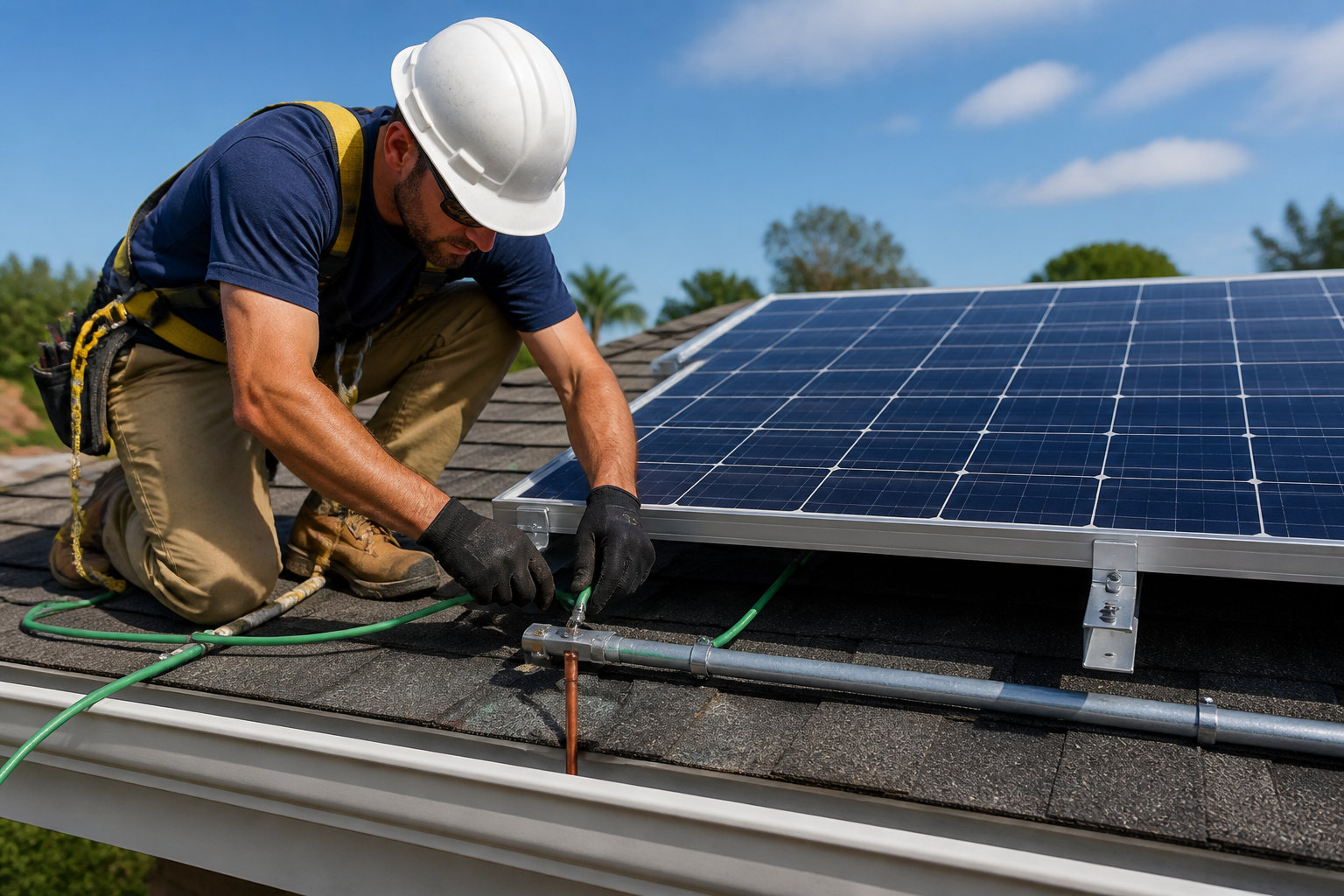
Integrating these habits is as vital as your smart solar management strategy. Consistent care ensures your independence lasts for decades.
Mastering the four pillars, efficient panels, MPPT controllers, LiFePO4 storage, and pure sine inverters, is your gateway to energy freedom. Start auditing your daily wattage now to size your system perfectly. Embrace this sustainable future today to secure reliable, independent power and eliminate rising utility costs forever.
FAQ
How does the setup differ between a small portable kit and a full-scale off-grid system?
A small off-grid setup is the ultimate entry point for adventurers, designed to power basics like LED lights, fans, or a TV in a cabin or van. These systems typically utilize a modest 12V battery bank and a simple PWM controller to keep things compact and affordable. It’s all about portability and meeting essential energy needs without the complexity.
In contrast, a full-scale residential system is a powerhouse engineered for total energy independence. These setups demand a sophisticated architecture, featuring high-voltage panel arrays, MPPT controllers for maximum harvest, and massive 48V battery banks. Often integrating backup generators and hybrid inverters, these systems provide the unwavering reliability needed to run an entire modern household seamlessly.
Why is a detailed wiring diagram so vital for my solar installation?
Think of your solar diagram as the definitive master plan for energy freedom. It eliminates guesswork by mapping every critical connection between your panels, controllers, and batteries. Without this blueprint, you risk catastrophic errors, such as incorrect polarity or undersized wiring, which can lead to equipment failure or even fire hazards.
A professional schematic ensures your system operates at peak efficiency from day one. It specifies the exact placement of fuses and circuit breakers, creating a safety net for your investment. By following a clear visual guide, you guarantee a secure, high-performance installation that is easy to maintain and troubleshoot for years to come.
What is the best battery technology for long-term off-grid living?
When it comes to serious energy storage, LiFePO4 (Lithium Iron Phosphate) is the undisputed champion. These batteries are the gold standard because they offer an incredible lifespan of 3,000 to 5,000 cycles, far outperforming traditional lead-acid options. They allow for a much deeper discharge, meaning you can use more of your stored power without damaging the cells.
Beyond longevity, lithium batteries are remarkably efficient and lightweight. They maintain a steady voltage until they are nearly empty, ensuring your appliances run smoothly even under heavy loads. While the initial investment is higher, the cost-per-cycle is significantly lower, making lithium the smartest choice for anyone seeking a reliable and maintenance-free power source.
Can I integrate backup power options into my off-grid solar design?
Absolutely! A robust off-grid design always accounts for the “worst-case scenario,” such as prolonged cloudy weather or unexpected surges in demand. Most professional diagrams include a backup generator as a critical safety component. This ensures you never have to worry about a blackout, providing total peace of mind regardless of the weather.
These backup sources connect directly to your inverter or a dedicated charger, allowing you to replenish your battery bank or power heavy appliances instantly. By incorporating a generator into your initial plan, you build a resilient energy ecosystem that delivers consistent power 24/7, 365 days a year.
What are the main advantages of choosing a Pure Sine Wave inverter?
Choosing a Pure Sine Wave inverter is the only way to guarantee your sensitive electronics receive high-quality power identical to the utility grid. Unlike cheaper modified versions, pure sine wave technology delivers a clean, smooth signal that protects computers, medical devices, and high-end audio equipment from damage. It’s the ultimate insurance policy for your modern gadgets.
Furthermore, these inverters are incredibly versatile, capable of starting demanding inductive loads like refrigerators and power tools with ease. They operate with higher efficiency and less noise, reducing heat buildup and extending the life of your appliances. If you want a system that is safe, reliable, and compatible with everything you own, pure sine wave is the mandatory choice.
How do MPPT and PWM charge controllers actually compare?
The difference is all about maximizing your harvest. MPPT (Maximum Power Point Tracking) controllers are high-tech marvels that can boost your energy yield by up to 30% compared to older PWM models. They act like an automatic transmission, constantly adjusting to extract every possible watt from your panels, even in low-light or cold conditions.
While PWM controllers are simple and cost-effective for very small tasks, they lack the flexibility and efficiency of MPPT technology. MPPT units handle much higher input voltages, allowing for longer wire runs and more complex panel configurations. For a residential off-grid system where every watt counts, the superior performance of an MPPT controller is worth every penny.